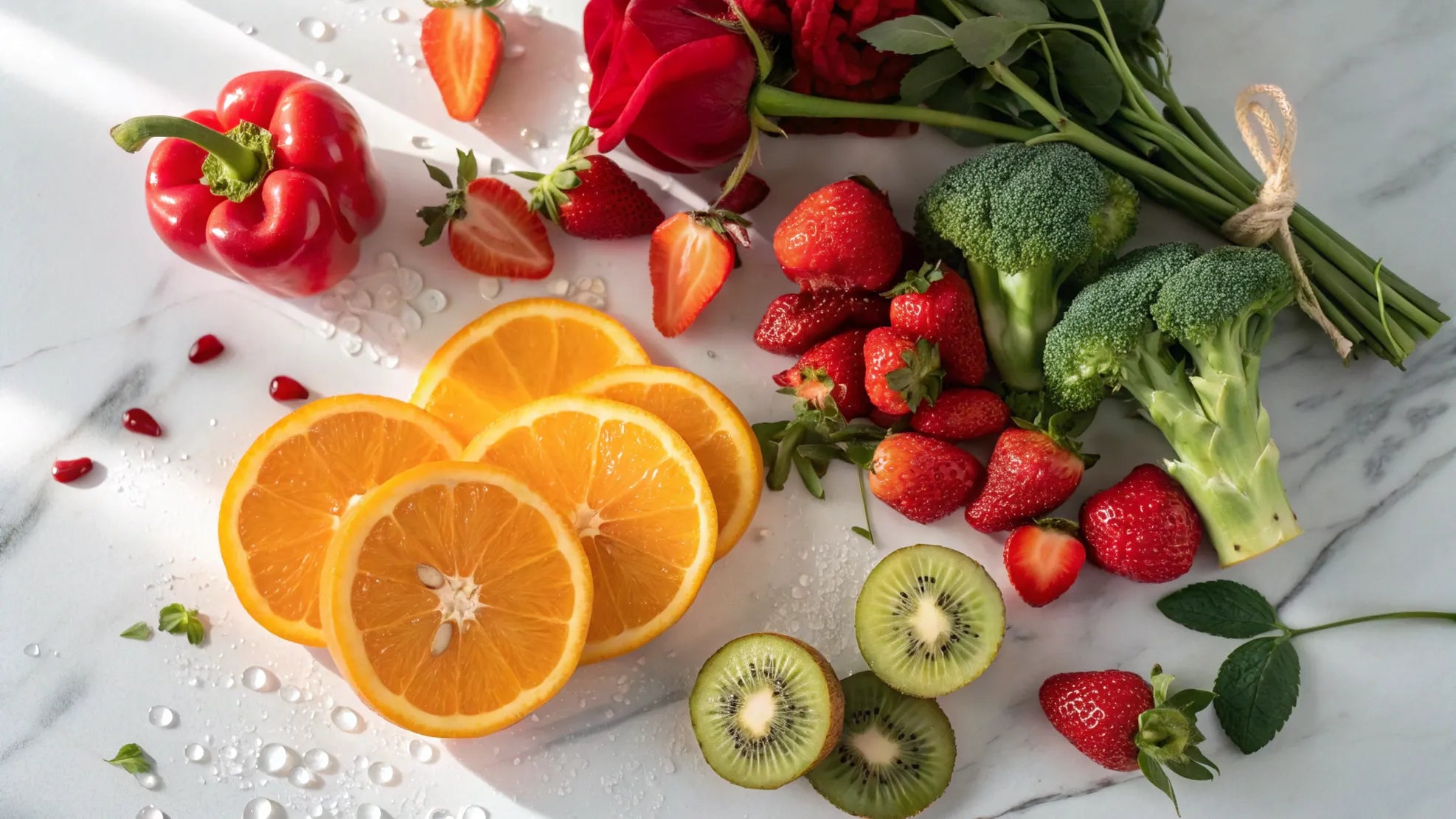
Vitamin C is well known for being an antioxidant. In this article, we tell you about this amazing, essential vitamin.
Powerful antioxidant
Vitamin C acts as a powerful antioxidant in the body and helps protect cells from damage caused by free radicals. Free radicals are unstable molecules that can contribute to inflammation and chronic diseases. Antioxidants work to prevent and neutralize an excess in the body. This increases, for example, during intense exercise, smoking, stress, use of birth control pills, and sun exposure. An excess of such compounds creates oxidative stress in the body, meaning if the body's antioxidant defense is insufficient, the body is exposed to oxidative stress. Balance between formation and destruction is therefore very important for the body's cells to function optimally.
Immune system protection
Vitamin C plays a vital role in the immune system by promoting the production of white blood cells, which are important for fighting infections and diseases.
Collagen support
Collagen is a protein that provides structural support to various tissues in the body, including skin, bones, and joints. Vitamin C plays a crucial role in collagen synthesis and helps form and maintain healthy collagen fibers. By boosting collagen production, vitamin C helps improve skin elasticity, reduce the appearance of wrinkles, and support joint health.
Vitamin C contributes to
- for the normal function of the immune system.
- to maintain the normal function of the immune system during and after intense physical exercise.
- to protect cells from oxidative stress.
- to reduce tiredness and fatigue.
- for normal collagen formation which is important for the normal function of blood vessels.
- for normal collagen formation which is important for the normal function of bones.
- for normal energy metabolism.
- for the normal functioning of the nervous system.
- for normal psychological function.
- to regenerate the reduced form of vitamin E.
- And last but definitely not least – vitamin C increases iron absorption.
How to prevent vitamin C deficiency
The simplest and most effective treatment for deficiency is simply to start changing your dietary choices. Including a variety of healthy, nutritious whole foods can actually help ensure you get enough sources of this important vitamin. However, some of these need to be eaten raw.
Which foods contain vitamin C
Citrus fruits, bell peppers, strawberries, tomatoes, broccoli, cauliflower, rose hips, Brussels sprouts, parsley, acerola cherries, chili, guava, cantaloupe melon, cabbage, kiwi, papaya, red and black currants are naturally rich in vitamin C. So the trick is to eat a colorful diet!
Are vitamin C supplements necessary?
Yes, it can definitely be needed during certain periods in life. The daily requirement varies depending on age, gender, lifestyle, medical history, exposure to toxins, stress, and dietary habits. Vitamin C is abundant in some foods, but the amount decreases with heating. Therefore, it is good to often eat raw fruits and vegetables and occasionally supplement with dietary supplements.
Extra needs can arise
- during intense physical exertion or training.
- increased exposure to environmental toxins.
- increased sensitivity to infections.
- during illness.
- if you smoke.
- with anemia.
- under stress.
- during hormonal imbalances.
- in menopause.
- if you take birth control pills.
How much vitamin C per day?
200 and 500 milligrams of vitamin C per day seem to be enough to experience health benefits. But in some cases, such as illness or a specific health condition that requires extra vitamin C, it can really be beneficial to take 1000 milligrams per day or more, preferably divided throughout the day. To absorb vitamin C and prevent it from being lost in the urine, it is best to take doses spread out over the day.
If you experience a lot of stress, both vitamin C, a B-complex, and Omega 3 are recommended for optimal support of the nervous system and brain function.
Different types of vitamin C supplements
Liposomal vitamin C
Liposomal means that the vitamin is encapsulated in microscopic bubbles (liposomes) filled with vitamin C surrounded by protective phospholipids. These can pass through the digestive system without being broken down by, for example, stomach acid. Instead, the vitamin is absorbed in the intestines, which can increase bioavailability. It is also a good supplement for those who want liquid supplements.
Various liposomal vitamin C brands are available on the market, including Better You, Närokällan, Mary Ruth, Dr Mercola, Aurora, Liponaturals, and Quicksilver Scientific.
We have information available about liposomal products.
pH-neutral vitamin C
pH-neutral vitamin C is gentle on the stomach because a mineral is added to neutralize the acid. It is therefore called pH-neutral or buffered vitamin C. The mineral helps the cells absorb the vitamin.
Vimergy Micro C in powder, Vimergy Micro C in capsules, Magnum C with Nutra C, Holistic magnesium ascorbate, Better You calcium ascorbate, Better You capsules calcium ascorbate, Terranova magnesium ascorbate and potassium ascorbate with herbs
Vitamin C with bioflavonoids
Vitamin C works together with bioflavonoids, which are also powerful antioxidants that increase the absorption of vitamin C.
Pureness vitamin C PUREWAY-C with citrus bioflavonoids Närokällan Super C with rosehip acerola and bioflavonoids Vimergy Micro C in capsules with rutin, acerola and rosehip Vimergy Micro C in powder with rutin, acerola and rosehip Better You capsules calcium ascorbate with rosehip Holistic Bioflav with citrus bioflavonoids Pureness Triple C with Camu Camu and citrus bioflavonoids
Wholefood vitamin C
"Whole foods" vitamin C comes directly from berries and/or fruit. Camu Camu and Amla are berries that are very rich in vitamin C. Blackcurrants are also very rich in vitamin C.
Camu Camu powder in capsules, liquid vitamin C from amla fruit extract and blackcurrant, liquid PurC® vitamin C from organic amla fruit extract, Vitamin Code "wholefood" vitamin C, Närokällan Bio C from a variety of fruits and berries in powder form
Are you interested in vitamin C in skincare?
Then read about why vitamin C is good for the skin and health.