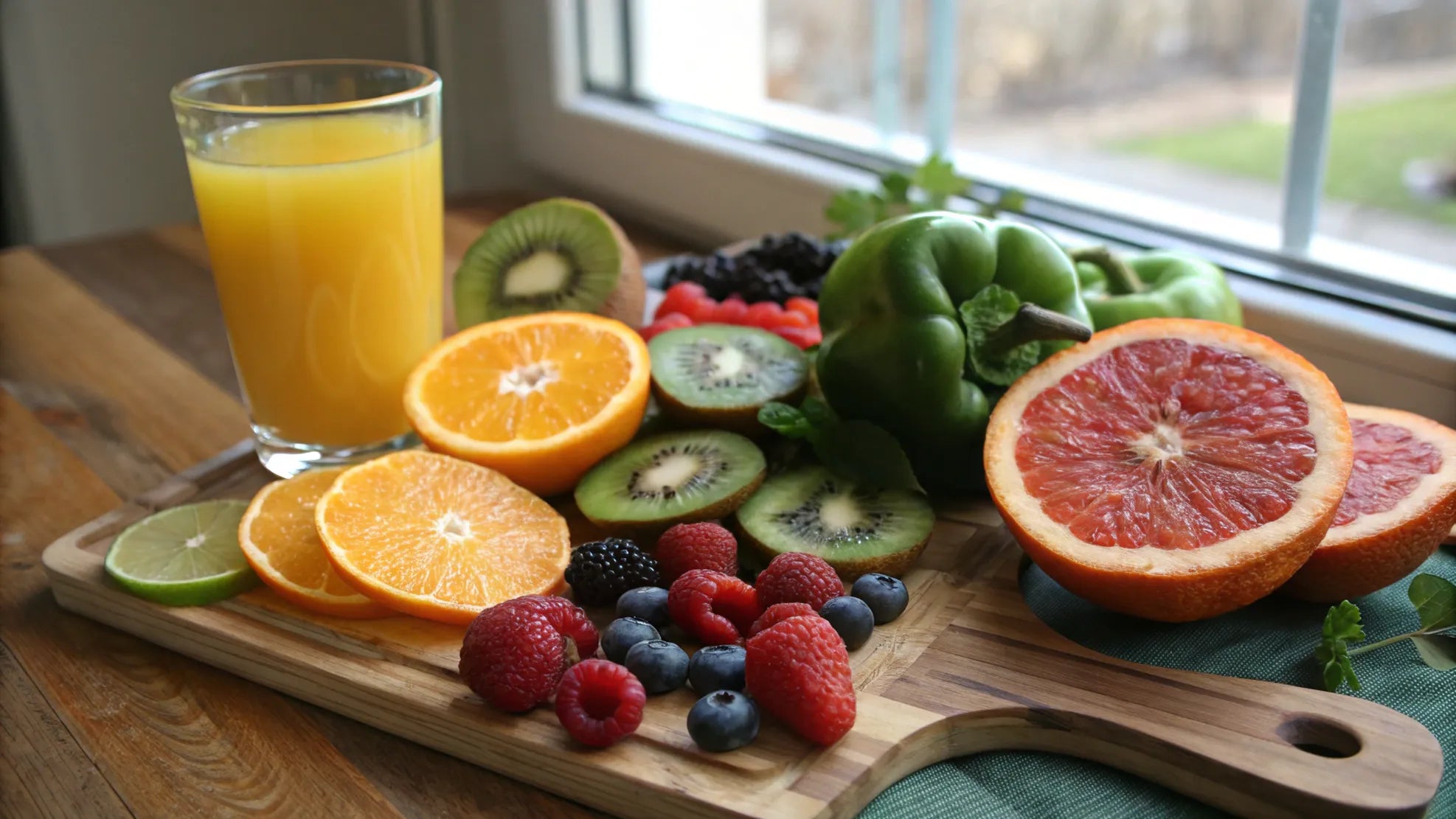
The amazing vitamin C is one of the most common vitamins we take as a supplement to strengthen the immune system, especially now in winter. We can also choose to eat more foods that are especially rich in vitamin C.
But in which foods do we find a lot of vitamin C, and what does it actually do for the body? Let's take a closer look now!
Vitamin C in the body
Humans are one of the few species, along with apes, lemurs, guinea pigs, and a species of bat, that cannot synthesize ascorbic acid themselves.
Most animals produce vitamin C daily from glucose in the kidneys or liver. Under physical, mental, or chemical stress, animals can triple their production.
This means it is very important that we get vitamin C in our diet every day, especially when we are stressed or sick.
The body normally contains a reserve of about 1,500 mg (considering human body weight). The basal consumption is about 70 mg/kg body weight per day.
For a 70-kilogram person, the requirement would be around 5 g per day and under extra stress up to 15 g per day.
Most types of vitamin C supplements are best taken in lower doses spaced a few hours apart; otherwise, we just urinate out the excess.
When you consume 1500 mg or less of vitamin C, it usually is not excreted in the urine, but with medication intake, stress, cold, and heat, urinary excretion can increase regardless of the amount in the blood.
Properties of vitamin C
- strengthens our immune system so it can function properly
- needed for the body's production of connective tissue and collagen
- needed for good health of teeth, bones, and palate
- supports the body's own wound healing function
- facilitates iron absorption
- is an antioxidant that counteracts free radicals
- has anti-inflammatory effects
- needed for our nervous system to function normally
- it also gives a more even skin tone
- protects cells against oxidative stress
At Morotsliv, you can read more about the properties and chemistry of vitamin C.
Vitamin C deficiency
If you have a vitamin C deficiency, you may experience the following symptoms:
- Fatigue, irritability, lack of energy
- Hair loss
- Dry, sagging skin
- Gum inflammation
- Repeated colds
- Poor wound healing
- Severe vitamin C deficiency causes scurvy
Vitamin C in food
Vitamin C is water-soluble and begins to lose its potency as soon as it is exposed to air, heat, and light.
The richest sources of vitamin C are:
- Acerola
- Rose hips
- Blackcurrants
- Parsley
- Horseradish
- Green bell pepper
- Broccoli
- Kiwi
- Papaya
- Orange juice
- Cantaloupe
- Chives
- Grapefruit juice
- Tomato paste
All boiling, frying, and heating destroy much of the vitamin C. It is actually the vitamin most easily destroyed by light, heat, and food preparation.
This makes fresh fruit and berries the best sources of vitamin C in a varied diet.
But for example, vitamin C in oranges pressed into orange juice gradually disappears in the pitcher in the fridge. After a few hours, not much remains unless you cover the pitcher. Much of the vitamin C in fruit is found just under the peel.
Simple tip to get your daily requirement
Eat a third of a green bell pepper every day to ensure your body gets the vitamin C it needs.
Vitamin C supplements
Vitamin C and bioflavonoids (vitamin P) always occur together in nature, so it is good to take them together. They complement each other, and bioflavonoids increase the body's absorption of vitamin C.
The common ascorbic acid form of vitamin C has a low pH, meaning it is acidic, and can irritate the stomach in some people. Therefore, there are also neutral forms and ascorbate forms. These have a neutral pH value.
A popular form is Ester-C, as well as mineral ascorbates obtained by mixing ascorbic acid with sodium, calcium, magnesium, and/or potassium. They are not as comprehensive and effective forms but are gentler on the stomach and have a good effect.
Ester-C is pH-neutral, better absorbed, gentler on the stomach, and stays longer in the body.
It is also possible to take vitamin C in the form of pills, powder as well as liposomal.
Liposomal means that the vitamin C is encapsulated in small fat bubbles called phospholipids. Phospholipids consist of choline, phosphate, and glycerin and are a substance naturally found in the body.
The cell wall also consists of phospholipids. These are then transported out to the body's cells; this is the liposomal transport.
Here you can read more about the importance of vitamin C for the skin and how you can use vitamin C in your skincare routine.