You have started reading up on pregnancy.
And suddenly there is an overwhelming amount of advice.
Folic acid.
Iron.
Vitamin D.
You may even have a small list on your phone of things you try to remember every day.
But there is a nutrient that rarely comes up in the same conversations, despite research on it having grown rapidly in recent years.
Choline.
It is a nutrient the body uses when the brain and nervous system develop.
At the same time, studies show that many pregnant women get less than recommended.
A nutrient that is rarely mentioned in pregnancy advice
When studying choline during pregnancy, the focus is often on how the nutrient participates in the development of the brain and nervous system.
At the same time, surveys from several countries show that intake often falls below recommended levels.
Interest in choline during pregnancy has therefore increased in recent years.
Choline is therefore sometimes described as one of the more underrated nutrients in the diet.
What choline actually does in the body
Choline is a nutrient that the body uses in several basic functions.
Among other things, it is needed to form:
- acetylcholine, a neurotransmitter used in the nervous system
- phospholipids that make up cell membranes
- substances that help the liver transport fat
This means that choline is involved in several basic functions in the body, including the nervous system and how the liver handles fat.
The body can produce small amounts of choline itself, but not enough to meet its needs.
That is why we need to get choline through our diet.
Did you know?
Choline was classified as an essential nutrient only in 1998.
This means that research on choline is still relatively young compared with that on many other vitamins and minerals.
Why the need increases when a new nervous system develops
During pregnancy, an entirely new brain is built.
The fetal nervous system develops rapidly, especially during the first few months. At that time, large amounts of building blocks are needed for new cells, neural pathways, and signaling systems.
This is where choline plays several roles.
It is needed, among other things, for:
- the development of the brain's structure
- the formation of the neurotransmitter acetylcholine
- cell division and DNA synthesis
Choline also plays a role in something called epigenetic programming.
It sounds advanced, but it is really about how the body uses its genes.
All people have the same basic DNA in the cells of their bodies. But not all genes are active all the time. Some are used more, others less.
During fetal development, an enormous amount of this fine-tuning takes place.
Nutrients such as choline participate in processes that help the body regulate how genes are used as organs, the brain, and the nervous system develop.
Research in the field suggests that these processes may affect how various systems in the body function later in life as well.
This is one reason why interest in choline during pregnancy has increased.
Did you know?
The baby's brain begins to develop very early in pregnancy. As early as the first few weeks, the foundations of the brain and spinal cord are formed.
This is one reason why nutritional status before and at the beginning of pregnancy can play an important role.
How much choline is needed during pregnancy?
The European Food Safety Authority (EFSA) states a recommended intake of approximately 480 mg of choline per day during pregnancy.
And here comes a figure that usually makes many people raise their eyebrows slightly.
An egg contains approximately 140–150 mg of choline.
That means you would need to eat approximately four eggs a day to meet the recommendation solely through eggs.
Four eggs a day may not sound like very much.
But most of us do not really eat that many eggs every day.
And especially not every day, week after week.
If you eat an egg for breakfast, you get approximately 30 percent of your daily requirement. The rest then needs to come from other foods.
This is one reason why many pregnant people have lower levels than recommended.
Did you know?
Eggs are one of the most concentrated natural sources of choline.
Most of the choline is found in the egg yolk, not the white.
The most important dietary sources of choline
The richest sources of choline are:
- egg yolks
- liver
- meat and fish
- legumes
- broccoli and cauliflower
Many pregnant people are advised about foods that may need to be limited during pregnancy.
For example, raw fish, unpasteurized cheeses, or larger amounts of liver.
At the same time, several of the most choline-rich foods happen to belong to that category. This means that choline can sometimes be a nutrient we consume a little less of without really thinking about it.
Choline and folate work within the same biological system
Most pregnant people are familiar with folic acid.
Folic acid is the synthetic form of vitamin B9 that is often used in dietary supplements and fortified foods.
Food, on the other hand, contains folate, the natural form of the vitamin. It is found in leafy greens, legumes, avocados, and liver, among other foods.
Folate is also found in dietary supplements, often in more biologically active forms that the body can use more easily.
What many people do not know is that folate and choline work within the same biological system in the body.
Both participate in a process called methylation.
Methylation is one of the body's most fundamental processes and is needed, among other things, to:
- build new DNA
- divide cells
- develop the nervous system
- regulate how genes are used during fetal development
During pregnancy, cell division occurs at an extremely rapid rate. Every new cell needs to copy its DNA correctly.
Here, folate and choline work together.
Put simply, folate helps the body build new DNA, while choline helps regulate how genes are used during development.
That is why some people choose to supplement with supplements
A nutritious diet is always the foundation.
Foods such as eggs, fish, meat, legumes, and vegetables provide both choline and folate.
But because levels in food vary, it can be difficult to reach the recommended amounts every day, especially during pregnancy when the need is higher.
That is why some people choose to supplement their diet with dietary supplements.
A choline supplement can be a way to ensure a steady intake, especially if the diet does not contain many choline-rich foods.
In the same way, many pregnant women choose to take folate supplements to ensure an adequate intake during the period when the body is building new life at a rapid pace.
So where does choline come into the picture?
When nutrition during pregnancy is discussed, folate, iron, and vitamin D are almost always mentioned.
Choline often takes a bit of a back seat.
But when you look more closely at the research, it becomes clear that choline is involved in several of the processes that are most active during pregnancy, not least the development of the brain and nervous system.
At the same time, studies show that many women consume less choline than recommended.
So if you're thinking about becoming pregnant, or already are, it may be worth looking at what your choline intake actually looks like. Are you getting it through your diet, or is it included in the supplement you're already taking?
And otherwise, there are always eggs.
Four a day actually goes a long way.
Discover choline supplements:
- Thorne Basic Prenatal
-
MaryRuth's Liposomal Prenatal/Postnatal Multivitamin
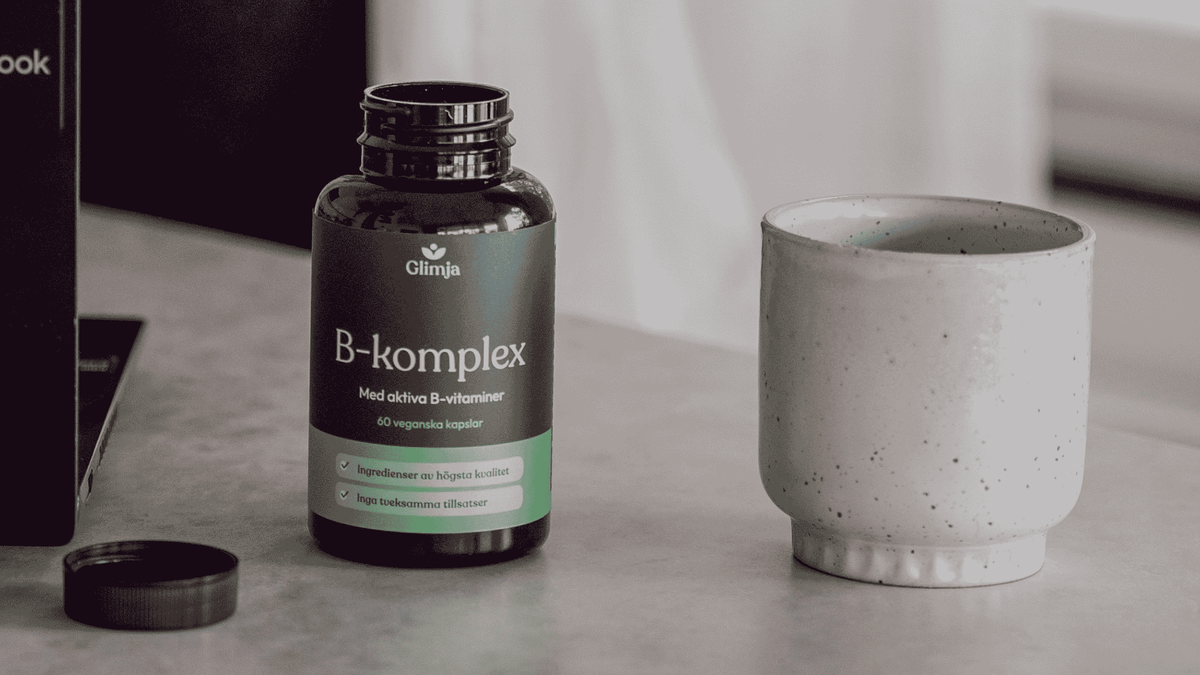
- Glimja B-Complex
- Glimja Multivitamin
- Holistic Femme Fertil
- Helhetshälsa Sunflower Lecithin
- Holistic Sunflower Lecithin
Sources
EFSA – Dietary Reference Values for Choline
NIH Office of Dietary Supplements – Choline Fact Sheet
Zeisel SH & da Costa KA. Choline: An Essential Nutrient for Public Health