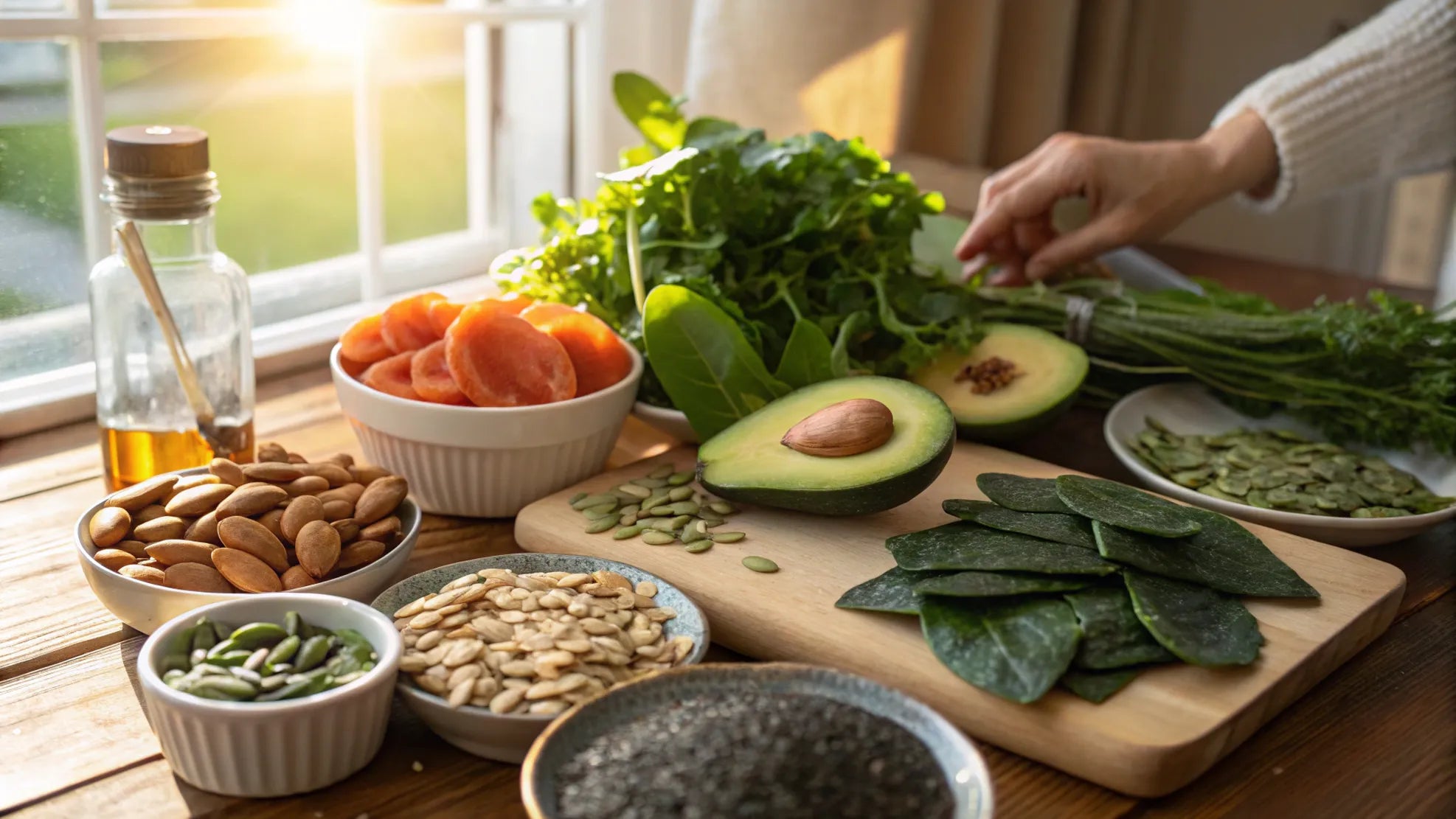
Minerals are inorganic substances found everywhere in nature and in our bodies. They are, in a way, the foundation of all life and serve as building blocks for living cells, hormones, and neurotransmitters. When minerals are in our cells (or in cells we eat), we often say they are in an organic or bioavailable state.
A mineral is defined as "a solid inorganic substance that occurs naturally." In other words, a mineral has the following properties:
- Exist in nature.
- Have a definite chemical composition, as each type is made of a certain mix of chemical elements.
- Although we need both, minerals in our diet are a bit different from vitamins because vitamins are made by plants or animals, while minerals come from soil and water. Minerals enter the food we eat by being absorbed by plants and animals, which we then consume.
Why minerals are important?
Minerals play an important role in bone development, brain health, cell function, and metabolism, and people need different types of minerals to function properly.
It is important to meet mineral needs to support functions such as heart health, immune defense, maintained bone density, skin health, cognitive function, fertility, and much more.
We are greatly affected by the minerals we consume, or in some cases do not consume. Most know that too little available calcium can lead to osteoporosis. Perhaps it is less common to know the effects and deficiency symptoms of zinc, magnesium, or iodine.
Here is a quick guide to the most important minerals for our health.
Magnesium
Magnesium is needed for the nervous system, muscles, bones, and metabolism. It contributes to enzymatic reactions, helps with DNA synthesis, is necessary for protein formation, muscle contractions, and immune system health. Magnesium is essential for the body to utilize vitamins B, C, and E.
Common deficiency symptoms
Hyperactivity, stress and noise sensitivity, sleep difficulties, all kinds of cramps, muscle stiffness, fatigue, exhaustion, and cravings for chocolate.
Magnesium-rich foods
Wheat bran, dulse, buckwheat, millet, almonds, avocado, chickpeas, lentils, cocoa beans, and nuts.
Recommended daily intake via food: 350 mg.
Optimal daily intake via supplements: 200-400 mg.
Calcium
Calcium is the most common mineral in the body. It is essential for:
- the nervous system.
- to maintain a healthy bone structure. Together with phosphorus and magnesium, it provides hardness and strength to bones and teeth.
- normal muscle function (just like magnesium).
- normal neurotransmission as well as blood clotting ability.
- Calcium helps muscles relax and contract and supports blood pressure regulation.
Common deficiency symptoms
Muscle cramps, difficulty falling asleep, brittle nails and skin/hair problems, bleeding gums, cavities, nervousness, eyelid twitches, numbness and tingling in arms and legs, allergies.
Calcium-rich foods
Unhulled sesame seeds (tahini), seeds, almonds, certain green leafy vegetables like chard and kale, dulse, parsley, dried figs, tofu, fava beans, white beans.
Recommended daily intake via food: 1200 mg.
Optimal daily intake via supplements: 400-800 mg depending on need.
Calcium intake can be as large as or twice as large as magnesium.
Zinc
Zinc is one of the body's most important minerals for, among other things, immune defense, growth and sexual development, skin and hair health, and normal wound healing. Also important for testosterone production and appetite regulation.
Common deficiency symptoms
Reduced appetite, growth disorders, impaired wound healing, weakened sense of smell and taste, poor wound healing and skin problems, hair loss and brittle nails, eye problems, and impaired hearing. Craving salt and carbohydrates is also common with zinc deficiency.
Zinc-rich foods
Pumpkin seeds, chia seeds, hemp seeds, kidney beans, sunflower seeds, oats, tofu, tempeh, cashew nuts, walnuts.
Recommended daily intake via food: 15 mg.
Optimal daily intake via supplements: 20-50 mg.
When taking zinc, one should check the ratio between zinc and copper. This can be balanced through a multivitamin/mineral. Copper is obtained from, for example, olives, nuts, legumes, and buckwheat.
Iodine
According to WHO, iodine deficiency is one of the world's most common nutritional deficiencies – up to 72% of the world's population is affected by an iodine deficiency-related disorder according to them.
Iodine is essential for the production of thyroid hormone and therefore plays a central role in our metabolism, but also plays a key role in the cells' oxygen metabolism and all other hormone production. Iodine supports metabolic reactions, aids development, facilitates normal brain development, and cognitive functions.
Common deficiency symptoms
Weight gain, reduced resistance to infections, poor circulation, cold hands and feet. Iodine deficiency can cause adults to develop goiter. In severe cases, iodine deficiency also leads to mental problems.
Iodine-rich foods
Seaweed such as Kelp, Wakame, Dulse, and Kombu all provide a lot of iodine. Tip: If you are sensitive to iodine but want to eat seaweed, Nori is a good choice.
Recommended daily intake via food: 150 µg.
Optimal daily intake via supplements: 150-300 µg.
Iodine should not be taken in cases of hyperthyroidism, toxic goiter, or impaired kidney disease.
Iron
Iron transports oxygen from the lungs through the bloodstream to all the body's cells. The mineral is mainly found in the blood where it is part of the pigment hemoglobin. There are many iron-dependent enzymes in the body's enzymatic antioxidant defense. Iron helps with development, assists in making amino acids, collagen, neurotransmitters, and certain hormones.
Common deficiency symptoms
Craving salt, high levels of fats in blood and liver, weakened immune system, fatigue, pale skin, hair loss, and brittle nails.
Iron-rich foods
Lentils, green vegetables like broccoli and spinach, beans, peas, quinoa, nuts, and seeds such as pumpkin seeds and sesame seeds (tahini).
Recommended daily intake via food: 15 mg.
Optimal daily intake via supplements: 0-20 mg.
This is met for most people through diet – imbalances in iron metabolism usually have other causes than lack of iron intake. Excess iron accelerates aging and increases the risk of chronic diseases. Therefore, one should be careful not to overdose or take iron supplements unnecessarily.
An exception is, for example, heavy menstruation when a lot of iron is lost and may need to be replaced through supplements, or long-term deficiency for other reasons. Iron deficiency should always be investigated and tested by a doctor, including checking Ferritin, Folate, and B-12.
Selenium
Selenium is an important mineral for the immune system; it participates in antioxidant activity that defends against damage and inflammation and plays a key role in maintaining a healthy metabolism. It is thus a powerful antioxidant just like zinc.
Selenium maintains normal thyroid hormone production, supports metabolism and DNA synthesis, protects against oxidative damage, supports the immune system in fighting infections, and is needed for healthy fertility, especially in men as it promotes sperm health just like zinc.
Selenium may need to be taken in cases such as Crohn's disease, thyroid problems since selenium regulates thyroid functions, or in older age. Healthy adults should not exceed 100 micrograms per day or take a multivitamin/mineral.
Deficiency symptoms
Selenium deficiency can increase the risk of cardiovascular disease and heavy metal poisoning.
Selenium-rich foods
You can cover your daily selenium needs with 2-3 Brazil nuts. Other good sources of selenium are chia seeds and sunflower seeds.
Recommended daily intake via food: 70 µg.
Optimal daily intake via supplements: 100 µg.
Potassium
Potassium contributes to fluid balance, nerve transmission, muscle contractions, and normal blood pressure. It also helps prevent heart arrhythmia and swelling and reduces the risk of high blood pressure and stroke.
Deficiency symptoms can be
Fatigue, poor memory, difficulty concentrating, trouble sleeping and relaxing, muscle weakness, muscle spasms, joint pain, mental confusion.
People most likely to have low potassium levels include: those who never eat vegetables or fruit, those taking medication for high blood pressure or heart disease, those with chronic kidney disease, diabetes, and athletes who train more than 1-2 hours a day. Potassium excretion increases with high intake of magnesium, coffee, sugar, and alcohol.
Potassium-rich foods
Avocado, dulse, kelp, bananas, sweet potatoes, spinach, grapes, watermelon, coconut water, certain beans, potatoes, dried fruit, beets. After intense exercise or during hot summer days, it is excellent to drink coconut water, eat watermelon, or take electrolyte powder.
Recommended daily intake via food: 2000 mg.
Optimal daily intake via supplements: 99-300 mg. You can take a multivitamin/mineral.