Your immune system is a silent hero that works every day, every second, to keep you healthy. When you get an infection, the immune system rallies to defend you, lightning fast!
And every time it fights an enemy, your immune system builds a memory that makes it even more effective.
All this happens in your amazing body, all the time, without you having to think about it.
Can we improve our immune system?
Can we influence our immune system? Absolutely. Of course we can.
Our choices and lifestyle affect how effectively the immune system can do its job. Poor nutrition, lack of sleep, stress, and alcohol negatively impact the immune system. And vice versa!
Through conscious choices, you can tune your immune system to become your best friend. As a bonus, you’ll feel more energetic, look better, and be happier.
What are you waiting for? Just get started!
5 general tips for a stronger immune system
1. Improve your sleep
When you sleep, your body temperature drops and your pulse slows down. Blood pressure decreases and the production of stress hormones reduces. Your muscles relax, the immune system activates, and your body heals itself from injuries.
In other words, sleep is absolutely necessary for the immune system to function optimally.
At least half of us get too little sleep. Here are some tips on what you can do to sleep better.
- Turn off your phone one to two hours before bedtime. Don’t keep it in the bedroom.
- Don’t work too late in the evening. Emails can wait until the next day.
- Don’t exercise hard too late in the evening.
- Don’t eat too much food in the evening.
- Don’t drink coffee too late.
- Make sure to get fresh air every day.
- Make sure your body has all the nutrition it needs; then it feels good and can relax.
Magnesium helps us sleep, especially if we are disturbed by restless legs. If you don’t have constipation, we recommend magnesium forms ending in lactate, malate, or citrate, such as Holistic Magnesium.
More nutrients and herbs that help sleep include Ashwagandha, GABA, lemon balm, hops, magnesium, passionflower, theanine (L-theanine), and valerian.
2. Eat a varied and nutritious diet
Treat yourself and your body to a wonderfully colorful and nutrient-dense diet, which can of course be complemented with supplements.
Supplements are a fantastic invention. Healthy food in concentrated form. It doesn’t get better than that!
3. Move your body
Intense training impairs the immune system’s ability to function, but regular, moderate exercise supports the immune system.
Vary your exercise with strength, flexibility, and cardio workouts. Walks count too.
4. Wash your hands
How many times a day do you touch your face with your hands? Studies show that we touch our face 23 times – per hour!
Wash your hands every time you’ve been to the bathroom, every time you’ve touched something dirty (this also includes every time you shake someone’s hand).
Wash your hands before preparing or eating food. If you don’t have access to soap and water, hand sanitizer is an alternative.
5. Stress less
When we think of stress, we think of having a lot to do at work. Or stress due to bad relationships. And that kind of stress unfortunately lowers your immune system quite significantly, but there are also other types of stress we should avoid.
- Alcohol not only has a long-term negative effect. Consuming alcohol lowers your immune system quite a bit—and quickly. If you are in a situation where you really don’t want to catch a cold, you should avoid drinking alcohol.
- Smoking increases your susceptibility to infections, worsens your blood circulation, impairs lung function, and reduces oxygen availability in the body. Smoking is not good for anyone who wants to stay healthy. Period.
6 different nutrients that are good during cold seasons
At Glimja, we are true nutrition hunters. Let's look at some classics in the home medicine cabinet. We start with the most classic of them all.
1. Vitamin C
This is a potent antioxidant that about half the population gets too little of.(1) You can find Vitamin C in guava, kiwi, oranges, Brussels sprouts, and broccoli.
If you take Vitamin C as a supplement, we want to recommend Holistic Vitamin C Acid-Neutral. It contains Vitamin C in the form of magnesium ascorbate, which is gentle on the stomach.
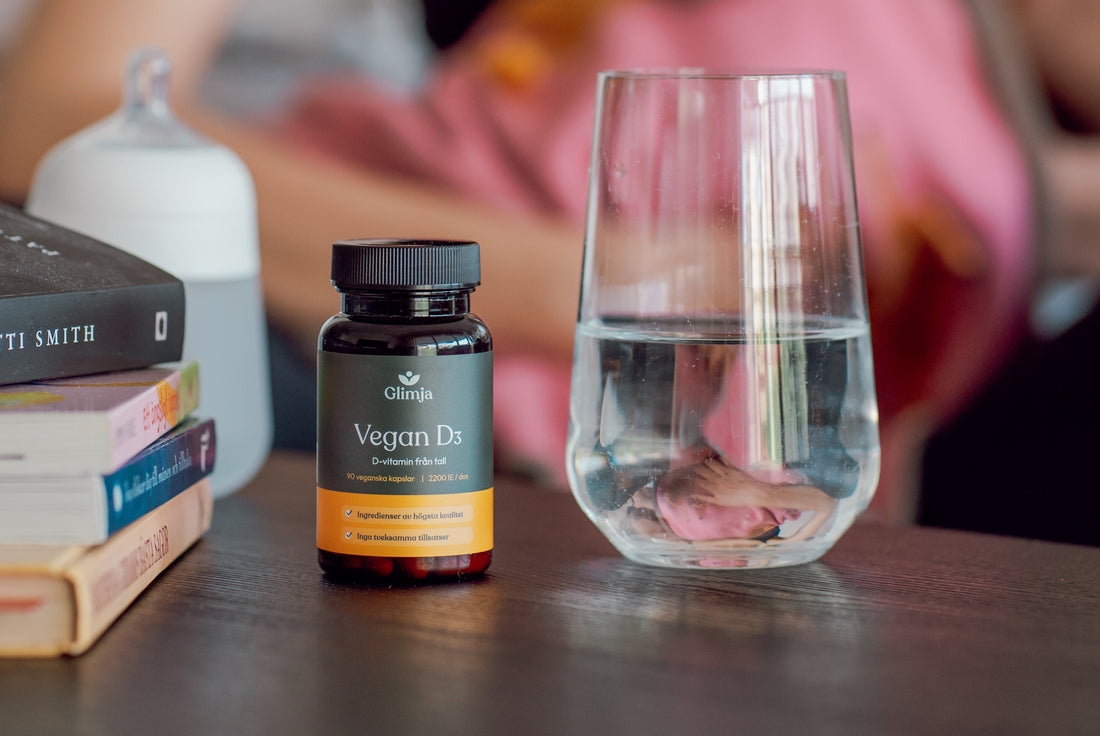
2. Vitamin D
During the winter months, you get no vitamin D at all from the sun. To get sufficient amounts of vitamin D through diet, you would need to eat fatty fish every day, drink 35 liters of milk daily, or eat 100 grams of chanterelle mushrooms every day.
3. Zinc
This is a rising star that is increasingly talked about during cold seasons. It is the second most common mineral in our body, after iron, and it is absolutely essential for our immune system.
Studies show, among other things, that zinc can shorten the duration of colds.(2) Zinc is mainly found in animal products such as beef, pork, and lamb.
4. Beta glucan
The substance 1,3/1,6-beta glucan, found on the surface of common yeast, helps neutrophils, which consume and kill viruses, to work better.
One of many studies on beta glucan showed that those who took a daily dose of 1,3/1,6-beta glucan during cold season had no sick days at all, in stark contrast to the control group.
5. Humic acid
Humic acids naturally occur in soil, water, peat, and coal. They bind to viruses and prevent them from attaching to the cell surface. If viruses cannot enter the cells, they cannot cause infection. (4)
6. Herbs
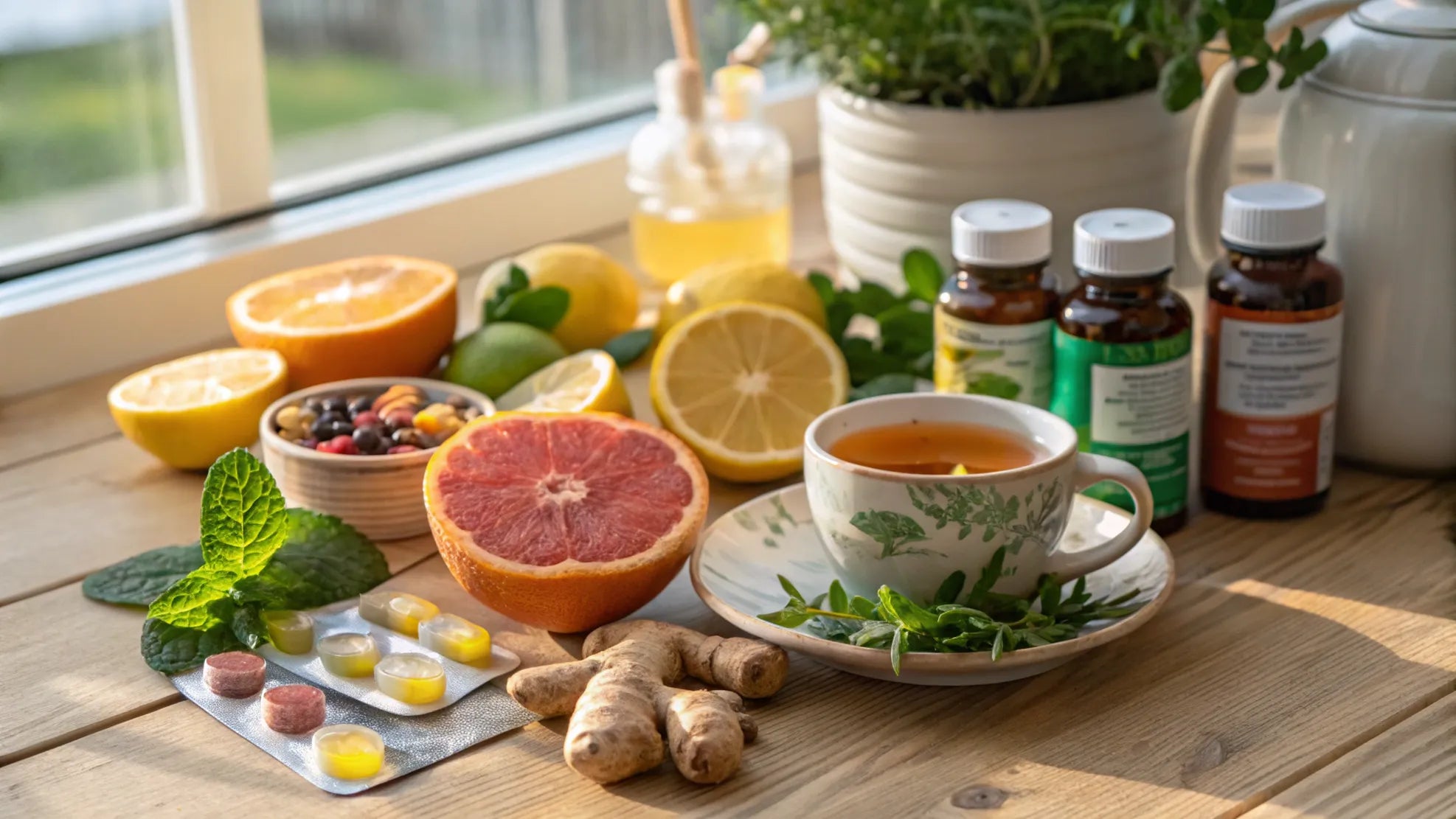
Traditional herbs for the immune system include ginger, oregano, olive leaf, pau d’arco, thyme, astragalus, and garlic.
Holistic ImmunBalans – brightening up the autumn
Holistic ImmunBalans is a dietary supplement that includes, among other things, Wellmune®, a patented 1,3/1,6-beta glucan that studies show activates the immune system.
ImmunBalans also contains vitamins C, D, and B6 as well as zinc, copper, and selenium, all of which contribute to the normal function of the immune system.
Read more
(1) www.ncbi.nlm.nih.gov/labs/pmc/articles/PMC7352522/
(2) Zinc for the treatment of the common cold: a systematic review and meta-analysis of randomized controlled trials Michelle Science, Jennie Johnstone, Daniel E. Roth, Gordon Guyatt, Mark Loeb CMAJ Jul 2012, 184 (10) E551-E561; DOI: 10.1503/cmaj.111990
(3) The research article by Feldman in Volume 9, Issue 1 of the Journal of Applied Research in Clinical and Experimental Therapeutics.
(4) de Melo BA Humic acids: Structural properties and multiple functionalities for novel technological developments. Mater Sci Eng C Mater Biol Appl. 2016 May;62:967-74