In the past, fermentation was a natural preservation process that made food last longer.
Additionally, it gave us a healthier gut thanks to the beneficial probiotic bacteria found in fermented foods.
You can ferment both vegetables and drinks. In this article, I share my three favorite recipes, and if you want more recipes and guides for fermentation, you can read more on my blog Morotsliv.se.
It’s incredibly easy to ferment and pickle vegetables in glass jars. Especially the jars from Weck.
They are made of soda-lime glass that can be both dishwasher safe and freezer safe. Weck preserving jars have a wide opening, making them easy to fill, empty, and clean. The glass lid and natural rubber seal make it easy to check the seal after preserving.
Preserving is easier than you think, it’s fun, satisfying, and you save money by doing it yourself. Make sure hands, tools, and jars are well cleaned before you start.
Here are my three favorite recipes:
Fermented sauerkraut
The easiest thing you can ferment is white cabbage, which naturally contains starter culture and is hard to fail with.
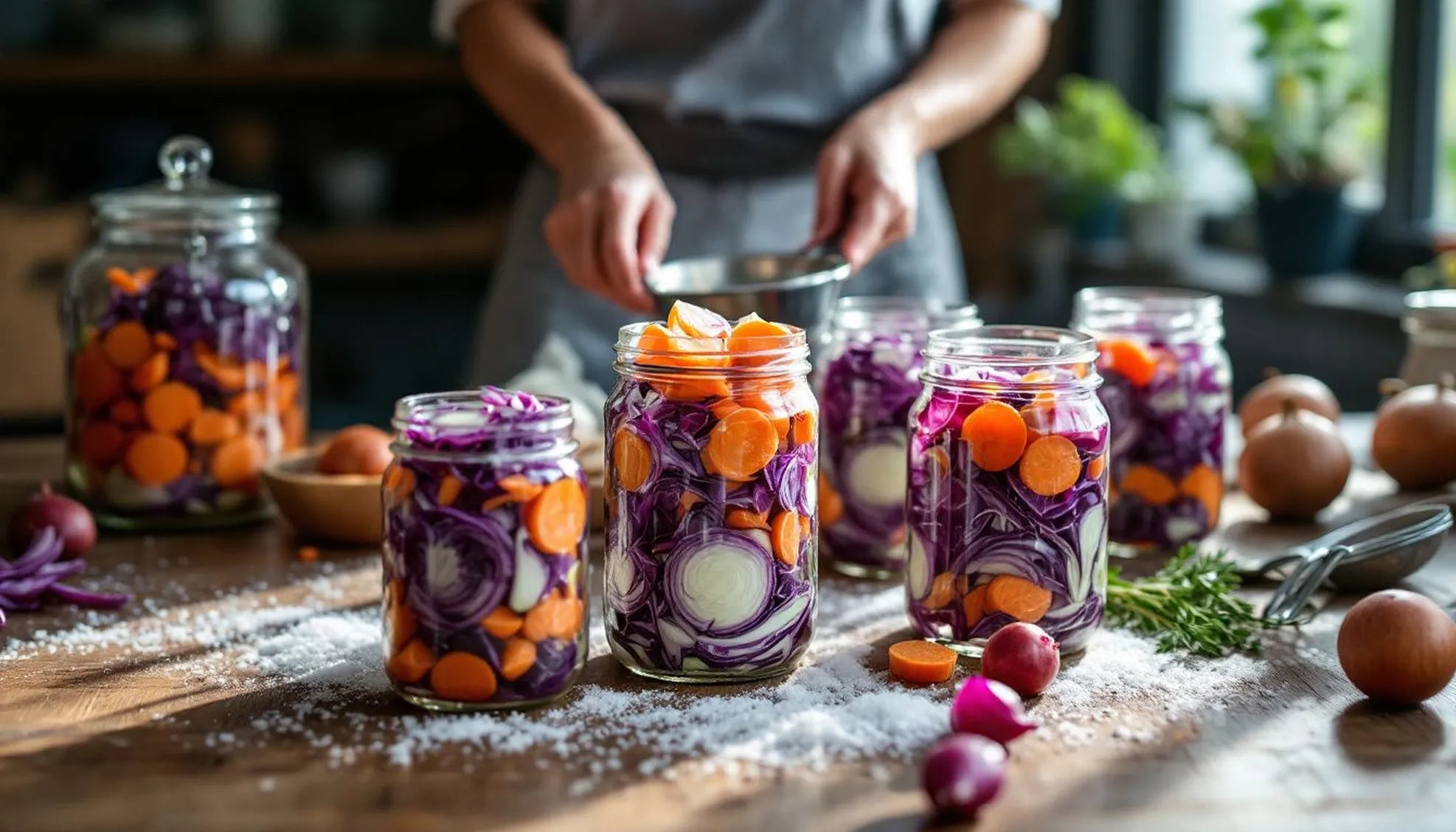
Once you’ve learned the process, you can try adding carrot, red cabbage, lingonberries, cauliflower, spices like fennel, and so on. The more batches you make, the more you can vary the ingredients as you get comfortable with the process.
Ingredients
- 1 white cabbage head
- 1 tbsp sea salt without additives
You need
- 1 Weck Jar preserving jar 850 ml
- Cutting board
- Knife
Instructions
- Remove the outer leaves if needed. A cabbage head usually does not need to be rinsed.
- Cut and shred the head. Remove the hard "core" and grate it finely. The core is rich in minerals and provides a more stable fermentation.
- Mix the white cabbage with a little salt at a time (about one tablespoon per cabbage head). Knead and press it until a lot of liquid has formed and the cabbage has softened.
- Fill a glass jar with the cabbage and liquid, pressing the cabbage down firmly with your fist so that the liquid covers the cabbage.
- Tighten the jar lid so that no air can enter, which would spoil the fermentation.
- Let the glass jar stand at room temperature for 3 days and then in a cool place at about 15-18°C for 3 weeks.
- Let it stand for another month in the fridge, then you can divide the sauerkraut into smaller jars if you want.
The cabbage keeps for about 1.5 years if you keep it sealed in the original jar. If you open the jar and divide the finished sauerkraut into smaller jars, it keeps for about 4 months instead.
If you want, you can flavor the sauerkraut with caraway, juniper berries, lingonberries, onion, red cabbage, carrot, or apple, but it’s just as good without.
Tip! Always trust your sense of smell if anything in the process deviates from the plan.
Quick-pickled carrots
Ingredients
- 4-5 large carrots
- 1 tbsp sea salt without additives
- 1 liter water
You need
- 1 Weck Jar preserving jar 850 ml
- Grater
- Saucepan
- Cutting board
- 1-liter measure
Instructions
- Boil 1 liter of water and dissolve 1 tablespoon of salt in the water.
- Let cool to room temperature (max 35 degrees)
- Peel and coarsely grate the carrots.
- Pack/press the carrots into the glass jar.
- Pour the saltwater so the carrots are covered.
- Press down the carrots and tap the jar to remove any air bubbles.
- Tighten the lid so no air can get in.
- Let the jar stand at room temperature for 3 days.
- Smell the carrots. They should smell tangy and fresh.
- Place the carrots in the fridge for a couple of days.
- Taste the carrots. They should have a tangy flavor reminiscent of sauerkraut.
The fermented carrots keep in the fridge for several months.
Pickled red onion
This is so delicious and a recipe with less sugar than traditional ones. You can also replace the sugar with xylitol or another natural sweetener, or skip it entirely.
Ingredients
- 3-4 red onions
- 1 dl vinegar spirit
- 1 dl organic sugar
- 3 dl lukewarm water
You need
- 1 Weck Jar preserving jar 850 ml
- Food processor or knife
- Cutting board
- Measure 0.5 liters
- Saucepan
Instructions
- Peel the red onion.
- Slice the red onion thinly with a knife or in a food processor.
- Put it in a well-cleaned preserving jar.
- Mix vinegar, sugar, and lukewarm water. Stir until all the sugar has dissolved.
- Pour the brine over the onions.
- Place in the fridge until the next day.
The onion tastes best within a week, but it keeps for up to a month in the fridge.
Are you an expert in pickling or fermenting and have great tips and tricks for the rest of us? Feel free to share in a comment or ask a question!