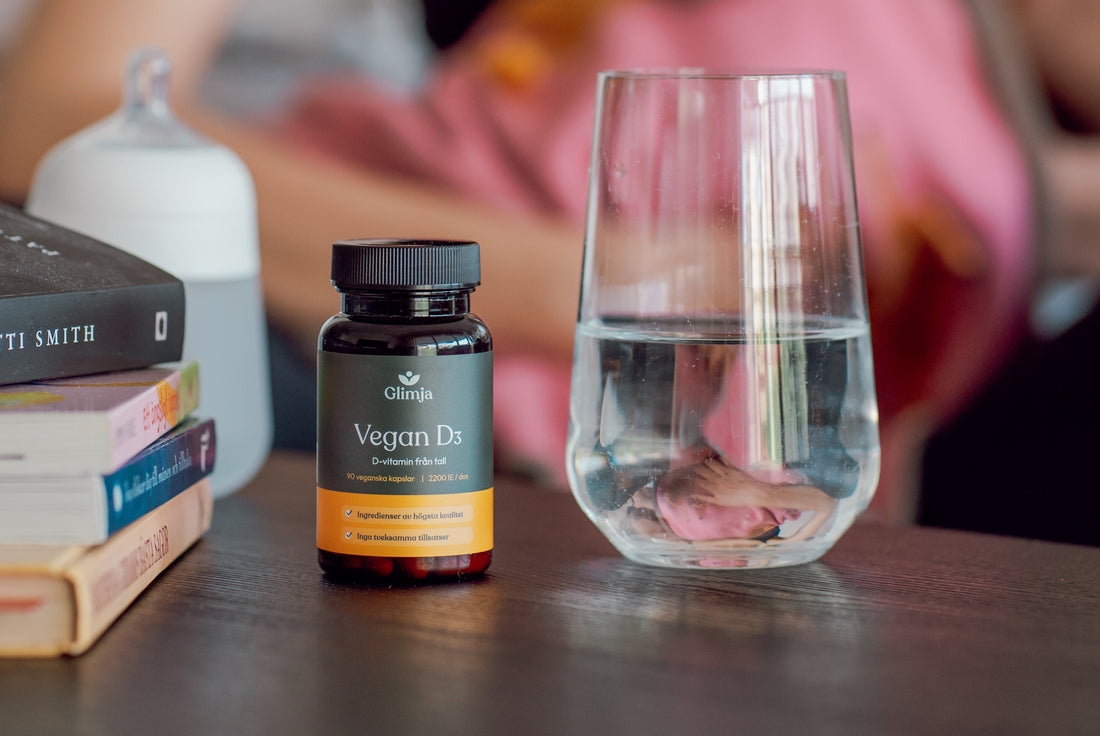
Vitamin D is a fat-soluble vitamin found only in small amounts in certain foods. Vitamin D is essential not only for healthy bones and teeth but also for muscle growth and strength, a healthy heart, lungs and brain functions, healthy skin, and a healthy immune system.
Did you know that vitamin D also remarkably affects our mood and skin? A deficiency in vitamin D can cause fatigue, low mood, aches, pain, immune system problems, and skin issues.
What vitamin D contributes
- for the normal function of the immune system.
- to maintain normal bone structure.
- to maintain normal muscle function.
- to maintain normal teeth.
- for normal absorption/utilization of calcium and phosphorus.
Two main types of vitamin D
Vitamin D3
Vitamin D3, cholecalciferol, is what is produced when our bare skin is exposed to direct sunlight. Cholecalciferol is ready for our body to absorb, metabolize, and use. So it is immediate goodness.
Vitamin D2
Vitamin D2, ergocalciferol, is like the analog version of vitamin D. So there is a complex process that must take place in the body for ergocalciferol to be ready for the body to use. That is why many researchers and medical experts agree that vitamin D2 is actually not very useful for our body.
How we get vitamin D
There are two main ways to get vitamin D; through supplements and through exposure to direct sunlight.
Sunlight
Many know that the sun's rays help us feel good in many ways; one reason is that sunlight helps us produce vitamin D. In a clever process that sets it apart from many other vitamins, your body actually produces its own vitamin D. This happens when your bare skin is exposed to the sun's UVB rays. The problem is that in our climate, we do not get enough concentrated UVB rays year-round.
- A general recommendation is to spend 10-15 minutes daily in direct sunlight, without sunscreen, if you have light to medium skin tone.
- If you have dark skin, you probably need more time in the sun to produce enough vitamin D, about 40 minutes daily.
How vitamin D is made in the body
- The body converts sunshine into chemicals that are then used by the body. When UVB rays hit the skin, a substance in the skin called 7-dehydrocholesterol literally turns into vitamin D3 (the more active form).
- 7-dehydrocholesterol or the cholesterol in our skin converts "previtamin D" into usable D3.
- Previtamin D first passes through the kidneys and liver in the bloodstream and is then converted into calcitriol.
Who has more difficulty producing vitamin D from the sun?
- People who work indoors.
- People who have covered skin.
- People who always use sunscreen.
- People living in areas with less sunlight.
- People with darker skin tones (it takes longer).
- Older people.
- Pregnant women.
Dietary supplements
Taking a vitamin D supplement can be helpful for many people, especially during the winter months and for those who cannot spend time outdoors most days.
Winter and early spring are the times of year when we have the lowest levels of vitamin D in our country, and then a good supplement can be essential.
Vitamin D3 for supplements is extracted either from sheep’s wool or from a vegetable lichen. Both are effective and good sources of active vitamin D3. The one from lichen is a plant-based option suitable for both vegetarians and vegans or those who do not want vitamin from sheep’s wool. Always choose supplements with the form D3 / cholecalciferol; we only sell that type.
Suggested dosage of D3
- Adults: 1000 – 2500 IU daily or 5000 IU every other day during spring, autumn, and winter.
- Children under 12 years: 500 – 1000 IU daily depending on age.
Can you take too much vitamin D?
“Vitamin D toxicity” (when you have taken too much vitamin D) is considered very rare, but it can happen when someone takes very high doses, for example more than 10,000 IU of vitamin D per day for several months.
When a person's blood level becomes abnormally high, side effects of vitamin D can include symptoms of hypercalcemia, digestive problems, diarrhea, and fatigue.
Can you get vitamin D from food??
Vitamin D is found in some fatty fish, wild mushrooms exposed to sunlight, and egg yolk. However, it is difficult to get enough through diet alone, so we need sunlight.
Vitamin D with vitamin K2
Vitamin K2 is another fat-soluble vitamin that plays a crucial role in blood clotting, regulation of calcium metabolism, and maintaining bone health.
Vitamin D combines well with vitamin K2 because vitamin D helps increase the body's ability to absorb calcium from the diet, while K2 mainly works by using and moving calcium to our bones and teeth, where calcium should be.
Vitamin K2 redirects calcium from soft tissue to the skeleton, balancing calcium levels in the blood and helping to significantly reduce the risk of calcium deposits in arteries and other soft tissues.
If you take mega doses of vitamin D and at the same time lack vitamin K2 in your body, calcium deposits can form in soft tissues, which is not good. Vitamin D toxicity is rare, but when it occurs, it can be due to a deficiency of vitamin K2.
It is therefore beneficial to take a supplement with both D3 & K2. or use a multivitamin-mineral as a base regardless of what other supplements you take.
Do you have questions for us? Please feel free to contact us by email.