I love sea salad, seaweed, saltwater algae. Yes, a beloved child has many names. They are incredibly rich in nutrients and can be used both in cooking and baking. I have even dedicated an entire blog post where I have gathered all my favorites on Morotsliv.
Dulse
One of these favorites is dulse, or Palmaria palmata in Latin and söl in Icelandic. It is a red algae that stands out quite distinctly from other algae due to both its color and taste.
Properties
As you may know, algae are very nutrient-rich, and dulse is no exception. Dulse contains a lot of fiber and protein and is rich in vitamins, trace elements, healthy fatty acids, and antioxidants. Dulse is actually said to contain the most iron of all algae and has high levels of iodine and potassium. Dulse contains alginic acid, which can bind heavy metals in the body and acts as a natural detox. Dulse has been shown to be anti-inflammatory, antiviral, and antithrombotic.
Dulse has 20–50 centimeter long fern-like leaves with a deep pink or reddish-purple color. It grows on the northern coasts of the Atlantic and Pacific Oceans. It is common that the dulse we can buy here comes from the clean waters of Iceland or the Faroe Islands. Dulse is commonly found from June to September and can be hand-harvested at low tide.
Dulse in Cooking
It can be used raw, cooked, soaked, or dried. When dried, it has a leathery texture and becomes soft and slippery when soaked. It has a slightly nutty, smoky flavor of salty licorice, violet, umami, a bit of acidity, and a scent of the sea.
When we think of seaweed and algae, we often think primarily of Japanese cuisine, but dulse has long been used in cooking in Ireland, Scotland, and France, where it is eaten raw with fish and potatoes. It is used, for example, as a flavoring in ice cream, cream cheese, and bread and can also be bought in tablet form as a dietary supplement.
Fresh dulse can be eaten directly before drying, and in Iceland, there is a tradition of eating it with butter. Dulse can be used as vegan bacon if you fry or deep-fry the algae, and it can also be fried into chips or baked in the oven, preferably with cheese on top. It also adds depth to creamy rice dishes like risotto and paella.
You can also bake bread with dulse. For example, the Irish “White soda bread” contains dulse. Or make desserts with chocolate or bake a sticky chocolate cake with dulse. Dulse can also be used in soups and salads or as a topping on bread.
Finely chopped, the algae works as a flavor enhancer thanks to its rich umami taste. You can sprinkle it on any dish.
Preparation
Most algae should be soaked before cooking, often for at least 20 minutes, so they swell. Some can swell up to 10 times their dried size. If the algae is too salty or contains sand, it should be rinsed clean with cold water.
Red algae, such as dulse, can be boiled whole or chopped into pieces. Fresh or soaked, it keeps for about a week in the refrigerator.
Dulse can also be eaten dried, usually as flakes or powder sprinkled on salads or sandwiches. It also works as a flavoring and coloring for butter, soups, hummus, dips, dough, stews, etc.
Dried dulse pieces can also be eaten as chips or cocktail snacks.
Sticky Chocolate Cake with Dulse
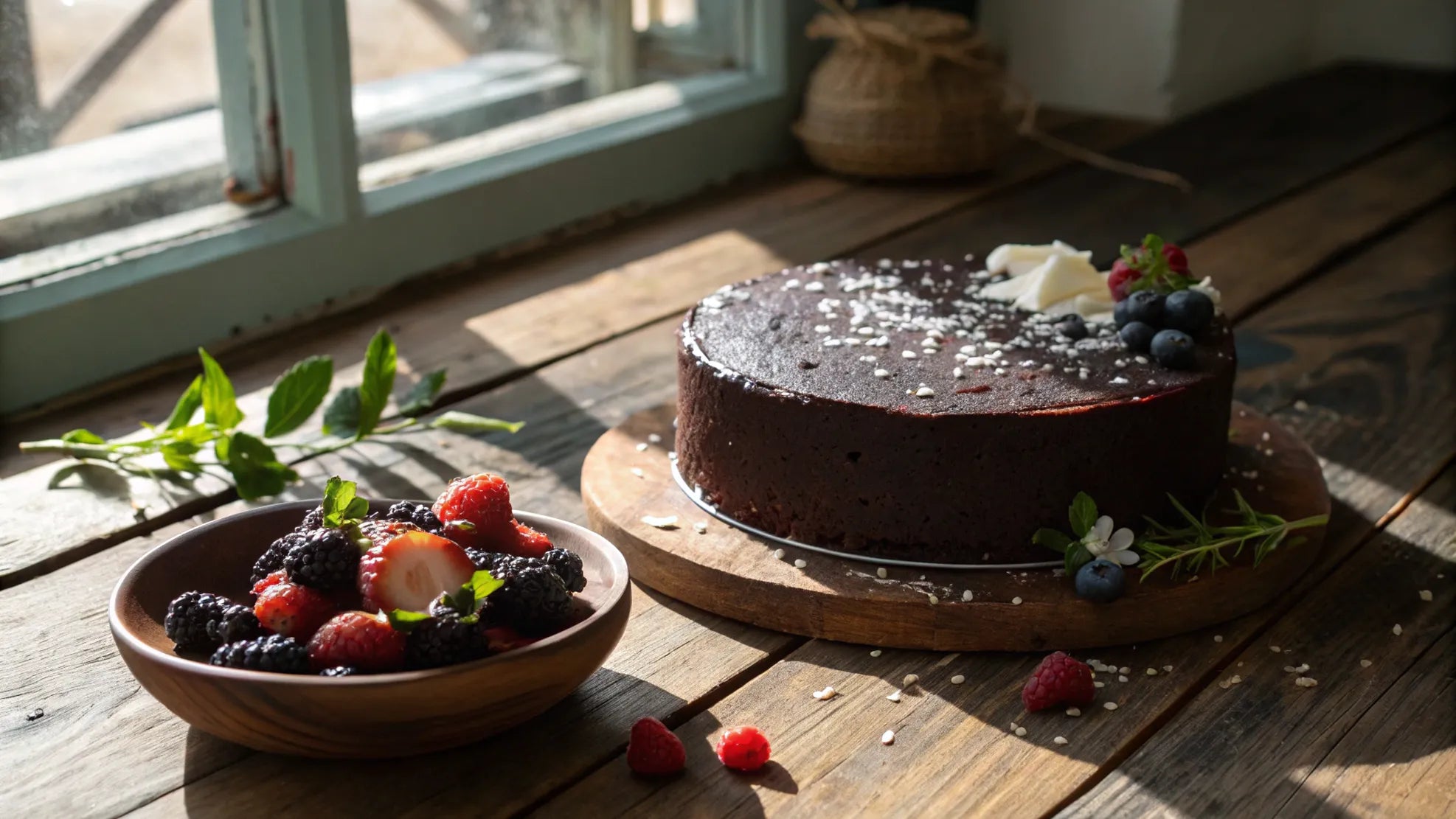
As mentioned, dulse can be used both in cooking and baking, and my absolute favorite is probably this sticky chocolate cake with dulse that makes my mouth water just thinking about it.
If you choose coconut oil instead of butter, you get a vegan version, and for a gluten-free version, you can use gluten-free flour mix.
Recipe:
- 150 g butter or coconut oil
- 1.5 dl water
- 2 tbsp agave, sukrin, or fiber syrup
- 2 dl granulated sukrin, raw sugar, or other sweetener of choice
- 3 dl sifted spelt flour or gluten-free flour mix
- 1 dl raw cocoa powder
- 0.5 tsp vanilla powder
- 1-2 tsp dulse flakes
- 1 pinch sea salt
- Coconut oil or butter and cocoa powder for the pan.
Instructions:
- Preheat the oven to 175°C.
- Grease the pan (about 20 cm in diameter) with coconut oil or butter and cocoa powder.
- Melt the fat with syrup and water.
- Mix the dry ingredients in a bowl.
- Combine the dry and wet ingredients.
- Pour the batter into the pan and bake in the oven for about 30 minutes, depending on how gooey or firm you want it.
- Let it cool in the refrigerator for a couple of hours before serving.
- Eat with coconut cream, coconut chips, fresh berries, and decorate with dulse flakes.
Good luck!