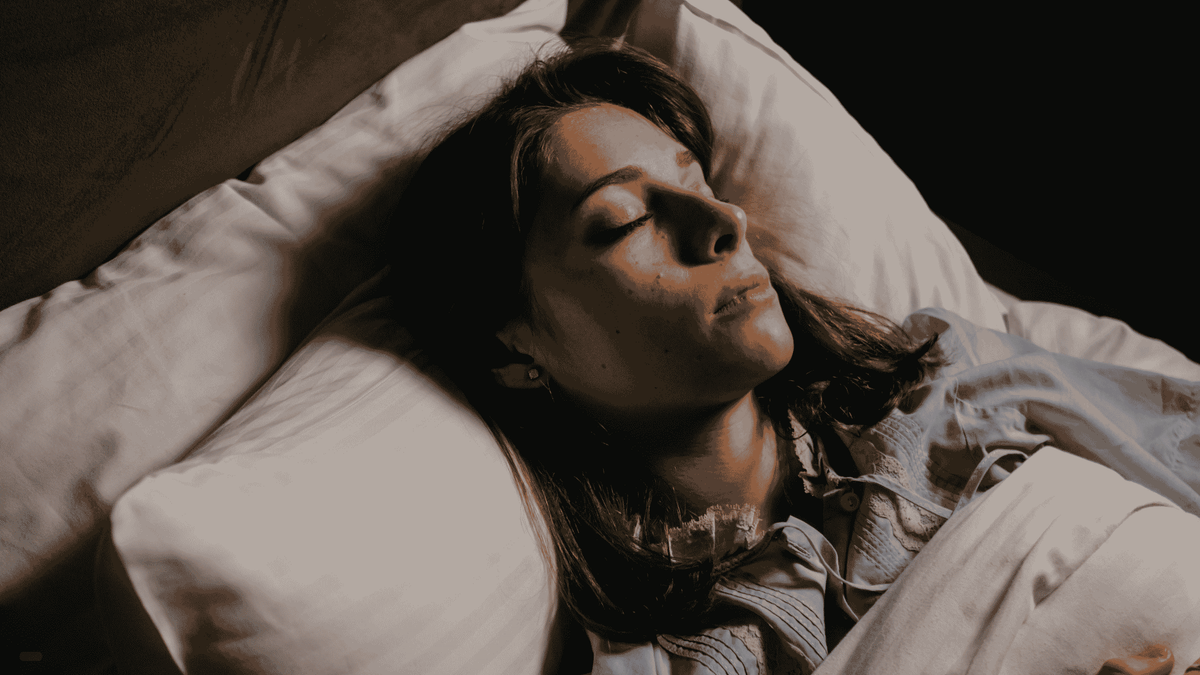
You can sleep through the whole night and still wake up without feeling fully rested. Good sleep is about more than the number of hours. While you sleep, the brain cycles through different sleep stages, with both deep sleep and REM sleep playing important roles. But what exactly sets them apart, and does it matter how much of each you get?
When you sleep, much more happens than you might think. For example, did you know that your different sleep stages each have their own specific functions? Some parts of sleep are closely linked to the body's physical recovery, while others help you process memories, emotions, and things you experienced during the day.
And these sleep stages are not distributed evenly throughout the night. So when you sleep can therefore affect what kind of sleep you get, which is one reason why both the number of hours and sleep quality matter when it comes to whether you wake up feeling refreshed or not.
What is the difference between deep sleep and REM sleep?
During the night, the brain cycles between light sleep, deep sleep, and REM sleep several times. A sleep cycle often lasts around 90 minutes, and the different sleep stages contribute to your recovery in different ways.
Deep sleep is also called N3 and is characterized by slow brain waves. During this stage, we are harder to wake, and the body is in a state that is important for physical recovery. Among other things, your body releases growth hormone, which helps build and repair tissue, maintain muscles, and regulate how the body uses fat as energy.
But deep sleep is also important for the brain. During this stage, certain memories are processed and strengthened, while the brain's neural connections undergo changes that help you take in new information the next day.
REM sleep, named after the rapid eye movements, looks completely different. The brain is highly active, you often dream vividly, and most of the body's skeletal muscles are temporarily inhibited so that you do not act out your dreams.
REM sleep is linked to, among other things, emotional processing, learning, and memory. Research suggests that it helps the brain process emotionally charged experiences, although other sleep stages also contribute.
Why do we get more deep sleep at the beginning of the night?
As we mentioned earlier, the different stages of sleep are not evenly distributed throughout the night.
Periods of deep sleep are most dominant during the first sleep cycles, when sleep pressure is high after all the waking hours of the day. The longer you have been asleep, the shorter and less prominent periods of deep sleep usually become.
However, REM periods become longer toward morning. This is partly because sleep pressure gradually decreases during the night, and partly because your circadian rhythm makes the brain more likely to enter REM sleep during the latter part of the night.
In other words, they contain the first and last hours of the night often consist of quite different types of sleep.
What happens if you go to bed late or sleep too few hours?
Imagine that you usually sleep from 10:30 p.m. to 6:30 a.m., but one evening you do not get to bed until 1:00 a.m. and still need to get up at the same time. You then lose several hours of sleep, but you do not necessarily lose equal amounts of each sleep stage.
The body tends to prioritize deep sleep when sleep pressure is high, while a shortened night may mean that you miss out on some REM sleep, which normally gets more time toward morning.
If, on the other hand, you go to bed later and sleep longer in the morning, you can still get the hours you need. But if your sleep schedule shifts significantly or varies from day to day, it can affect your circadian rhythm and, consequently, the quality of your sleep.
Can you influence the amount of deep sleep and REM sleep?
Yes, to some extent. You cannot decide for yourself how much deep sleep or REM sleep you get, but you can influence the conditions for both.
-
Sleeping at regular times and getting daylight in the morning help keep your circadian rhythm in sync, while physical activity can improve the quality of your sleep and in some cases also increase deep sleep.
-
Giving yourself enough time to sleep is also important, since REM periods are normally longer toward morning. So if you often cut your night short, you may miss out on some of that REM sleep.
- Alcohol can also alter the distribution of sleep. It often makes it easier for you to fall asleep, but can at the same time delay the first REM period and reduce the amount of REM sleep. As the alcohol is then broken down during the night, sleep can become more restless, and you may wake up more easily and more often. You may therefore have slept for many hours but still had a less consolidated night.
And what about your sleep tracker (if you have one)? It can be useful for tracking sleep times and changes over time, but it does not measure brain waves in the same way as a sleep study. Therefore, it can be inaccurate when it comes to how much deep sleep and REM sleep you have actually had.
So which sleep phase is actually the most important? The answer is that both are needed, as they partly serve different functions that are important for your recovery. The best thing you can do is therefore give your body the best possible conditions to go through all its natural sleep cycles and phases, from beginning to end.
Do you have trouble falling asleep or winding down in the evening? Here you’ll find supplements for both adults and children that can help promote sleep and relaxation.
Sources:
- Lutz, N. D., Harkotte, M. & Born, J. (2026). Sleep’s contribution to memory formation. Physiological Reviews.
- Crowley, R., Alderman, E., Javadi, A.-H. & Tamminen, J. (2024). A systematic and meta-analytic review of the impact of sleep restriction on memory formation. Neuroscience & Biobehavioral Reviews.
- Franken, P. & Dijk, D.-J. (2024). Sleep and circadian rhythmicity as entangled processes serving homeostasis. Nature Reviews Neuroscience.
- Van Cauter, E. & Plat, L. (1996). Physiology of growth hormone secretion during sleep. The Journal of Pediatrics.
- Gardiner, C. et al. (2025). The effect of alcohol on subsequent sleep in healthy adults: A systematic review and meta-analysis. Sleep Medicine Reviews.
- Birrer, V., Elgendi, M., Lambercy, O. & Menon, C. (2024). Evaluating reliability in wearable devices for sleep staging. npj Digital Medicine.