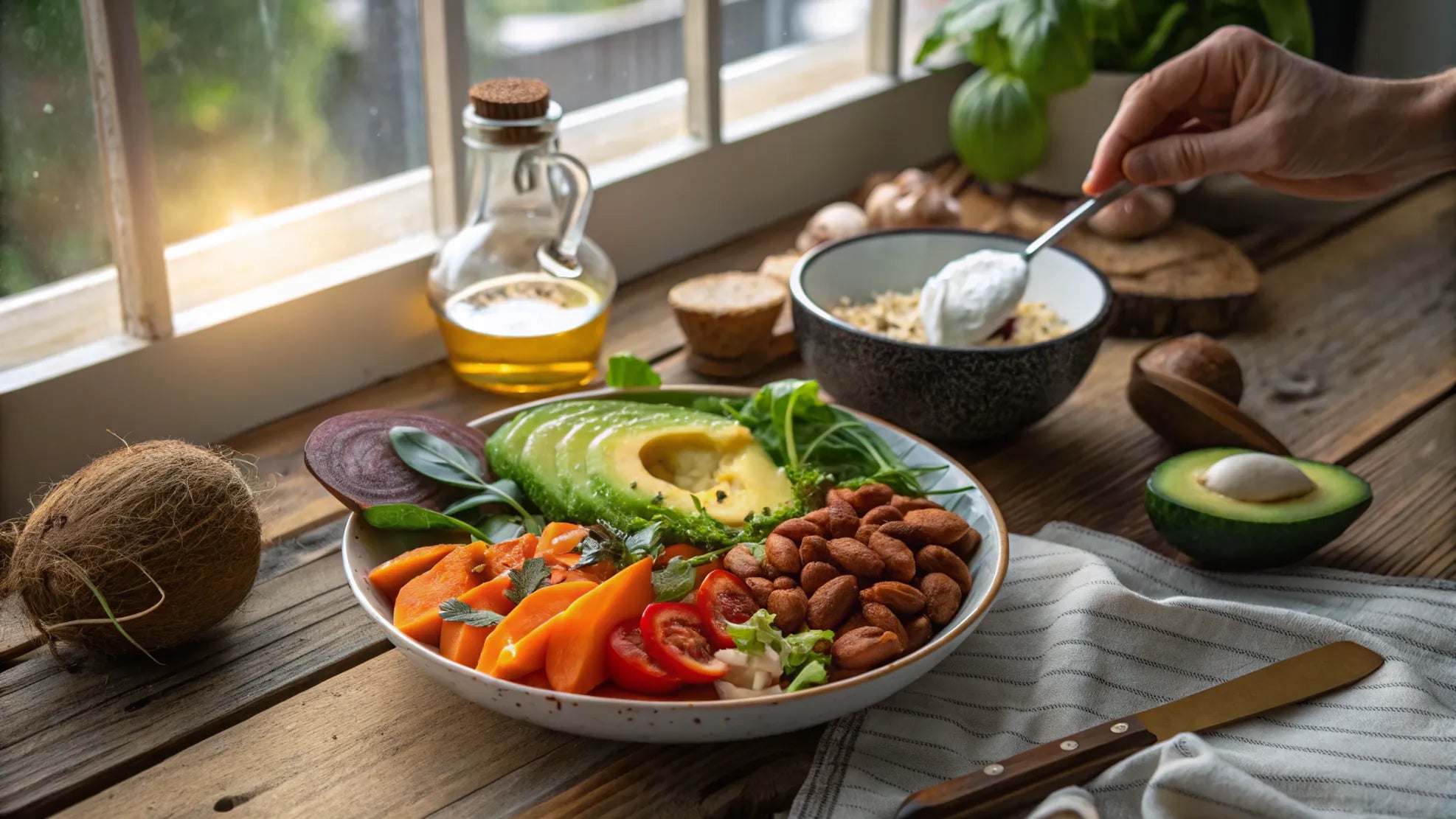
Ketogenic diet is a dietary approach aimed at shifting the body’s cells to burn fat as the primary energy source instead of carbohydrates. To achieve this, you need to eat a lot of fat, few carbohydrates, and a moderate amount of protein. It is perfectly possible to follow such a diet as both a vegan and a vegetarian, which we think is great. Many who have tried this report weight loss, improved mental clarity, freedom from sugar cravings, calmer digestion, softer skin, stabilized blood pressure, and better endurance during exercise. If you have high blood pressure, you should talk to your doctor first.
Article from Dr. Perlmutter on the keto diet:
Being on the ketogenic diet or “keto” is quite popular today and for good reason. Choosing dietary fat to fuel the body’s cells, as opposed to using sugar or carbohydrates, seems to have powerful health effects.
We know that when fat is used as fuel, instead of sugar or carbohydrates, there appears to be much less production of harmful free radicals. Additionally, it seems that a more ketogenic diet is actually associated with less inflammation, the cornerstone of some of our most challenging conditions.
When the body is adapted to a fat-burning program, in other words, “keto-adapted,” it means the body can mobilize fat and create molecules to fuel the body’s cells, called ketone bodies, the most important of which is beta-hydroxybutyrate.
New research recognizes the importance of beta-hydroxybutyrate as much more than just an efficient cellular fuel. It turns out that beta-hydroxybutyrate is actually a powerful modulator of gene expression. Beta-hydroxybutyrate changes the expression of our DNA, further reducing inflammation and improving the way we eliminate harmful free radical chemicals by increasing our production of antioxidants.
Eating 100% keto can be challenging for many. But at least moving in this direction and deciding to reduce your consumption of sugar and carbohydrates also yields very good health results.
One thing to remember, however, is that while it is indeed a good idea to reduce carbohydrates, you need a sufficient amount of prebiotic fiber in your diet, even though prebiotic fiber is considered a carbohydrate. By definition, your body will not use carbohydrates as a fuel source, but you will absolutely take care of your gut bacteria. When you make sure to add adequate amounts of prebiotic fiber, it is much less challenging to stay on the keto diet.
Article from Dr. Perlmutter on ketosis & caffeine:
When you wake up in the morning after 12 hours of fasting, your body is in a state we call mild ketosis. This means your body has shifted away from burning glucose as the sole fuel source and is now tapping into your body fat reserves. When a person is in ketosis, it is actually a very healthy state in terms of brain function.
For now, I want to focus on a common question about the effects of coffee consumption, or more specifically, caffeine intake, on either enhanced ketosis or not.
In a new study titled "Caffeine Increases Plasma Ketones: An Acute Metabolic Study in Humans," Canadian researchers evaluated the effects of caffeine intake in a group of 10 healthy volunteers. After fasting for 12 hours and then breakfast, these individuals were given either 1. no caffeine 2. about one cup of coffee or 3. 3 cups of coffee. Blood samples were then taken to evaluate not only caffeine levels over a four-hour period but also the levels of ketones produced in the liver from the release of body fat.
What the researchers found was really very interesting. Higher doses of caffeine in the 10 adults dramatically increased beta-hydroxybutyrate, one of the most studied ketones in terms of fueling the brain. The researchers found that the increase in blood ketones caused by caffeine intake was twice as high as what was observed after an overnight fast. It is important to know that this study is based on caffeine intake in its purest form.