In this article, we focus on the menopause phase leading into postmenopause. We write about what we women can prepare for, consider, and how we can support ourselves.
Menopause can last over a period of 5-10 years. The period can be divided into three phases: perimenopause, menopause, and postmenopause, which is one year after the last period.
Typically, menopause begins between 50-52 years. You can take blood tests (Estradiol and FSH) in consultation with a (private) gynecologist who also examines the ovaries and uterus if you want to be sure you are in menopause.
In any case, it is good to see a gynecologist you trust when menopause is approaching. Usually, you know without tests because your period has changed so markedly, often becoming irregular in both flow and timing.
During menopause, estrogen levels drop. About five years after the last period, the body's estrogen production has decreased to a steady and very low level. Neurotransmitters serotonin, noradrenaline, dopamine, and GABA are also affected. Some women experience few symptoms, some many, some none, and not everyone has the same symptoms.
Common symptoms:
- Hot flashes – the body's own thermostat, the hypothalamus, becomes unstable when estrogen levels decrease.
- Sudden sweating
- Weight changes
- Low mood
- Sleep disturbances
- Dry mucous membranes
- Urinary tract problems
- Dry skin and dry hair
- Decreased sex drive
- Joint pain
- Constipation
- Palpitations
- Fatigue
This is affected by how you have lived before menopause begins. If you have not had optimal conditions before to take care of yourself, it is always possible to start now! The body is amazing and can recover with the right help.
Is menopause just difficult?
No, absolutely not. It sounds less pleasant when reading all these symptoms, but menopause can be a joyful and insightful period in life if you get support and take care of yourself.
We are now older and the body changes. This can be difficult for many as society places great emphasis on age and appearance.
If we are also going through a divorce or another grief, we may question a lot. We see that our possible children have grown up and live their own lives, and our parents are getting older.
It is a period that shows the transience of life which needs to be embraced and accepted. We often get more time for introspection and reflection. Who am I and what do I want in this "new" part of my life?
How can we support ourselves during this transition phase?
First, we should remind ourselves that this is not a static period, and we can influence it through good choices and by taking care of ourselves on all levels. There is much we can do!
1. Social support
We may need to talk to a therapist or similar to understand our feelings. Healthy relationships and social support are essential. It is a key to feeling well.
Being close to a partner, friends, and family for warmth and connection makes life easier. We women also need each other to understand ourselves and reflect on our inner lives. We cannot share everything with a male partner; we can share a lot, but not everything, so sisterhood is especially important during this period.
"The wise woman"
Now is our chance to claim "the wise woman"* within us. She who is mature, emotionally balanced, and can stand in female leadership.
She who can distinguish "bullshit" from truth.
*The archetype of the wise woman exists in many cultures and religions. She is often seen as a powerful and wise figure who can help and guide others. If we look up the word wisdom, it means "someone who has experience, knowledge, and good judgment."
2. Reduce & manage stress
Stress increases and worsens any symptoms. If you have had chronic stress before entering menopause, the symptoms can worsen because hormone production is affected by stress.
Many women in menopause feel they can no longer handle stress at all. Instead of seeing this as something negative – "that you should be stress-resistant" – we should see it as something positive, that we start standing up for ourselves, saying no, taking it easier, making good choices.
Things that help counteract stress include walks in nature, sunshine, yoga, dancing, relaxation exercises, massage, meditation, listening to audiobooks, rest, calm music, closeness, bathing, and so on.
Remember that good sleep is also very important.
3. Healthy diet
Diet is always important but perhaps even more so as we get older.
You can choose anti-inflammatory food or a Mediterranean diet as a base; the main thing is to focus on pure, genuine ingredients. Eat vegetables in all colors, fruit, berries, sprouts, good fiber, good protein like fatty fish, shrimp, sardines, beans, lentils, quinoa, etc. Eat like a rainbow on your plate.
Consume good fats such as avocado, cold-pressed olive oil, and Omega 3. Remember that fat and protein are especially important for women to support their hormones.
Reduce or eliminate red meat, processed foods, white sugar, fried foods, soda, all light products, bad fats like sunflower oil, and gluten. Be careful with coffee and alcohol; consume in moderation.
Choose organic whenever possible.
4. Physical activity
Exercise something you really enjoy. It supports not only physical health but also mental health, as dopamine and serotonin are released during exercise. After a workout, you feel uplifted and happy.
Many women with hot flashes, which is the most common menopausal symptom, find that exercise significantly relieves the symptoms. Even intense cardio training has a good effect on sweating.
Exercise is also very important to prevent future osteoporosis.
5. Meditation / Mindfulness
We highlight this as a separate point because we think it is essential. To look inward, manage emotions, and learn to sort experiences and impressions.
Meditation doesn't have to be a complicated technique that takes ages to master; it can be as simple as sitting on a rock outside and looking at a tree.
Meditation is not about "doing something" but about allowing.
It's about giving yourself time to understand yourself deeply, to relax, and how to be present with that. In this way, we can gain understanding of human true nature and become better at communicating with others.
6. Supplements & herbs
Supplements to consider that help
- Probiotics. To support the body's microbiome, gut health, and digestion. Gut health is the foundation of all health.
- Omega 3 is important for healthy hormone function and to counteract inflammation in the body.
- Magnesium helps us relax. Best taken in the evening.
- Vitamin E is an antioxidant that counteracts inflammation.
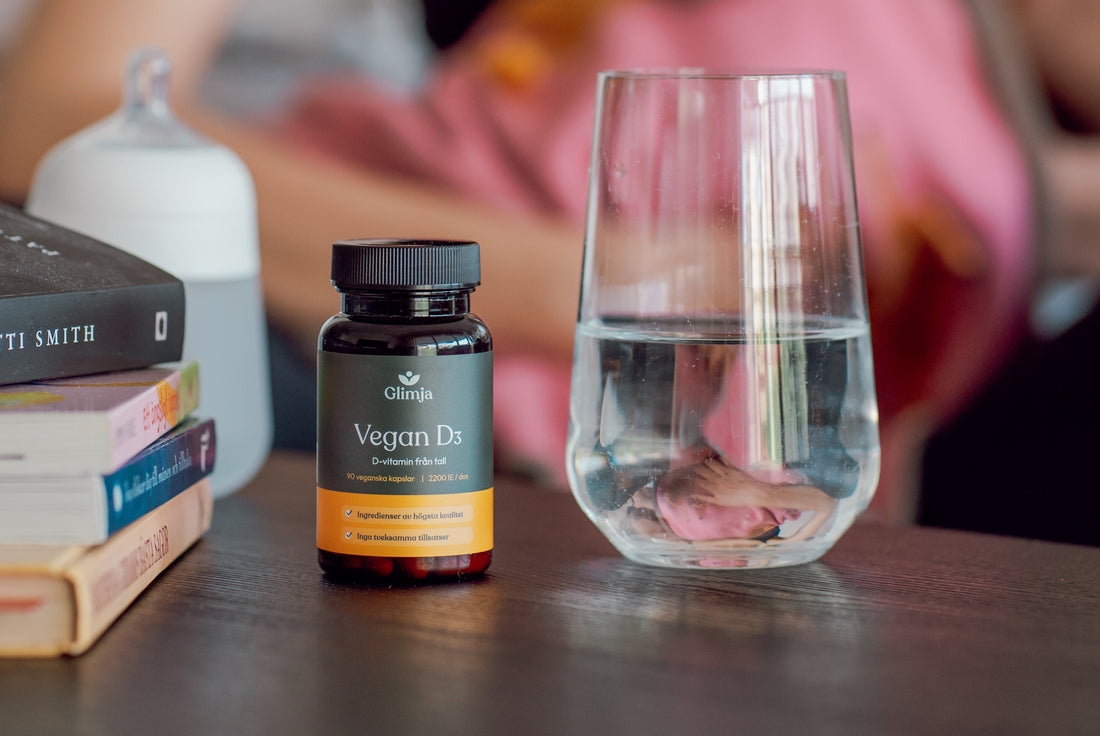
- Vitamin D for the immune system.
- B vitamins are very important for many different functions in the body, including effective estrogen metabolism in the liver.
- Vitamin C supports the immune system and collagen formation.
- Selenium – a potent antioxidant that contributes to both normal thyroid function and immune system support.
- Q10 plays an important role in producing energy in the cells' power plants, the mitochondria, and supports the heart. Q10 decreases as we age.
Extra supplements during certain periods
- Holistic has a great product called FemmePaus.
- Calcium-D-Glucarate*
- 1-2 herbs or medicinal mushrooms
- proteolytic enzymes
What does Calcium-D-glucarate* do?
- Calcium-D-glucarate supports liver function and detoxification processes, helping to eliminate excess estrogen and toxins from the body.
- They help regulate estrogen metabolism by inhibiting the enzyme beta-glucuronidase, which potentially reduces the risk of hormone-related conditions.
Proteolytic Enzymes
If you have body pain, proteolytic enzymes (such as protease, bromelain, papain, nattokinase) are well worth trying. The enzymes bromelain and papain have been shown to have anti-inflammatory properties. They can help reduce swelling and pain in conditions such as joint inflammation and arthritis.
Tips:
Get blood tests through, for example, Blodkollen or Werlabs to check your status on folic acid, B-12, vitamin D, zinc, magnesium, heart health, liver health, kidney health, etc. It is well worth getting a blood test every year to keep track of yourself.
You can read more about supplements for women.
Herbs
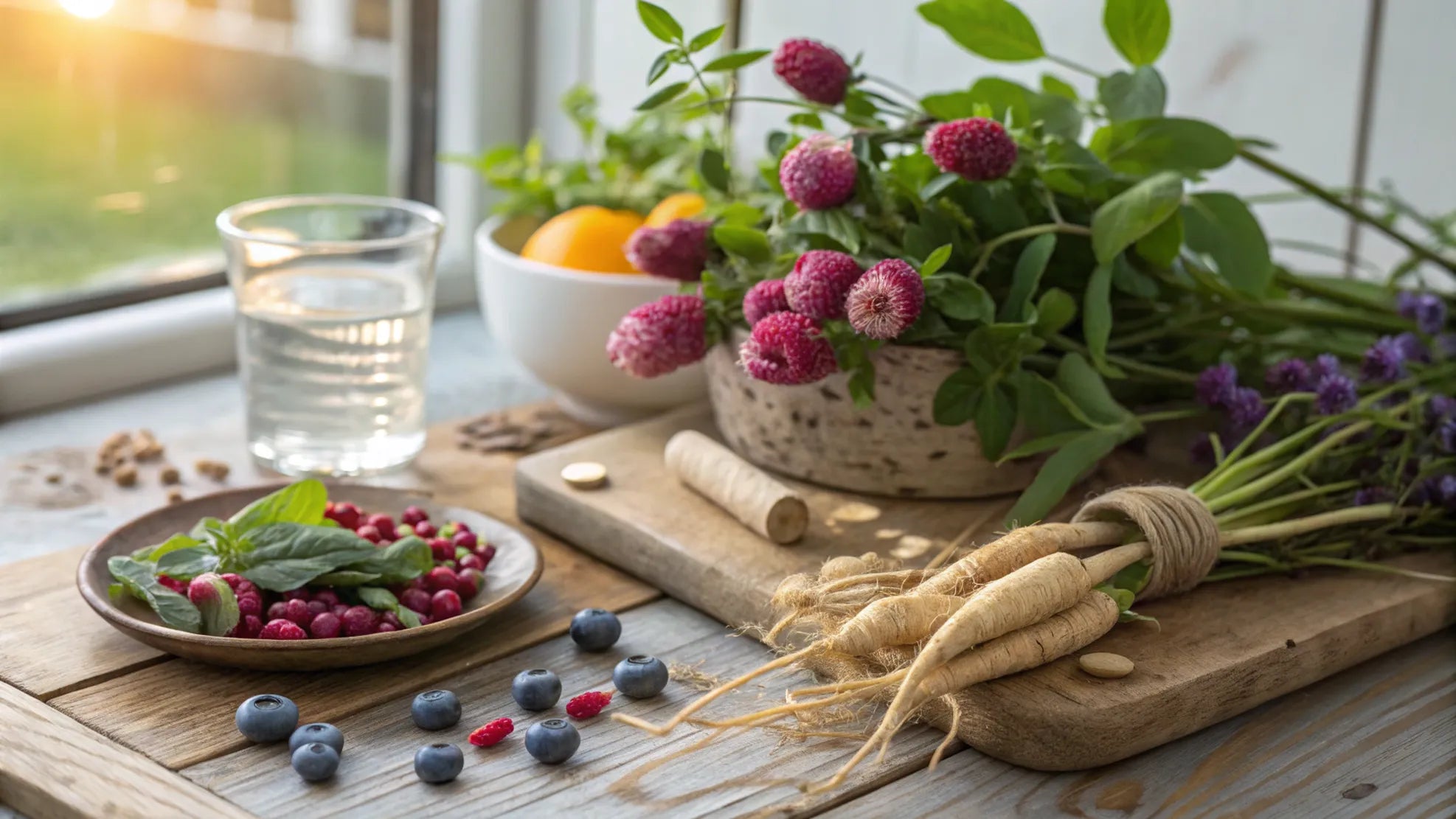
- Red clover is an herb that has helped many, even with hot flashes, so it is worth trying.
- Other popular herbs are ashwagandha, lemon balm, and chaste tree berry.
- Maca can also give good results, as well as reishi or tulsi.
- This mushroom provides an enormous amount of antioxidants.
When it comes to herbs, you need to experiment and see which supports you best; it is quite individual.
You can explore information about herbs to learn more.
7. Hormone Therapy
Do I need hormone therapy? Maybe, it is a choice every woman should consider; if you have troublesome menopausal symptoms, it can provide support.
It may be the only way to manage certain symptoms for a period if you have already changed your diet and lifestyle and that is not enough.
Many may feel down, think they are depressed, and seek care for it, but remember that it could be hormone imbalances, and as a woman in menopause, you should try hormone therapy before agreeing to possible psychotropic medication.
For hormone therapy, we recommend choosing bioidentical hormones once menstruation has ended. Then you receive transdermal treatment via estrogen patches or estrogen spray, as well as oral progesterone. Typically, hormone therapy is taken for 5 years.
This should be done in consultation with a gynecologist/doctor you visit for check-ups to refill prescriptions and for regular endometrial monitoring. There are now excellent private clinics that work in a Holistic way.
If you have any questions, don't hesitate to get in touch or share what has worked best for you.