A question we often get is when during the day to take a particular dietary supplement and whether it should be taken with a meal or not. Here is a short guide to popular supplements and when it is best to take them.. If a supplement is missing from the list, please don't hesitate to get in touch.
Morning or before noon
In the morning, the body is a little more receptive to nutrient absorption, and we like to take supplements that stimulate energy production and mental clarity. For the same reason, some of these may be best avoided in the evening, especially if you are sensitive and have difficulty winding down.
- B vitamins. Taking a B complex provides a little of all the B vitamins at once, creating a balanced intake.
- Vitamin B-12 contributes to normal energy metabolism and helps reduce tiredness.
- Multivitamins are best viewed as a foundation, which can then be supplemented with higher doses of specific nutrients.
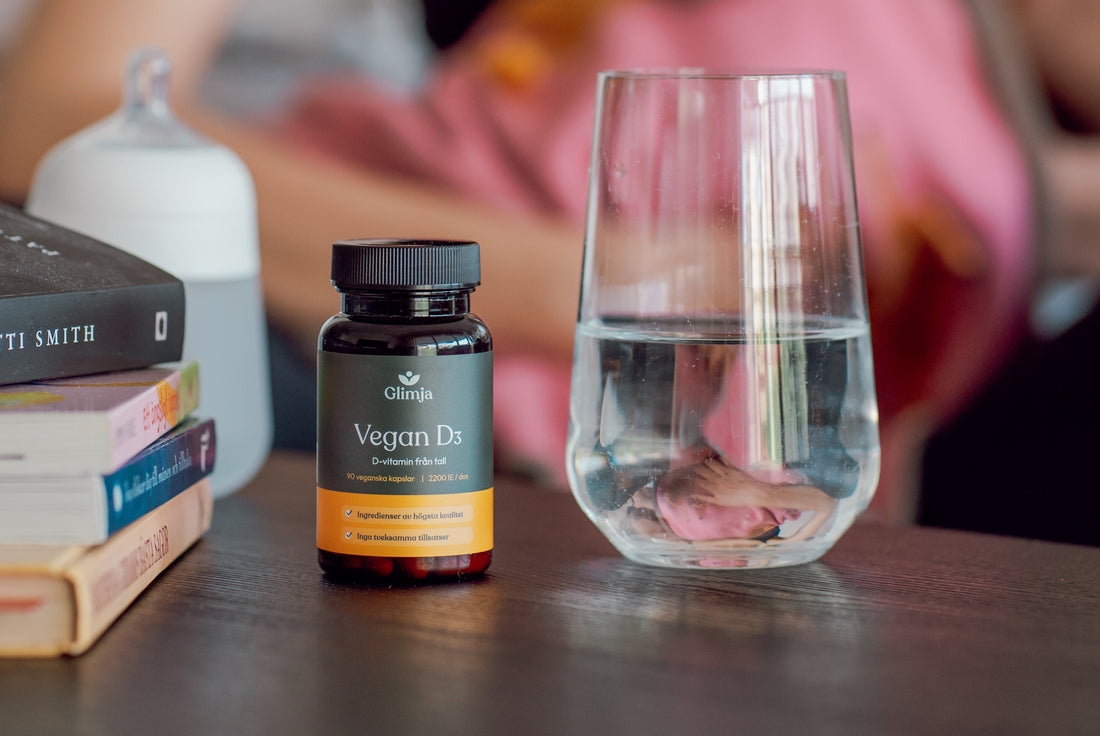
- Vitamin D is best taken in the morning, as it provides energy. It should also be taken with a meal containing fat. Remember that magnesium is needed for the body to activate vitamin D.
- Q10 supports energy production in the body and is therefore especially beneficial in the morning.
- PQQ is involved in the body's energy metabolism and enhances performance, so it is best taken in the morning.
- Iron is best taken in the morning, as it is stimulating. However, it is important not to take it at the same time as milk, caffeine, or supplements containing zinc, magnesium, calcium, or vitamin D, as these interfere with absorption. Iron does pair well with vitamin C!
- Copper stimulates the sympathetic nervous system, so it is best taken in the morning.
Any time of day
These supplements can be taken at any time of day, as they are rarely perceived as either stimulating or relaxing. They nourish the body and help it adapt to what is needed at the moment.
- Omega-3 (algal oil or fish oil) can be taken at any time of day. Omega-3 can be seen as a foundation, just like multivitamins.
- Vitamin C is preferably taken spread throughout the day. In case of illness, vitamin C intake can be increased to larger amounts.
- Calcium – Many people believe that calcium is best taken in the morning, but calcium is difficult for the body to absorb in excessive doses and then passes through the intestines. Therefore, it is best to take half the dose in the morning and half in the evening with dinner.
- Adaptogens – For most people, it is best to follow the instructions. Some highly stimulating adaptogens, such as rhodiola, may be best taken in the morning.
- Greens and algae – These are green, nutrient-rich foods, so they can be consumed at any time.
Afternoon or evening
In the evening, we want to support the body in relaxing and recovering. Here are the most common supplements that are best taken either with dinner or during the hour before bedtime.
- Magnesium stimulates the body's parasympathetic nervous system, which promotes calm, making it perfect for the evening.
- Zinc can be taken in the afternoon or evening.
- Potassium also has a calming effect, so it is well suited to the afternoon or evening.
- Lemon balm is a calming herb, so it is especially suitable for the evening.
- Reishi can be taken both in the morning and evening, but may help promote relaxation in the evening.
- L-theanine is best taken in the afternoon, as it can make you feel alert while also promoting relaxation.
- Special calming supplements with active ingredients, such as GABA to help promote a good night's sleep, can be taken one hour before going to bed.
Supplements with food
First, keep in mind that it is best not to take too many supplements at once, as your stomach may react if you have a sensitive stomach lining. We therefore recommend dividing your supplements into a schedule throughout the day. Please note that if you take medication, you should always leave 3–4 hours between taking it and taking supplements or herbs.
Supplements that can be taken with food
- Vitamin D, vitamin A, vitamin E, and vitamin K are fat-soluble vitamins, which means they are absorbed more easily when you eat fat along with them. In some supplements, the vitamin is dissolved in oil, which means it can be taken on an empty stomach. Otherwise, it is best to take the vitamin with food containing a source of fat, such as olive oil.
-
Digestive enzymes are specifically made to break down food more effectively, so they should naturally be taken with a meal. They can be taken 30 minutes before a meal or right with the first bite; opinions differ on this.
- Q10 is fat-soluble and should therefore be taken with a meal to ensure proper absorption.
- Selenium works synergistically with vitamins E and C, so they can advantageously be taken together—and together with food.
- Taking B vitamins with food may improve absorption and reduce the risk of nausea if you are sensitive.
- Taking a multivitamin with food can prevent possible nausea if you are sensitive and may also support absorption.
- Zinc – Many people may react negatively when taking zinc on an empty stomach and feel nauseous. This may be because they have a sensitive stomach lining, insufficient enzymes to break down zinc properly, or low zinc levels. In that case, zinc should be taken with a meal, preferably with digestive enzymes.
- Calcium is best taken with food. Remember that the body also needs vitamin D to absorb calcium.
Dietary supplements before meals
Supplements that can be taken on an empty stomach
- Zinc sulfate – NOTE: See the text above about zinc. If you are one of those who feel nauseous from zinc, we recommend taking it on a full stomach.
- Vitamin B12 is a water-soluble vitamin, so it does not require food for better absorption—unless otherwise stated in the product description.
- Systemic enzymes are not intended to break down food but to work in the body, so they should always be taken between meals. Examples include Spikenzym and Global Healing Enzymer.
- Lysine is considered most effective when taken on an empty stomach.
- Glutathione is considered most effective when taken on an empty stomach.
- Alpha-lipoic acid should be taken on an empty stomach, as certain foods may interfere with its bioavailability.
Special occasions
Here are examples of supplements that should be taken for shorter periods, as a cleanse for a specific purpose. For information on what time of day they should be taken and whether they can be taken with food, see the instructions on the jar or bottle.
- Oregano
- Oregano oil
- Olive leaf
- Cranberry extract/D-mannose
- Fungal Defense
- Cleanses of various kinds, such as Liver Health, Candida Balance, C60, and UltraBalans.
I hope this overview is helpful. If you have any questions, please don’t hesitate to contact us!