In this guide, we will try to answer common questions about children and dietary supplements. We hope it can support you in finding the right habits and supplements.
Do children really need dietary supplements?
The simple answer is that children basically have the same nutritional needs as adults, but of course in lower doses. In that sense, the need for dietary supplements is also the same.
Everyone has increased nutritional needs
We are now born into a world that is not evolutionarily adapted to our DNA. There are many factors in the modern world that increase our nutritional needs, such as:
- Artificial additives, flavorings, and sweeteners in food and drinks.
- Processed food with highly refined carbohydrates and unhealthy fats.
- More sources of stress and increased radiation from mobile phones and computers.
- Environmentally harmful and potentially health-damaging substances in conventionally manufactured clothing, furniture, buildings, and electronic products.
Less nutrition in food
At the same time, the nutritional value of our regular food has declined over the past 100 years. An orange or a lettuce leaf no longer contains the same concentration of nutrients as they once did, due to soil depletion.
Ensure yourself with dietary supplements
The combination of these factors leads to an increased nutritional need for everyone, including children.
The most important thing we can do to counteract this is to try to live as healthy and natural a lifestyle as possible and eat clean, natural food at home. But it can still be challenging to get children enough of all nutrients, especially at school, and many want to ensure the whole family has a good nutritional base for a healthier life.
That’s why we at Glimja believe that high-quality, natural dietary supplements are a good idea for both adults and children.
With us, you can get information about why and who might need dietary supplements.
Which dietary supplements are most important for children?
The three most important supplements to consider if you want to give your children extra nutrition are, in our opinion:
1. Multivitamin with minerals
A good multivitamin tailored for children. Provides a solid foundation of vitamins and minerals in the right dose for growing kids.
We offer well-thought-out multivitamins for children.
2. Omega-3
A good source of the important fatty acids EPA & DHA. Important for, among other things, the development of the nervous system as well as heart and vascular health.
Opti3 liquid Omega 3 is a great choice for both children and teenagers. Also Garden of Life's Kids Plant Omega 3 from 4 years old. Or Mary Ruth's liquid Omega 3 suitable from 4 years.
3. Green powder
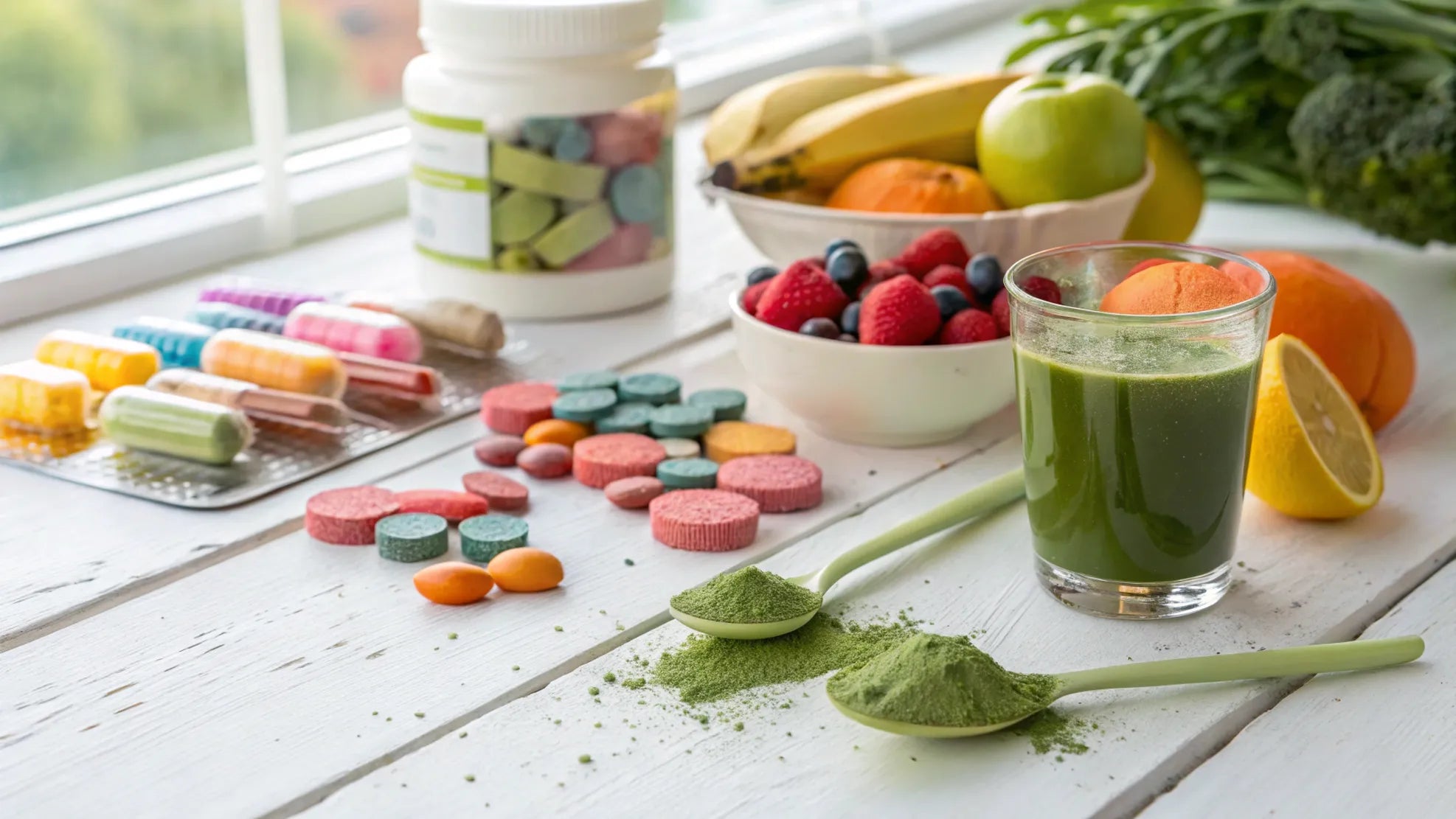
Green powders are rich in phytonutrients and chlorophyll. They work a bit like "insurance" to get children their daily vegetable intake.
Green Magic is a great choice for children as it is a green powder. Holistic Fytoenergi also suits children and can be mixed with water, filmjölk, or yogurt.
The most important thing is that you as an adult carefully read the ingredient list before choosing one for your child, so the child can tolerate all the contents. You will always find a complete ingredient list on the product page with us.
Other dietary supplements in periods
In addition to the three supplements, there may be individual needs such as:
- Lactic acid bacteria for the stomach.
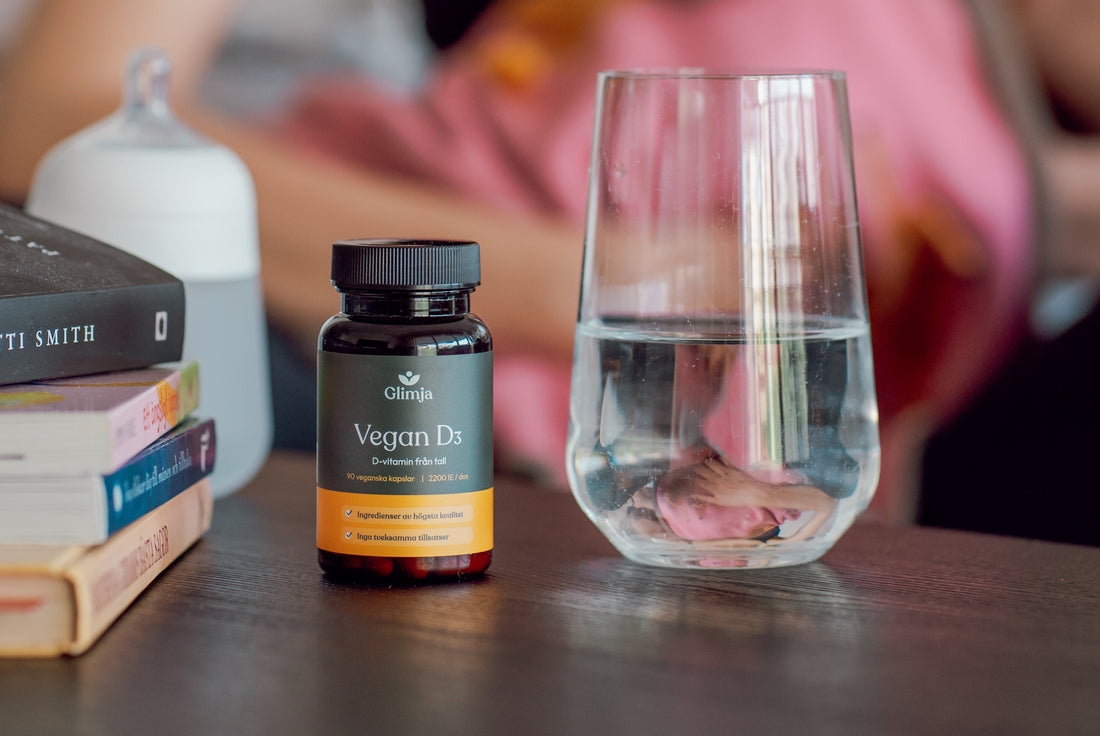
- Extra vitamin D during the winter months.
- Specific vitamins such as B-12.
- Specific minerals such as zinc.
If you want to know exactly what your child needs, you can consult a qualified nutritionist or naturopath.
What doses apply for children?
Generally, we recommend using products that are adapted for children. Then the recommended dose is stated directly on the packaging.
For other products, you can start from the adult dosage and adjust it to your child’s weight. For example, if you have a child who weighs 35 kg, you can use half the recommended adult dose. But keep in mind that not all products are suitable for children; if you are unsure, ask us.
Chewables vs liquid vs capsules?
There are several different forms of supplements for children. It’s simply different ways to get the nutrition into children, which is a matter of taste.
Chewables – “Gummies”
Small chewable portions that often taste a bit like "candy." Most children like these, and the only thing you should watch out for is that they cannot reach them on their own so they don’t eat too many at once.
Here we have, for example, Mary Ruth´s Multivitamin Gummies, Garden of Life’s Vitamin Code Kids Multivitamin, Garden of Life Magnesium Gummies from 4 years old, Mary Ruth´s Kids D3+B12 Gummies, and Mary Ruth´s Kids Sleep Gummies.
Liquid supplements
Liquid supplements are easy to give on a spoon or mix into porridge, juices, smoothies, etc. Here we have, for example, Earth Harmony Liquid Multivitamin from 4 years old, Mary Ruth´s Liposomal Kids Multivitamin, Vimergy’s liquid B-12, and liquid zinc for children.
Powder
Powder is perfect to mix into juice or smoothies. For example, super powder for children with vitamins and minerals.
Capsules
It can be difficult, especially for small children, to swallow capsules, and there is a risk that children might choke on them. Capsules have the advantage that you can open them and mix the contents into food or drink. Soft omega-3 capsules can be chewed, and then children can spit out the "shell" to get the oil.
Omega 3 capsules can be chewed and are suitable for slightly older children.
Many capsules can be opened so you can sprinkle the contents on food, porridge, or in a little juice. For example, Terranova's Green Child Living Multivitamin. Feel free to watch the video by the product image. Or Terranova Green Child Friendly Microflora for children.
Tablets
Chewable tablets designed for children are excellent. For example, digestive tablets for children. Here we also have multivitamins for children, good probiotics for children, and multivitamin chewables specially adapted for children.
However, hard tablets that must be swallowed are only recommended for older children who can swallow them without problems.
Superfoods and herbs for children?
A very good way to give children extra nutrition is through individual superfoods like wheatgrass, spirulina, dulse, or chia seeds, which can be mixed into smoothies and provide lots of extra nutrition. You can also make dressings with several of them or, for example, chia pudding.
Organic herbs are another good source of phytonutrients for children. However, it is important to know which herbs are suitable so they do not consume anything too strong or disruptive to their development.
Here are some herbs that are good to use for making your own herbal tea or adding a little to a smoothie:
- Chaga
- Lemon balm
- Peppermint
- Chamomile
- Nettle
- Propolis
Global Healing's Lung Health is an example of a natural herbal extract for respiratory support for children from 3 years old.
Other nutritious products that can be good for children are snacks and bars made from natural ingredients, as alternatives to the artificial varieties often found in grocery stores.
Here you will find natural snacks and bars.
Which supplements should not be given to children?
You should not give your child supplements designed for adults that affect hormones, provide a lot of energy, create detoxification in the body, or have special high doses for specific purposes.
There are many things children do not need; for example, they should never be exposed to detox unless a doctor deems it necessary.
It can be valuable to reflect on attitudes towards children and detox.
Primarily choose supplements made for children or products classified as food, such as green powders and superfoods.
You are always welcome to contact us if you are unsure!