Are you wondering which supplements you should prioritize, or where to start?
Here is our guide to the most important supplements you can take every day, recommended by many health and nutrition experts to optimize your nutritional status throughout your life.
It is important to note that we are talking specifically about "supplements" – not "replacements." The foundation for good nutrition is always healthy and nutrient-rich food.
Good supplements provide that little extra your body needs to function optimally, but they cannot make up for a poor diet.
Why do we actually need supplements?
There are many reasons why we today need supplements to maintain our health in the best possible way.
Some of the most important are:
- Depleted soils have caused food to contain less nutrition than it did in the past.
- Environmental toxins and various pesticides increase the body's need for good nutrition to protect itself and detoxify.
- Stress in daily life is higher than ever before, which further increases our nutritional needs.
- We also consume more junk food than previous generations, leading to more stress and disturbances.
- Overall, we take more medications, which also increases the need for good nutrition since many medications deplete the body.
All this means that natural, high-quality supplements have become an important part of a healthy lifestyle and recovery from lifestyle-related diseases.
What are the most important supplements?
The supplements you need most obviously vary from person to person and at different times in life.
It should ideally be tailored based on a nutritional analysis or other diagnostic method to evaluate your specific needs and possible deficiencies.
But at the same time, there are basic nutritional needs that apply to virtually everyone. This list is based on those; a general foundation that is good for most people.
1. A quality multivitamin
Most people have imbalances and insufficient amounts of vitamins and minerals to optimally protect themselves from stress, environmental toxins, medication side effects, and more.
Additionally, very few eat an optimal diet, and both our soil and food often contain too little of certain nutrients, such as selenium and iodine. And if these are not in the soil, they are not in the food.
2. A green powder
A blend with, for example, spirulina, chlorella, wheatgrass, barley grass, and/or nettle powder that contains phytonutrients not found in a vitamin and mineral combination.
3. A pure omega-3 supplement
Essential for many functions in the body, not least the brain. The optimal daily intake is at least 800 mg of EPA and DHA combined.
A daily intake of 250 mg DHA contributes to maintaining normal brain function and normal vision.
A daily intake of 250 mg EPA and DHA contributes to the normal function of the heart.
4. Good gut bacteria
The bacterial flora in our gut helps us absorb nutrients in the best way and protects us from invaders (sometimes called the "first line of immune defense").
Taking a high-quality supplement of lactic acid bacteria and/or bacterial cultures can help us feel better on many levels.
If needed, digestive enzymes can also be very helpful in breaking down the food we eat properly.
5. For stress: Magnesium, B-complex & Vitamin C.
B-complex helps us manage stress, and magnesium helps the body relax.
These two are quickly depleted in the body during stress and can be very helpful to take as extra supplements to support these functions.
B vitamins contribute, among other things, to the normal function of the immune system, reduced tiredness, and fatigue.
Optimal doses of vitamin C often do not fit into a multivitamin, and it is often beneficial to supplement with extra vitamin C for the immune system.
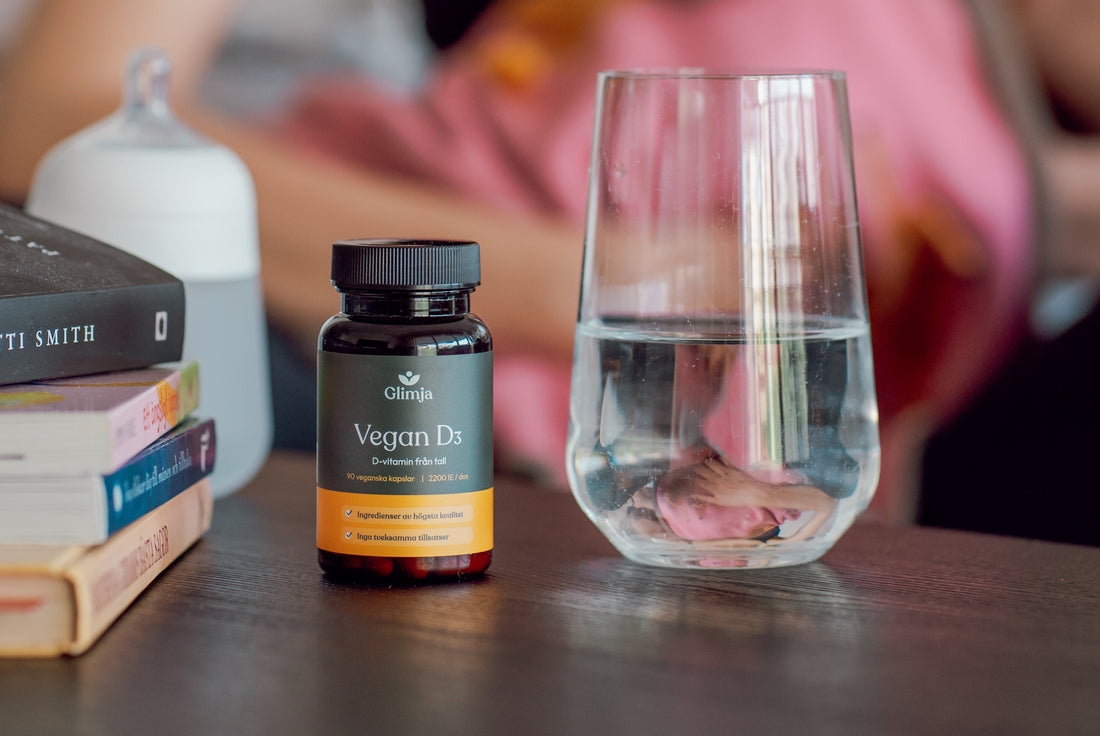
6. For extra needs: Vitamin D
Optimal doses of vitamin D also often do not fit into a multivitamin.
It can therefore be a good idea to supplement during the winter months when we do not get sunlight, as well as during periods when you want to support your immune system.
We hope this was helpful – and don’t hesitate to contact us if you have questions about our products!