Health Blog
Health Blog

Homemade vegan ice cream without strange additives
Make your own ice cream then. Yes, it’s easy and tastes so good. Plant-based ice cream completely free of dairy and white sugar suits everyone, and all ages. Coconut & Lavender Ice Cream (vegan & nut-free) 2.5 dl coconut milk1-2 tbsp edible lavender flowers2 frozen bananas, slicedNatural sweetener such as maple syrup, honey, coconut palm sugar How to make it? Add coconut milk and lavender to a small saucepan and bring to a boil. Remove from heat and stir. Let stand, covered, for 20 minutes. Strain out the lavender flowers. Pour the coconut milk into a freezer-safe container and freeze overnight. Break the frozen coconut milk into pieces and place in a food processor or a powerful blender. Add the sliced frozen banana. Blend until smooth and add sweetener now if desired. The banana already sweetens the ice cream, so it depends on taste. The ice cream can now be eaten immediately. If you want firmer “ice cream,” put the mixture in the freezer for 20 minutes. Almond & Peach Ice Cream (vegan) 2.5 dl almonds2.5 dl water3-4 peaches (save some for decoration)5 dates (remove pits)a pinch of vanilla powder1 tsp freshly squeezed lemon juice How to make it? Soak almonds overnight, then drain. Put almonds in a powerful blender covered with fresh water and blend until it becomes like milk. Strain through a nut milk bag or similar. If you’re in a hurry, you can of course use ready-made almond milk. Pour the strained almond milk back into a cleaned blender with the peaches and dates. Blend until smooth. Mix in vanilla and lemon juice, blend again. Pour into a freezer-safe container and leave overnight. Decorate the finished ice cream with some peach halves. Banana & Peanut Butter Ice Cream with Chocolate Sauce (vegan) 3 frozen bananas, sliced2 tbsp unsalted peanut butter1/4 tbsp sea salt How to make it? Slice bananas and freeze overnight in a container with a lid. Take them out the next day and thaw for a few minutes. Blend bananas and peanut butter in a powerful blender until it becomes a batter. Add a little salt at a time and adjust to your taste. Chocolate Sauce 2 tbsp coconut oil2 tbsp cocoa powder2 tbsp yacon syrup or another liquid sweetener you like1 pinch sea salt (optional) How to make it? Gently melt the coconut oil in a saucepan over low heat or in a water bath. Add cocoa powder, optional sweetener, and salt and stir gently until smooth. If there’s any left over, store in the fridge. Scoop the ice cream into a bowl and pour on the chocolate sauce... Ice cream is just so good =)
Read more
Homemade ice cream in a juicer with protein powder
If you freeze items and then run them through a juicer that can handle it, you get heavenly delicious ice cream! Tip for recipes for the juicer is to add a protein powder: Favorite Smoothie/Chia Cream:0.5 dl protein powder0.5 dl chia seeds0.5 dl hulled hemp seeds4 dl waterFreeze as ice cubes in an ice tray, and when you want to make the ice cream, take them out and wait a little while, then just run them through the juicer. The advantage of first freezing them into “ice cubes” is that the flavor becomes even. Other super simple ice cream recipes with only two ingredients (frozen):Avocado + RaspberryAvocado + PineappleBanana + RaspberryBanana + BlueberryBanana + Carrot
Read more
Natural Celtic sea salt rich in minerals
When choosing salt, we believe you should choose the best: salt that provides minerals and trace elements – without additives and anti-caking agents. And we promise, we do not want to consume anti-caking agents. All the salt we sell is completely natural and free from unnecessary additives. We have received fantastic new varieties of salt from Selina Naturally, who also produce the immensely popular gray, semi-moist, coarse-grained Celtic salt. Celtic Sea Salt Gourmet Seaweed Seasoning The base of the salt consists of finely ground Celtic salt mixed with four different organic and wild-harvested sea plants/seaweeds; Dulse, Kelp, Wakame, and Kombu, as well as red shiso, garlic, onion, and lemon. Celtic Sea Salt is an unprocessed salt that is hand-harvested. It is dried in the sun and wind, which helps it retain the sea’s moisture as well as all the important minerals and trace elements naturally found in salt. The seaweed ensures the salt contains iodine. The perfect blend gives a very rich Umami flavor. What does Rahima think? This salt is wonderful both on salads, vegetables, quinoa... yes, I think it works on almost everything. I’m a real salt enthusiast and often think about not eating too much. But since I like salt, I want the best. That’s where all the salts from Selina Naturally come in. I like all their salts. This was a perfect combination in flavor, and the seaweed really adds that little extra without overpowering with a “seaweed taste.” I don’t think synthetic iodine in regular table salt is a good idea for our health, but that’s another discussion. So getting iodine from seaweed or a good supplement is a better option... Here, the seaweed provides exactly that. The right amount is released when you sprinkle the salt. Makai Pure Deep Sea Salt A salt for true salt lovers… The salt is taken from more than 600 meters below the sea surface. It is harvested from areas with deep underwater currents that move very slowly and rarely reach the surface. The seawater is transported to enclosed salt houses and allowed to dry naturally with the help of solar heat. The harvesting method is completely free from mechanical and chemical bleaching. The crystals of Makai salt are hand-harvested, inspected, and cleaned by hand, actually with tweezers, to exact standards. Slow evaporation aided by the strong sun creates ideal conditions for the characteristic, pure white Makai crystals to form. They are gently scooped into wooden molds where remaining moisture drains from the salt. The salt is then packaged by hand. The salt has a fine, delicate salty flavor that almost turns sweet. It is a gourmet salt worth trying and contains less sodium than other salts. Makai contains 0.4 grams of sodium per serving compared to 0.6 grams in table salt. What does Rahima think? Wow, it’s fantastic, it’s very salty, yet smooth in flavor and sweet. You can take a piece like candy directly in your mouth (if you like salt). I think this salt works well on everything, even on chocolate desserts, I imagine. I haven’t tried that yet. It is coarse-grained (flake salt), so if you want to grind it, a nice mortar is a good option. I like mortars; they look nice, bring out the flavor in spices, and you feel so professional in the kitchen when you crush spices…=)
Read more
Manuka Honey: Nature's Powerful Beauty Product
Manuka honey is produced in New Zealand and is made from nectar from the Manuka tree (Leptospermum scoparium), which has beautiful white or pink flowers. To produce Manuka honey, beekeepers move their bees to areas where Manuka is the predominant vegetation type when the tree starts to bloom, usually from spring to early summer depending on the region in New Zealand. Manuka honey has gained international recognition for its unique properties because it has high antibacterial activity. Plus, it tastes so good! It can be eaten as is spread throughout the day, in tea, or as an exclusive topping. Honey is an excellent sweetener that also contributes to health. What can Manuka honey contribute? Amino acids, B vitamins (B6, thiamine, niacin, riboflavin, pantothenic acid), calcium, copper, iron, magnesium, manganese, phosphorus, potassium, and zinc. Generally beneficial for colds and soothes sore throats. Provides energy. Supports digestion and relieves mild digestive discomfort. Prevents plaque and gum inflammation. Helps with problematic skin, acne, and acne scars during facial treatments. DIY Facial Masks with Manuka Honey 1 tsp Manuka honey (all skin types). 1 tsp Manuka honey, 1 tsp rose water (all skin types). 1 tsp Manuka honey, 1 tsp lavender water, and 1/2 tsp spirulina powder (all skin types). 1 tsp Manuka honey, 1 tsp tea tree water, 1/2 tsp matcha powder (oily skin). 1 tsp Manuka honey, 1/2 tsp lemon juice, 1/2 tsp cinnamon powder (all except sensitive skin). 1 tsp Manuka honey, 1 tsp rose water, 1/2 tsp turmeric (all skin types but especially mature skin). Why is Manuka honey expensive? Manuka honey is unique to New Zealand. It is harder to extract and has a limited harvest period because it is only collected at certain times of the year. However, the unique properties of the honey are understood by consumers worldwide, creating continued high demand despite the high price. What is UMF? The UMF logo is recognized worldwide as a standard that identifies and measures the strength of the unique antibacterial activity in Manuka honey. UMF® stands for “Unique Manuka Factor.” The UMF mark is followed by a number indicating the strength of the UMF activity. The higher the UMF, the more potent the product. To be potent enough for medicinal use, it should have a UMF rating of at least 5+. UMF® is a registered name and trademark of AMHA (Active Manuka Honey Association) and can only be used by licensed users who meet established criteria, including monitoring honey quality. They must have the UMF name clearly indicated on the front label. The honey must be packaged and labeled in New Zealand. The honey must come from a New Zealand company licensed to use the UMF name.
Read more
Ketogenic diet - natural fat burning for better health
Ketogenic diet is a dietary approach aimed at shifting the body’s cells to burn fat as the primary energy source instead of carbohydrates. To achieve this, you need to eat a lot of fat, few carbohydrates, and a moderate amount of protein. It is perfectly possible to follow such a diet as both a vegan and a vegetarian, which we think is great. Many who have tried this report weight loss, improved mental clarity, freedom from sugar cravings, calmer digestion, softer skin, stabilized blood pressure, and better endurance during exercise. If you have high blood pressure, you should talk to your doctor first. Article from Dr. Perlmutter on the keto diet: Being on the ketogenic diet or “keto” is quite popular today and for good reason. Choosing dietary fat to fuel the body’s cells, as opposed to using sugar or carbohydrates, seems to have powerful health effects. We know that when fat is used as fuel, instead of sugar or carbohydrates, there appears to be much less production of harmful free radicals. Additionally, it seems that a more ketogenic diet is actually associated with less inflammation, the cornerstone of some of our most challenging conditions. When the body is adapted to a fat-burning program, in other words, “keto-adapted,” it means the body can mobilize fat and create molecules to fuel the body’s cells, called ketone bodies, the most important of which is beta-hydroxybutyrate. New research recognizes the importance of beta-hydroxybutyrate as much more than just an efficient cellular fuel. It turns out that beta-hydroxybutyrate is actually a powerful modulator of gene expression. Beta-hydroxybutyrate changes the expression of our DNA, further reducing inflammation and improving the way we eliminate harmful free radical chemicals by increasing our production of antioxidants. Eating 100% keto can be challenging for many. But at least moving in this direction and deciding to reduce your consumption of sugar and carbohydrates also yields very good health results. One thing to remember, however, is that while it is indeed a good idea to reduce carbohydrates, you need a sufficient amount of prebiotic fiber in your diet, even though prebiotic fiber is considered a carbohydrate. By definition, your body will not use carbohydrates as a fuel source, but you will absolutely take care of your gut bacteria. When you make sure to add adequate amounts of prebiotic fiber, it is much less challenging to stay on the keto diet. Article from Dr. Perlmutter on ketosis & caffeine: When you wake up in the morning after 12 hours of fasting, your body is in a state we call mild ketosis. This means your body has shifted away from burning glucose as the sole fuel source and is now tapping into your body fat reserves. When a person is in ketosis, it is actually a very healthy state in terms of brain function. For now, I want to focus on a common question about the effects of coffee consumption, or more specifically, caffeine intake, on either enhanced ketosis or not. In a new study titled "Caffeine Increases Plasma Ketones: An Acute Metabolic Study in Humans," Canadian researchers evaluated the effects of caffeine intake in a group of 10 healthy volunteers. After fasting for 12 hours and then breakfast, these individuals were given either 1. no caffeine 2. about one cup of coffee or 3. 3 cups of coffee. Blood samples were then taken to evaluate not only caffeine levels over a four-hour period but also the levels of ketones produced in the liver from the release of body fat. What the researchers found was really very interesting. Higher doses of caffeine in the 10 adults dramatically increased beta-hydroxybutyrate, one of the most studied ketones in terms of fueling the brain. The researchers found that the increase in blood ketones caused by caffeine intake was twice as high as what was observed after an overnight fast. It is important to know that this study is based on caffeine intake in its purest form.
Read more
Recipe for Tom's Power Coffee with MCT Oil and Chaga
1 cup of coffee1-2 tsp MCT oil2 tsp Coconut oil2 tsp Ghee (if you are vegan, use a bit more coconut oil instead)Optional additions:– 1/4 tsp Reishi extract– 1/2 tsp Chaga extract– 2 drops Vanilla steviaBlend everything in a good blender like our Omniblend. It is important to choose coffee beans of the highest quality, preferably from high altitudes and small farms; coffee beans that are not sprayed or over-roasted and purchased directly from the coffee growers. You won’t find such coffee beans in grocery stores but need to look at specialty coffee shops or online. Just like with everything we select, quality is our guiding principle. We recommend brands such as: Kafferostare Per Norby, Johan & Nyström, Koppi Fine Roasters, Drop Coffee Roasters, Da Matteo, Love Coffee Roasters, and The Barn – try some of these coffee varieties and you will understand that coffee offers a world of new experiences. We make our coffee either with an Aeropress or a stainless steel moka pot. What is the difference between chaga powder and chaga extract in powder form? Chaga belongs to the family of tree fungi. It has a structure that is practically impossible for our digestion to extract anything from in its raw form. But when heated in water, many active substances are released that are beneficial to us. The chaga extract is double-extracted using alcohol to extract the adaptogenic terpenes and with hot water to extract the water-soluble immune-modulating polysaccharides. This method allows extraction of both the water-soluble and fat-soluble components of the Chaga mushroom. Since it is already extracted, you can enjoy it directly in, for example, a smoothie, hot water, hot chocolate, or coffee. If you buy a powder that is not an extract, you must first brew tea from it or make your own extract to benefit from the useful substances.
Read more
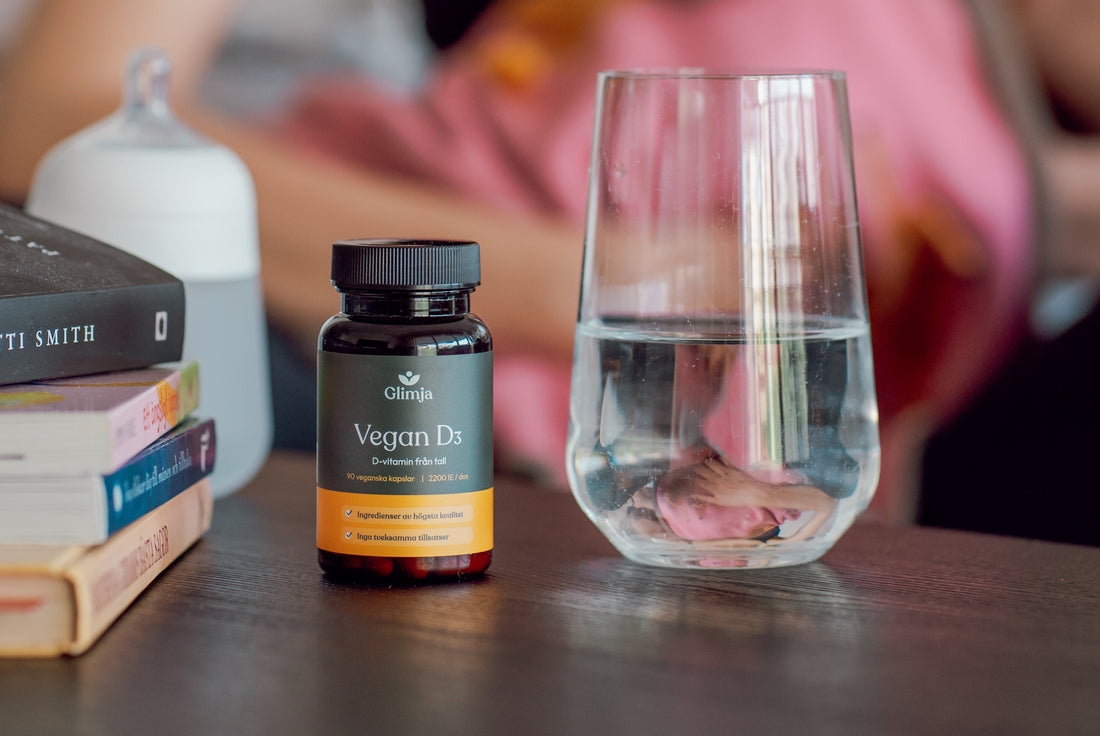
Vitamin D: Important for health during autumn and winter
Vitamin D is a hormone-like vitamin that is very important for good overall health and strong, healthy bones. Vitamin D improves the absorption, transport, and utilization of calcium and phosphorus, which in turn are necessary for bone and tooth formation. It is also a factor in ensuring that your muscles, heart, and lungs function optimally. Why do we need vitamin D? Vitamin D plays an important role in the body's cell division process and contributes to the normal function of the immune system. Quite simply, it helps cells throughout the body communicate properly. People with an adequate level of vitamin D are generally much better equipped to fight colds and other illnesses. How do we get vitamin D? Vitamin D is mainly found in oily fish, wild mushrooms, and egg yolks. However, it is difficult to get sufficient amounts through the diet. If you are vegetarian or vegan, it is even more difficult. Otherwise, vitamin D mainly comes from your skin when it is exposed to sunlight. Your body then undergoes a number of chemical processes to alter it so that your body can use it in the best possible way. However, the amount of vitamin D you get from sunlight depends on: The time of day – your skin produces more if you expose it around midday. Where you live – the closer you live to the equator, the easier it is for you to produce vitamin D from sunlight year-round. In the Nordic countries, we can only obtain vitamin D from the sun during the summer. Your skin tone – fair skin produces vitamin D faster than darker skin. For example, if you have very fair skin, it may take about 15 minutes to produce an adequate amount of vitamin D, whereas if you have dark skin, it may take up to 2 hours. The amount of skin you expose – the more skin you expose to the sun, the more vitamin D your body produces. Because the sun's rays are weaker and the days are shorter during autumn and winter in Sweden – and because we spend less time outdoors and wear more clothes – we in Sweden produce virtually no vitamin D from the sun between October and April. Therefore, a vitamin D supplement can be highly beneficial during this period. Low levels of vitamin D can affect energy levels, mood, depression, the immune system, and more. One way to find out your exact needs is to measure vitamin D levels in your blood, either through a therapist, at a healthcare centre, or privately through, for example, Werlabs or Blodkollen. Vitamin D supplements Vitamin D comes in two forms: D2 and D3. Both have been shown to be effective in clinical studies for raising vitamin D levels in the blood, but vitamin D3 is preferable because it is utilized much more effectively by the body and is the form that comes from natural sources: the sun and our food. Vitamin D3 can be extracted in various ways, and today there are primarily two natural sources used in supplements: sheep's wool or lichen. Both are effective and good sources of active vitamin D3, and which one you choose is entirely up to you. The one from lichen is 100% plant-based, which may be an advantage for many people. One vitamin that may be beneficial to combine with D3 is vitamin K, which is also fat-soluble and works synergistically with vitamin D to build strong bones, as well as being important for the blood's ability to clot. How much vitamin D do we need? The best way to find out exactly how much vitamin D you need is to take a supplement for a couple of months and then have a blood test. The absorption of vitamin D supplements varies from person to person and is affected by several factors. Therefore, it is impossible to give a recommendation that applies to everyone. The test is called 25-OH-D and can be ordered through a healthcare centre or private laboratory. For most people, the optimal goal is a blood level of 50–80 ng/ml or 125–200 nmol/L (there are two different ways to express vitamin D measurements. In Sweden, ng/ml is the most common). That said, we recommend these doses as a starting point during the winter months in the Nordic countries: Adults: 1000–2500 IU daily (alternatively 5000 IU every other day).Children under 12: 500–1000 IU daily. View our range of vitamin D supplements here.
Read more
Organic Shea Butter for Dry Skin & Eczema
Shea butter is a wonderful body product that is many people's favorite! The butter is appreciated for its moisturizing effect and its "healing" effect on, for example, eczema and other skin problems. It is used extensively on adults, children, and babies alike. It can be used as is or mixed with other butters or oils. Additionally, it works on most parts of the body and does not clog pores. But where does shea butter actually come from? Shea butter is the fat from the nuts of the wild Shea tree/Karite Nut Tree (Vitellaria paradoxa) found in semi-arid savannas in western and central Africa, where there is a wealth of local and traditional knowledge about how to produce and use shea butter. The tree that the shea nuts grow on can live up to 300 years. Almost every part of the tree has some practical use. The locals themselves call the shea tree the "tree of life." Flower clusters on the tree develop into fruit clusters, and the ripe fruits fall to the ground. Inside the outer shell is the fruit kernel (the shea nut). Traditionally, it is the women who collect the fruit and do the time-consuming work of extracting the fat from the nuts. The process of making shea butter is long. First, the outer fruit pulp must be removed, then the nuts are boiled, then crushed, then sun-dried, and finally roasted and ground before becoming butter. That’s why it’s called women’s gold Both Fushi’s and Akamuti’s shea butter comes from Ghana in West Africa and is produced by women’s cooperatives. Shea butter is a valuable source of income for these people, and the fair trade price allows them to build better facilities for their communities and fund renewable energy projects. In communities where women otherwise have very limited opportunities to earn their own income, this is very important both for their dignity and their status in society. That’s why shea butter is often called “women’s gold.” And the shea butter we sell is wild-harvested, meaning the population uses harvesting and production techniques that have been used for many thousands of years. What is the difference between refined and unrefined shea butter? Processed shea butter is often extracted with hexane or other solvents that are petroleum products. The extracted oil is boiled to remove the toxic solvents and then refined. Refining can include filtering, deodorizing with hot steam, purification with acids and alkalis, bleaching with absorbent powders, and removing wax residues by cooling. The scent is especially removed. Shea cream produced this way still contains unwanted solvent residues, and its healing effects are naturally much reduced or perhaps gone entirely. The end result is a scentless, white butter that may be aesthetically pleasing but lacks the moisturizing, healing, and nourishing properties found in unrefined, organic shea butter. It’s easy to choose, isn’t it? We choose the organic shea butter, produced by women’s cooperatives, of course!
Read more
Protein Chai Latte: Simple recipe with plant-based milk
Ingredients: 8 cardamom seeds 6 cloves 4 black peppercorns 2 cinnamon sticks 1/2 vanilla bean 1 large piece of fresh ginger (grated) 1/2 nutmeg (grated) 2 chopped dates 500 ml coconut milk, almond milk, or oat milk 2 scoops of plant-based protein powder (optional) How to make it? 1 Place all ingredients except the protein in a saucepan and bring to a boil. Turn off the heat and let steep for 5 minutes. 2 Whisk in the protein. Heat a little more if needed. 3 Strain into cups or glasses. Save any leftovers in a glass container in the fridge – can be reheated. 4 If you want to make it a little more festive, whip some cream and top it off, decorating with a sprinkle of cinnamon.
Read more
Plant-Based Chocolate Mousse - Simple Avocado Recipe
Recipe2 ripe avocados5 tbsp carob powder2 pinches vanilla powder Fruit skewers2 slices of kiwi4 small pieces of watermelon2 wooden skewers Garnish:Fresh mint Place the avocado in a blender together with the carob and vanilla and blend until smooth.Thread the fruit onto the skewersServe! The recipe comes from food blogger and recipe creator Sophie Cronquist, who runs a recipe and inspiration blog focused on low-carb diets and health. Her food is colorful, fresh, and imaginative. The focus is on clean food without additives and with minimal use of dairy products. She has now debuted as a cookbook author with her book Matfilosophie – enjoyable, colorful & varied low-carb cuisine published by Idus förlag. The cookbook contains dishes suitable for both celebrations and everyday meals. The recipes are influenced by other food cultures but also have their roots in traditional Swedish home cooking. Let yourself be inspired by colorful starters, varied main courses, and enjoyable desserts. Sophie's wonderful recipes show that low-carb eating is so much more than cream sauces!
Read more
Chaga Coffee Milkshake: Simple Recipe with Adaptogens
Recipe 1-2 frozen bananas1 dl natural cashew nuts soaked overnight.1 dl organic coffee (room temperature)1 tbsp coconut sugar or two pitted dates1 dl unsweetened almond milk1 tbsp cocoa powder (or carob)1/2 tsp real vanilla powder or vanilla extract1 tbsp coconut oil2 tsp chaga extractBlend everything in a mixer.Pour into a nice glass or two smaller ones. Feel free to top with mint leaves. Chaga is a powerful adaptogen, adaptogens are herbs/plants that help increase the body's ability to adapt to various forms of physical, mental, chemical, or biological stress as well as changing situations. Adaptogens help create a state of balance in the body and make the body more adaptable. Taking an adaptogen daily greatly contributes to well-being and stability. When using plants with adaptogenic properties, it is recommended to follow a routine that includes periods when you do not consume them. For example: take chaga, reishi, schisandra, or maca daily for six weeks, then take a break for one to two weeks. Here you can find more adaptogens.
Read more
Nutritious smoothies with hemp and chia seeds
Hemp – chia – berry – smoothie5 dl unsweetened hemp milk (you can use any other milk you prefer, e.g., almond or oat)1/2 tsp lactic acid bacteria (you can open a capsule and pour out the contents)2 bananas300 grams frozen or fresh berries1 tbsp goji berries1 tbsp honey or none if you think the bananas provide enough sweetness or if you are vegan2 tsp acai or blueberry powder1 tsp wheatgrass or barley grass powder1 tsp hulled hemp seeds1 tsp chia seeds1 tsp hemp oil1 pinch of Celtic salt (optional) Blend everything in a powerful blender until smooth Smoothie bowl with vegetables, almond & bee pollen 2.5 dl unsweetened almond milk½ avocado1 small cucumber2 celery stalks1 banana1 tbsp almond butter1 tsp bee pollen1 tsp spirulinaa pinch of ginger powder Chop the vegetables into smaller piecesBlend everything in a powerful blender until smooth
Read more