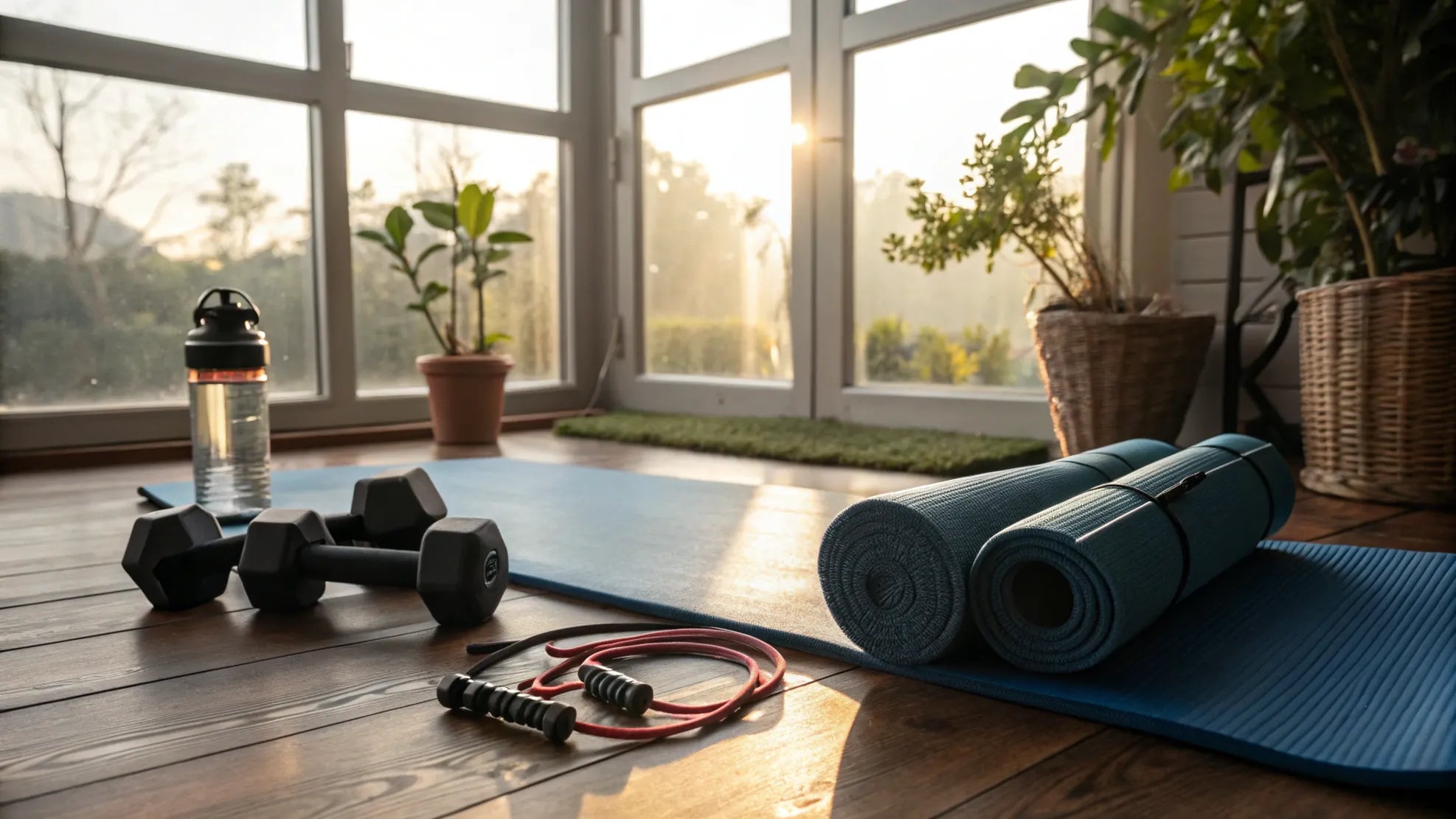
Many of us sooner or later experience a wake-up call in life where we realize that we need and also want to start moving more.
When we move more than we usually have before, an inner resistance can arise. It is then easy to choose to believe myths or so-called "fundamental beliefs" about exercise that we have never really examined, which in turn leads to us "forgetting" to exercise or coming up with other excuses.
Therefore, let's now look together at three common ideas about exercise.
1. You need to be motivated to exercise
This myth is based on two assumptions: that exercise is hard or boring and that we actually don’t want to move.
What may be missing is a deeper "why" in our exercise that activates our natural playfulness and curiosity about our physical capacity.
You can easily explore a deeper "why" for your exercise by answering the question:
Why do I exercise? The most common answers are:
- I want to feel good and be healthy. This often means having more energy in everyday life and not getting sick often. And if you do get sick, being able to recover quickly.
- I want to look good naked. This can be a desire to lose weight or build muscle or simply a wish to feel good naked and like yourself.
- I want to live a long life. Many of us want to reach old age but not as sick individuals, rather as healthy people with full brain capacity.
Exercise can also be about reducing joint pain, living long enough to meet grandchildren, or being able to do something specific like becoming good at dancing, handstands, climbing a tall tree, running a certain distance, mastering a special yoga pose, or lifting a certain weight.
If you have something you want to be able to do or change that is important or fun for you, the chance is much greater that you will want to exercise. Then you don’t need any "motivation" or "pep" to go and work out. You are motivated from within, by your own curiosity and meaningfulness.
Another equally important aspect is that when you are used to exercising, you will automatically be more eager to exercise. It becomes a bit like brushing your teeth; it feels a little strange not to do it eventually.
Find a why or goal that makes you feel alive and have fun while you exercise!
2. You have to train hard every day to succeed with "x"
One idea that circulates is that "the harder and more often you train, the better you get." This is probably true if you train a specific art like table tennis or salsa.
But if you train, for example, strength or endurance, most of the effects of the training happen after your workout, i.e., when you rest, eat, and do other things in life. You need to give your body time and recovery to get results.
Another aspect of training very often and intensely is that it can be easy to overexert yourself, which leads to injuries or a weakened immune system. This then does not lead to long-term effectiveness or healthy training that we all want.
You need to train often enough to continuously improve a little. The body needs 2 to 6 days between sessions depending on what you train. The more you push yourself during a session, the longer recovery time you need.
Lighter activities like stretching and balance can be done every day, e.g., yoga, while heavy strength training requires more time between sessions.
So don’t forget recovery!
3. You have to eat a certain way to succeed with your training
If we believe that we have to stick to a very strict diet, eat a certain number of times per day, and/or avoid things we otherwise enjoy to succeed with our training, we create unnecessary resistance to moving.
Instead, we would like to invite you to explore what you crave to eat after you have trained? How does it feel in your body and what works best for you?
Of course, there are habits and guidelines that are good for everyone, e.g., it is more supportive for our bodies to eat natural, nutritious, and toxin-free food. Excessively processed food, additives, and chemicals disturb the body, which takes energy instead of helping with recovery.
If you want to make it easy to replenish with good nutrition after training, we offer great smoothie recipes.
There are many different ways of eating that work for different people. Remember: no diet is right for everyone. Natural food works better than unnatural food, and it’s good to fill your kitchen with clean, nutritious food that makes you feel good.
Do you know other myths about exercise that hold us back? Share in a comment and make health easier for all of us with inspiration!