Finding the perfect skincare product is a challenge for many.
With all the different options on the market, it can feel like a jungle to navigate to find something natural, sustainable, and affordable that also suits your skin’s needs.
But we have the solution: oils!
Why make your own facial oil?
We often get questions about which creams are best for different conditions, e.g. dry skin, problematic skin, or oily skin.
Mostly the result turns out really well, but for some it seems impossible to find the right one. Then we usually suggest a trick that rarely fails; take matters into your own hands and mix your own facial oil.
You can customize the ingredients according to your unique needs, you get full control over the contents of the bottle, and you can make lots of different combinations with just a few ingredients.
Is it difficult to make? Not at all.
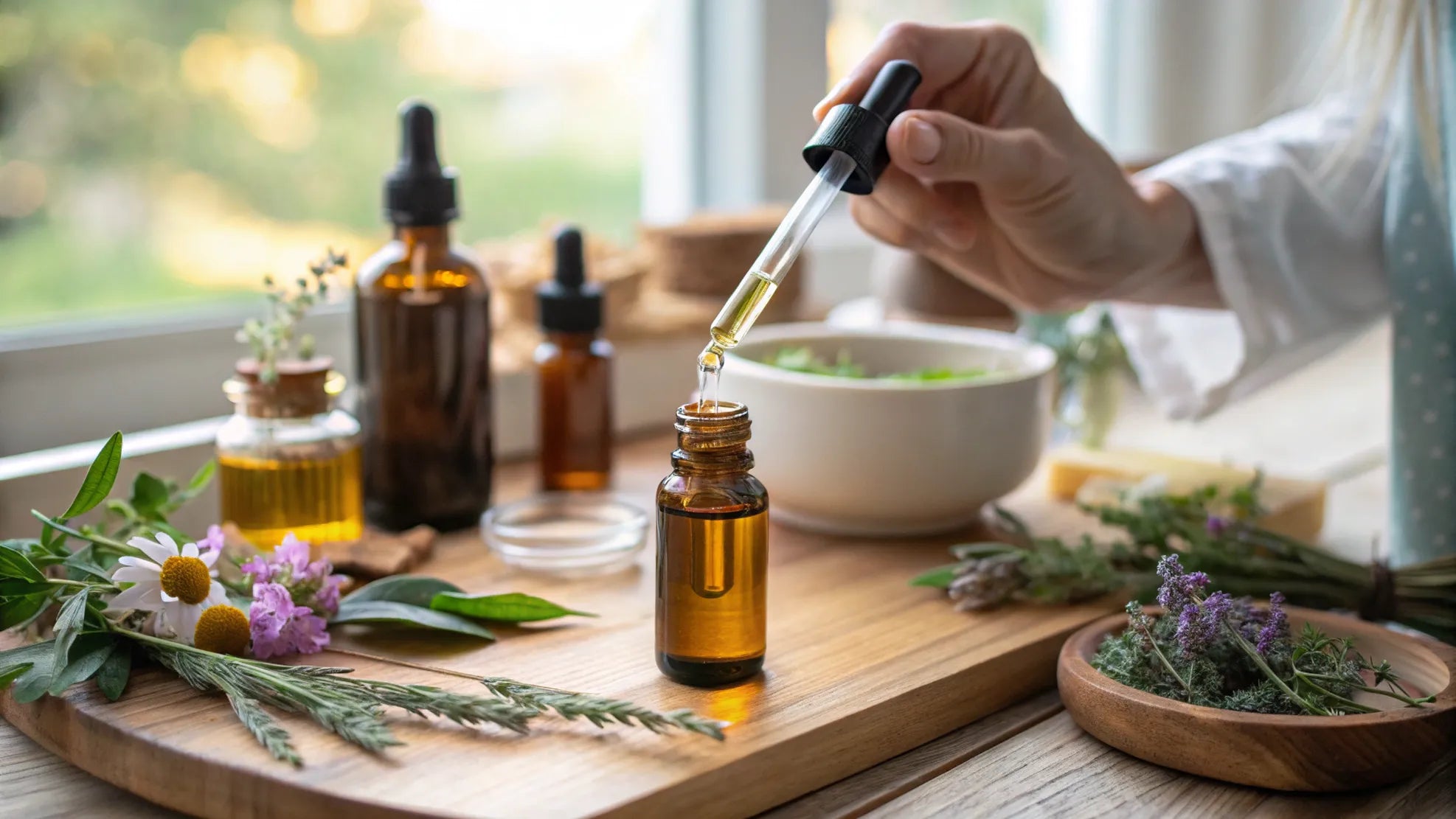
All you need for your own skin oil are three components: a base oil, one or more oils that add bonus nourishment, and an essential oil that contributes luxurious aromas.
DIY recipe: How to make your own facial oil
Here we have compiled a small guide of different oils that suit each ingredient best, along with the healthy effects they provide.
Hope this can help you!
1. First choose a base oil like one of these:
- Argan Oil – for dry, aging, oily, and normal skin. Intensely moisturizing.
- Jojoba Oil – for dry, normal, combination, or oily skin as well as acne-prone skin. Balances sebum production.
- Apricot Kernel Oil – for all skin types, especially good for normal, dry, and aging skin. Universal oil.
- Almond Oil – for all skin types. Fantastic facial oil, gentle and nourishing. Universal oil.
- Grapeseed Oil – for dry, normal, oily, or acne-prone skin. Soothing for the skin and mildly astringent.
- Green Avocado Oil – for dry, aging, and sun-damaged skin. Increases elasticity and hydrates.
- Camellia Oil – for all skin types. Absorbs quickly and reduces fine lines while deeply moisturizing. Universal oil.
- Baobab Oil – suitable for all skin types, including sensitive and oily skin. A true anti-aging oil that improves skin elasticity.
2. Then choose a "bonus-nourishing" oil:
- Kalahari Melon Oil – light oil but moisturizing, without any greasy feeling, also works for acne-prone skin.
- Rosehip oil – dry, aging, and normal skin. Highly regenerative with anti-aging properties.
- Raspberry seed oil – all skin types, a fantastic facial oil. Repairing, regenerating, and soothing.
- Macadamia oil – for dry, damaged, aging skin. Renews the skin, restores moisture, and improves skin quality.
- Marula oil – for mature skin, dry skin. Protects the skin against aging, reduces fine lines and wrinkles.
- Borage oil – most skin types, especially oily and acne-prone skin. Very rich in GLA (gamma-linolenic acid).
- Evening primrose oil – normal skin, mature skin, nourishes the skin. Rich in GLA (gamma-linolenic acid).
- Tamanu oil – both dry skin and acne-prone skin. Known anti-aging oil and regenerative.
- Pomegranate seed oil – normal, dry skin, including sensitive skin. Naturally anti-inflammatory, anti-aging, soothing, and moisturizing.
- Moringa oil – mature, dry skin and oilier skin with acne. Rich in antioxidants that protect while purifying the skin.
- Black Cumin Oil – all skin types, including sensitive skin. Prevents skin aging and deeply nourishes.
- Hemp oil – for all skin types, soothing, moisturizing. Naturally anti-inflammatory, contains omega 3-6-9.
These two oils are already blended in other oils and work best as they are:
- Carrot oil – for all skin types. Provides intense protection, even for sun-damaged skin, due to its high beta-carotene content.
- Calendula oil – for problematic skin such as itchy skin, acne, eczema, or diaper rash. Stimulates the skin’s healing process and cell renewal.
3. Then choose one essential oil (optional)
- Lavender – most skin types, normal, dry, oily; lavender heals and soothes.
- Peppermint – oily and acne-prone skin. Highly astringent.
- Cedarwood – normal, oily skin and acne-prone skin. Astringent but also calming.
- Patchouli – for normal skin or just because you love the scent.
- Frankincense – soothes dry and sensitive skin and balances oily skin.
- Geranium – most skin types, including oily skin. Balances the skin's sebum production.
- Lemongrass – normal, oily skin and acne-prone skin. Stimulates overloaded skin.
- Rosemary – normal, oily skin and acne-prone skin. Stimulating oil.
- Orange – normal skin, oily skin, blemished skin, clogged skin. Adds radiance to the skin.
How to make
You need a bottle or jar with some kind of lid, preferably dark glass, as well as the oils.
- Fill your glass bottle/jar with 2/3 of your base oil.
- Add your "bonus nourishing" oil until the bottle is almost full.
- Optional: then add between 3-8 drops of essential oil depending on the size of the bottle. About 1 drop per 15 ml.
- Shake the bottle after each drop so you can smell your way to how much essential oil you want. You should be able to smell it, but it shouldn't be overwhelming. Essential oils have very different beneficial effects and wonderful scents, which can sometimes be appreciated since not all oils are considered pleasantly fragrant. For example, neem oil smells really bad, moringa smells like grass, black cumin is very peppery, and so on.
What is an essential oil?
Essential oils are produced from flowers, twigs, leaves, seeds, and roots of aromatic plants.
Each essential oil is unique in its composition. Essential oil is a fragrant plant extract that is part of the plant's immune defense. They are fat-soluble, which allows them to penetrate the skin and be absorbed through inhalation.
The oils have low-dose effects such as antispasmodic, antiseptic, anti-inflammatory, stimulating, and can increase blood circulation, among others.
In high doses, they can cause allergic reactions, so you should dose carefully. Plants that contain essential oils include lavender, basil, chamomile, sage, rosemary, anise... basically all plants with a strong scent.
PS: The term "essential oil" is not correct in Swedish; it's a poor translation from the English "essential oil." Now you know.
And remember, always choose organic oils – whether it's a vegetable oil or an essential oil!
If you need help choosing products, you can always contact our specialists at hej@glimja.se!