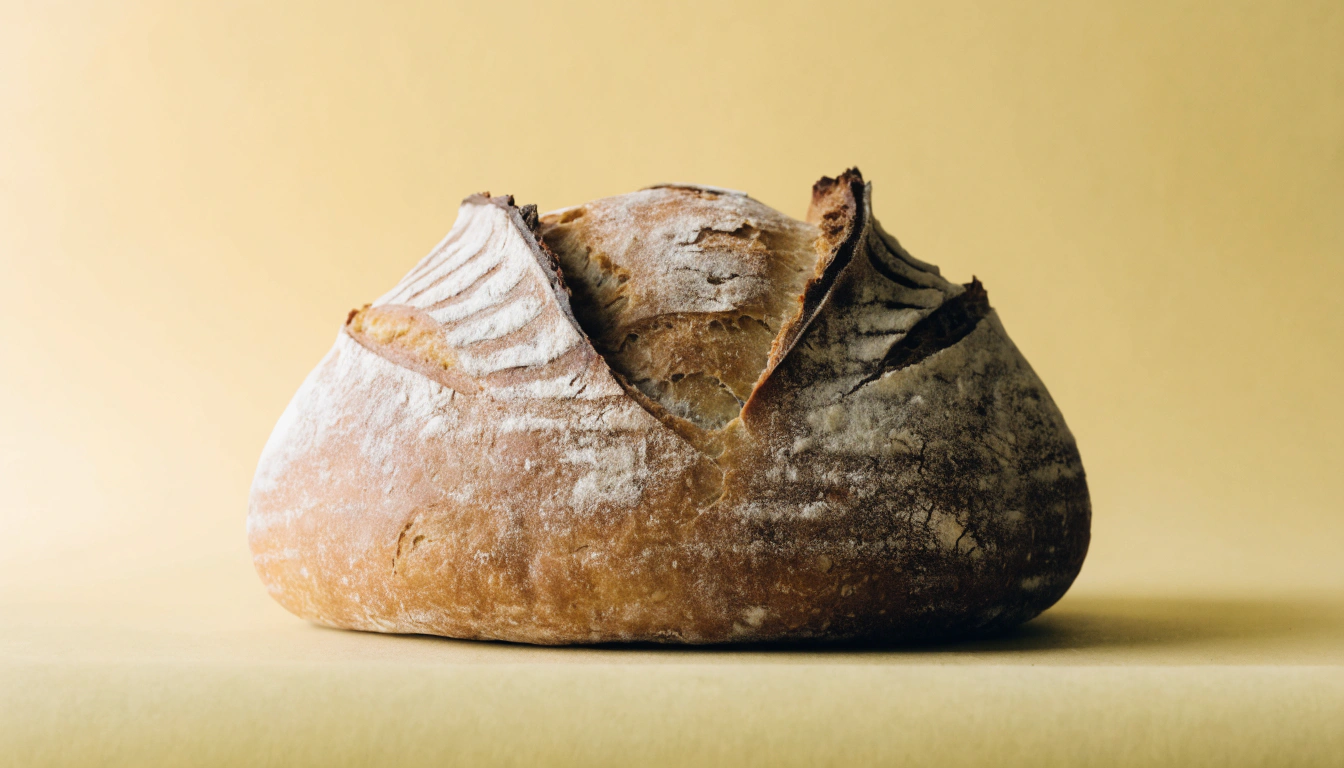
Gluten has gotten a pretty bad reputation.
Gluten-free options are popping up everywhere, from bread to pasta and snacks.
At the same time, there’s another side that says we’ve eaten gluten for thousands of years, so it shouldn’t be a problem.
And the truth? It’s not that simple.
For many, gluten works without any problems.
For others, it’s felt immediately in the stomach.
So what determines it?
What is gluten and what happens in the stomach?
Let’s start at the beginning.
Because many people hear the word gluten all the time but don’t really know what it is.
Gluten is a protein found in wheat, rye, and barley. It’s what gives bread its structure and makes it chewy and airy, which most of us like.
Many break it down without noticing anything at all.
But some people’s bodies react. I am one of them myself.
Then there are more serious cases, like celiac disease.
There, gluten triggers an immune reaction that damages the small intestine, affecting nutrient absorption and causing symptoms like diarrhea, fatigue, and weight loss.
But even without a diagnosis, gluten can affect the body.
A bloated stomach, slow digestion, brain fog, or feeling unusually tired even though you’ve actually slept.
And it’s easy to get used to those signals and think that “this is just how it is.”
But if you keep eating something your body reacts to, it can start to show up in more ways than just in the stomach.
When the gut isn’t working properly, it can affect how you absorb nutrients, which in turn can make you feel more tired, have trouble maintaining steady energy, or not recover as usual.
It can also make the stomach more sensitive over time, so more foods start to feel difficult to eat.
In some cases, this is also called increased gut permeability, sometimes described as “leaky gut.”
It means that substances that should normally stay in the gut can pass into the body, which research links to increased reactions.
This can show up in the skin, energy levels, or how the body handles everyday exposures.
So even if it’s not always urgent, it’s often the body’s way of signaling that something isn’t quite working as it should.
Why do some people react to gluten (and others don’t)?
Part of the explanation involves the intestine.
In research, they talk about a protein called zonulin, which affects how tightly the cells in the intestine are joined. When that balance is disturbed, the intestine can become more permeable, which makes the body start reacting to things it would otherwise handle without problems.
But that’s only part of the picture.
The flour we eat today is not quite the same as before.
On one hand, grains have been bred for higher yields and better baking properties, but they have also lost some of their original structure. At the same time, the flour has been refined, where parts containing fiber and nutrients are removed, leaving mostly starch.
And when it also ends up in processed foods, it no longer looks like something the body is used to.
This means that how we consume gluten today doesn’t always look the same as before.
And that is one of the reasons why some people don’t feel well eating it.
And then there are those who still want to eat bread but choose to avoid store-bought and bake it themselves at home. Are you one of them? Great job, that’s actually the best.
If you want to take it a step further, it might be worth looking at the flour as well.
Organic flour is grown without synthetic pesticides and chemical fertilizers, relying more on natural farming methods that consider the soil's health over time. This also means the grain is not chemically treated after harvest, which can otherwise occur.
Have you switched to gluten-free?
Many switch to gluten-free thinking it will solve the problem.
And sometimes they do.
But not always.
Many gluten-free products in stores are still processed, often with ingredients that are not always gentle on the stomach. Some also contain wheat starch.
For some, the sensitivity is not just about gluten, but about the wheat itself.
And unfortunately, switching to gluten-free is not always enough; the stomach can still react.
A simple tip if you want to buy ready-made bread is to check the ingredient list.
Look for alternatives based on, for example, buckwheat, and with as few ingredients as possible.
And yes, it might sound like you have to avoid everything.
But that’s not really the point.
This is more an explanation of why gluten can feel completely different from person to person.
So what can you do instead?
Instead of getting stuck on what to remove, it can be more helpful to look at what you add.
Food that is less processed. Flours the body recognizes.
And sometimes as simple as baking yourself.
Using other flours like buckwheat, oats, or almond often makes a big difference, both for the stomach and how the food feels.
When gluten becomes a problem – look at the gut
How do you know if gluten affects you? Sometimes it’s clear. Sometimes more vague.
An easy way to find out is to test.
Remove gluten for a few weeks and see what happens. Then add it back again.
Does your stomach feel calmer without gluten?
Does your skin react differently?
Has your energy changed?
How you react to gluten is connected to how your gut feels. The gut determines how well gluten is broken down and how the body reacts to it.
If the gut isn’t working optimally, gluten can become harder to tolerate. When the gut works better, many notice that their reaction to gluten changes.
There are ways to support the gut, for example with lactic acid bacteria. But food is always the foundation. Only when the diet works as it should can the body fully absorb and use the nutrients.
If you want to understand this a bit deeper, you can read more here:
Gut flora and lifespan – what does the research say?
So… do you need to avoid gluten?
It’s easy to start thinking in black and white when it comes to something as talked about as gluten.
And yes, for some it can make a big difference to remove it completely.
For others, it’s enough to choose better sources or not eat it all the time.
It’s not about following rules.
But to understand what your own body reacts to.
The most important thing isn’t to follow extreme advice in any direction.
You don’t have to avoid gluten at all costs or assume all bread works the same.
Check in with yourself.
Adjust a little.
And build your diet based on what actually works for you.