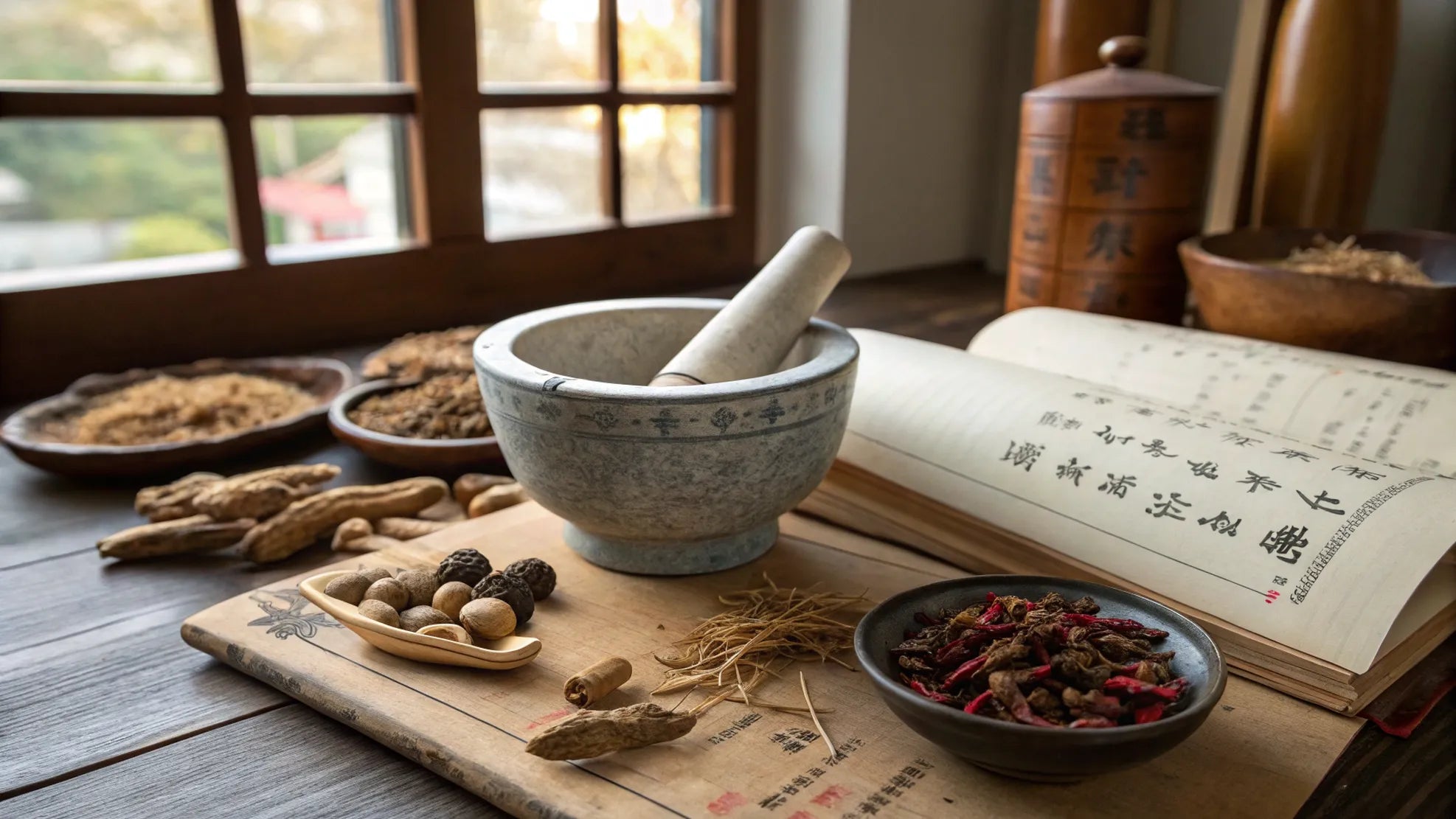
In ancient China, they had a different system for health and medical care than we have today. A doctor was paid to keep their clients healthy. If someone became ill, the doctor received no payment until the patient recovered.
The interesting aspect of this system is the perspective on the role of medicine in society and the deep knowledge of what affects our ability to stay healthy for a long time.
Of course, the ancient Chinese did not have access to the scientific sophistication available today, but had to rely on their proven experience and observations.
In our view, however, there is still a lot we can learn from the Eastern medical tradition, especially because:
- This testing of experience has been ongoing for at least 3,000 years in Asia. That is a bit longer than the just over 200 years we have had modern scientific medicine in the West. Perhaps the Chinese learned something worth taking a closer look at?
- Especially in Asia, research has begun on this ancient knowledge and more and more fascinating parallels are being discovered between “ancient wisdom” and actually measurable effects of Chinese herbal medicine. Many of these herbs have now started to be used as complements and/or alternatives within modern medicine in countries including China and Japan.
Our own experience is that these herbs can be a key to elevating health to new levels in connection with the right diet, exercise, and rest.
We at Glimja have personally experienced this and hope that more people can benefit from the treasure of knowledge found in these preparations.
The Three Treasures in Taoist Herbal Medicine
Within Taoism and Chinese medicine, they talk about “The Three Treasures.”
“The Three Treasures” is a perspective that can simplify the understanding of humans and make it easier for us to see where we need extra support to achieve what we want in life.
The ultimate goal of this knowledge is to let our joy of life shine through and to live a long life to the benefit of ourselves and others.
The Three Treasures are:
Jing
Our generative capacity; our deepest reserve of energy that functions as our “battery.”
Jing is considered to be located in the kidneys/adrenals and closely linked to our ability to recover and resist stress.
Jing is generated when we sleep, rest, spend time in nature, and through specific herbs.
Jing is then consumed when we exert ourselves physically and mentally and can be disturbed by prolonged stress without recovery, i.e., leading to “burnout,” or as the Chinese would say; Jing deficiency.
In Western medicine, Jing could be related to the hormonal system.
Qi
Our life energy that we use in our daily lives. Qi flows through the blood throughout the body and is nourished by nutritious food, unobstructed breathing, movement, and closeness in relationships.
Qi is disturbed, among other things, by too much sitting still, wrong food or poor digestion, as well as breathing problems.
In Western medicine, Qi could be related to oxygenation capacity and circulation.
Shen
What we see when we say someone “shines in the eyes.” It is our true essence which, according to the Chinese, resides in the heart.
When Jing and Qi are in balance, Shen can “find home” and shine with its wisdom, calm, and inspiration.
Shen is nourished through meditation, having space for creativity and inspiration, spending time in nature, and can be supported by certain herbs.
Shen is disturbed by too many impressions, stress, conflicts, and an unbalanced emotional life.
In Western medicine, Shen could be related to our nervous system.
Herbs for the Three Treasures
The herbal medicine that we at Glimja are most interested in is the herbs that, according to Taoists, support “The Three Treasures.”
These are often called “Superior herbs” or “Tonic herbs” because they are believed to increase our chances of a long, balanced, and happy life; simply our ability to let “Shen” shine through.
Dragon Herbs offers excellent supplements and teas that reflect this philosophy.