Sometimes hair changes gradually. You barely notice it at first.
Until you do.
A little more hair in the shower. A little less volume.
And the thought arises: is it stress? Season? Age?
But hair rarely changes without reason.
When hair starts to thin, it’s not a mystery. Hair follicles are biological structures, and they respond to how the body is doing.
It means there are explanations. And often solutions, especially if you start in the right place.
What happens when hair becomes thinner?
Hair becomes thinner when the growth cycle is disrupted. Either more hair follicles enter the resting phase at the same time, or they gradually produce thinner strands than before.
A wider part, reduced density, or more hair in the shower are often some of the first visible signs that something in the body is out of balance.
Hormonal fluctuations, nutrient deficiencies, and prolonged stress can affect hair follicle function, often long before other symptoms are noticed.
At the same time, the flow of information about hair is more confusing than ever. New “miracle products” appear every week.
Rosemary oil. Collagen. Laser helmets. Serums.
It’s hard to know what actually works and what is mostly marketing.
That’s why it’s wise to start with what really affects the hair follicle environment: hormones, nutrition, and stress management.
When you suddenly lose more hair than usual
It’s normal to lose hair every day. But when the amount noticeably increases, there is often an explanation.
A common cause is telogen effluvium. This means more hair follicles than usual take a break at the same time.
The result is that more hair falls out for a period, often a few months after stress, illness, or other strain.
It can be triggered by:
- Infection or illness
- Low nutrient levels
- Hormonal changes
- The period after pregnancy
- Change of contraceptive
- Prolonged psychological stress
The increase is often noticed two to three months after the body has been under stress. That’s why it can feel sudden, even though the cause actually lies in the past.
This type of hair loss is often temporary. The hair follicles are not damaged; they have just gone into rest.
When the body gets a chance to recover, growth usually gradually resumes.
Hormones can play a bigger role than you might think
Hair clearly reacts to hormonal changes.
During periods such as after pregnancy, in perimenopause, or with thyroid disorders, the hair growth phase can become shorter. When estrogen levels drop or fluctuate more, the balance between different hormones changes, which can affect how strong each hair strand grows.
This usually happens gradually.
You don’t lose all your hair at once. But each new strand can become a little thinner than before.
And over time, the difference becomes visible.
Start from within – with what actually builds hair
Hair follicles are among the most active structures in the body. They produce new cells at a high rate and are completely dependent on getting the right building blocks.
When availability decreases, the body prioritizes other things first.
What we most often see with thinning hair is not a single deficiency, but several factors being a bit too low at the same time.
Protein is the foundation. Hair consists mostly of keratin, a protein. If protein intake is too low, the hair follicle has poorer material to work with.
Iron (ferritin) is another common factor. Iron is needed to transport oxygen to the hair follicles. When stores are low, the body prioritizes the heart and brain, not hair growth. Even levels within the reference range can be too low for optimal hair growth.
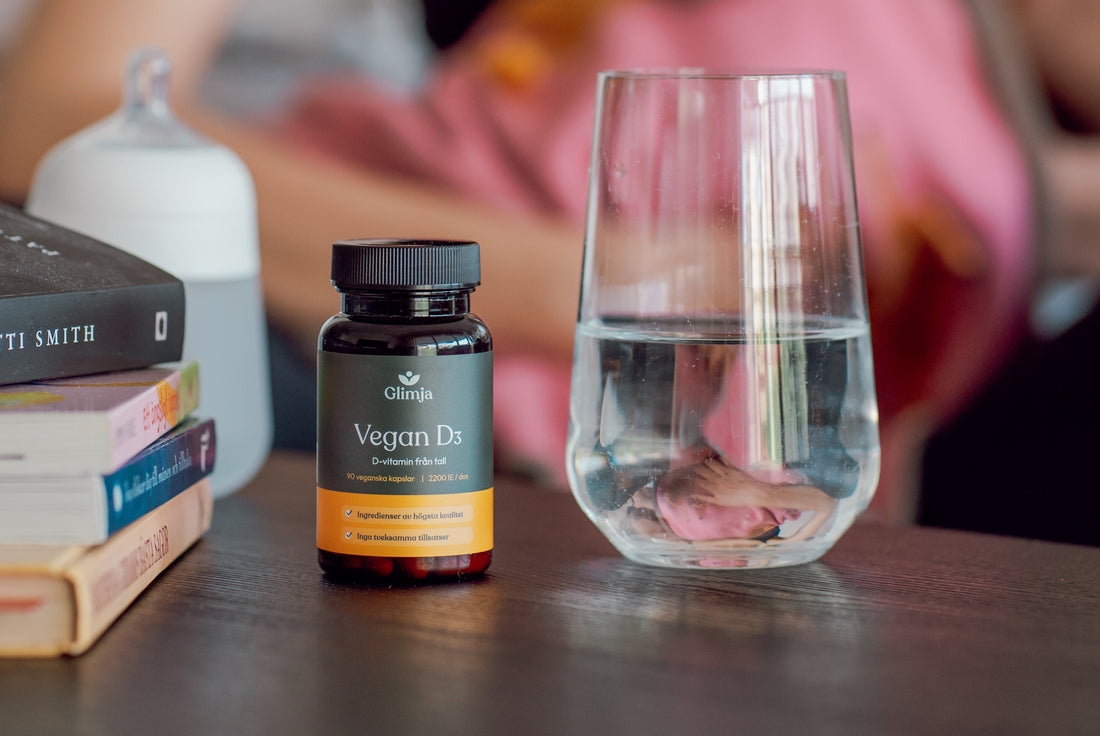
Vitamin D is commonly low in the Nordic countries and affects the hair follicle’s cycle regulation. Low levels have been linked in several studies to increased hair loss.
Zinc and B vitamins, especially B12 and folate, are needed for cell division and tissue repair. Without them, the rapid regeneration in the hair follicle does not function optimally.
Food is always the foundation. Enough protein, healthy fats, and nutrient-rich ingredients give the body better conditions.
But if levels are already low, sometimes better nutrition alone is not enough. Targeted supplements can then be a reasonable next step.
It's not about taking everything. It's about ensuring that the body actually has what it needs to produce strong hair strands.
So, what about collagen?
Collagen is often mentioned in connection with hair, and there is a reason for that.
Collagen is an important part of the skin and scalp structure. It contributes to the elasticity and stability of the tissue around the hair follicle. As we age, the body's own collagen production decreases, which can affect the quality of the scalp and ultimately how the hair feels.
One collagen supplement can therefore support hair quality, especially if the hair feels more fragile or drier.
But collagen does not affect iron levels, protein intake, or hormone balance. If the imbalance is there, you need to start there.
See it as structural support, not a standalone solution.
When the body is under prolonged pressure
Stress affects more than we often realize.
It changes how the body distributes energy and nutrients. It affects sleep, appetite, and hormone balance. And these are factors that in turn affect the hair follicle's function.
That's why thinner hair often shows up after an intense period, rather than during it.
When the body gets a chance to recover, the conditions for normal hair growth also improve.
What is reasonable to start with?
When hair changes, it's easy to look for quick fixes.
But hair growth is controlled from within.
If possible, it can be valuable to check ferritin (iron stores), vitamin D, B12, and thyroid function. Reference values provide guidance, but even if you are in the lower range, it can still affect the condition of your hair.
At the same time, you don't have to wait for perfect test results to strengthen the foundation.
Many in the Nordic countries have low iron and vitamin D levels. Protein intake is often lower than we think. And during periods of stress, the need for several nutrients increases.
Ensuring the body has enough building blocks is a reasonable place to start.
If you lose more hair for a period, it can often be reversed when the body gets the right support. Hormonal changes, however, can be slower to influence. That's why it's good to address it early.
Recovery also plays a role in parallel. Sleep, stable energy, and mineral balance affect the conditions for normal hair growth more than you might think.
The most important takeaway
Thinner hair is rarely an isolated event.
It's usually a combination of hormonal changes, nutritional status, and stress load.
When you strengthen the whole, you give the hair follicles better conditions to keep doing their job.
And often that's where change begins.