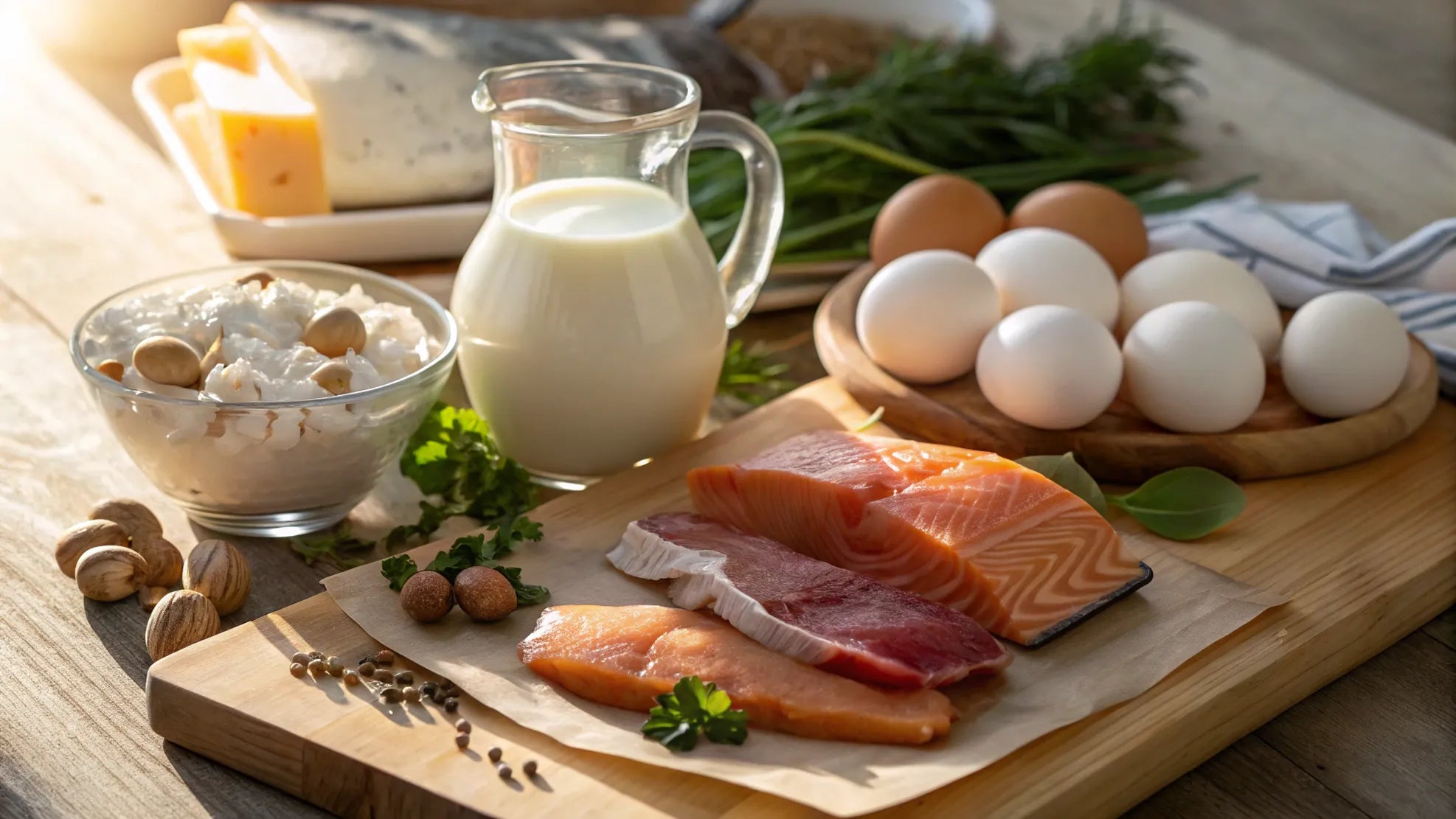
Vitamin B-12 is a water-soluble vitamin and one of the eight B vitamins. B-12 naturally occurs in animal products (eggs, milk, meat, fish, and shellfish) but is difficult to obtain from vegetables and fruit.
Vitamin B-12 is produced exclusively by bacteria and single-celled microbes; they are the only living organisms that have the enzymes needed for its synthesis.
In fact, vitamin B-12 has the most complex chemical structure of all vitamins.
Why is B-12 important for your health?
Vitamin B-12 is an essential vitamin. This means the body cannot produce it on its own and must get it through food or supplements.
B-12 is sometimes called the "energy vitamin" because it has several important roles in processes that produce energy in the body.
Virtually all cells in the body need vitamin B-12.
The four forms of vitamin B-12
There are four forms of vitamin B-12.
1. Hydroxycobalamin
Hydroxycobalamin (hydroxocobalamin), also called vitamin B-12a, is naturally produced by bacteria.
Hydroxycobalamin is converted to methylcobalamin and adenosylcobalamin in the body.
This type of B-12 is found in Global Healing's Triblend product, which is unusual.
2. Methylcobalamin
Methylcobalamin is an active form of B-12 and the most bioavailable form in the human body.
Being the most bioavailable means, in other words, that it is the easiest for your body to absorb and use.
Methylcobalamin easily crosses the blood-brain barrier to protect the brain and nerve cells. It also helps convert homocysteine to methionine, which is important because high homocysteine levels are linked to various negative health conditions.
This type of B-12 is found in all our B-12 products.
3. Adenosylcobalamin
Adenosylcobalamin (5-deoxyadenosylcobalamin) is an active form of B-12.
Some brands have managed to produce adenosylcobalamin in a stable, liquid form, as in this liquid B-12 from Global Healing.
Pureness also offers this type.
4. Cyanocobalamin
Cyanocobalamin is a form of B-12 that is lab-synthesized, making it the cheapest option to use in supplements.
It is not the best option and a good reason to spend a little more on your B-12 supplement. Cyanocobalamin also needs to be converted in the liver to active forms of vitamin B12.
Cyanocobalamin does not occur naturally in food, unlike the other three forms of vitamin B12.
Methylcobalamin is mainly found in meat, while hydroxycobalamin and adenosylcobalamin are mainly found in dairy products and eggs.
What does vitamin B-12 do for the body?
B-12 contributes to:
- Normal energy metabolism.
- Normal nervous system function.
- Normal homocysteine metabolism.
- Normal psychological function.
- Normal formation of red blood cells.
- Normal immune system function.
- Reducing tiredness and fatigue.
- Plays a role in the cell division process.
Vitamin B-12 supports many important body functions
The body uses B-12 for cell metabolism and cell division.
B-12 helps cells produce hemoglobin, an iron-containing protein that transports oxygen throughout the body in red blood cells.
In the form of methylcobalamin, B-12 helps the body synthesize protein, DNA, RNA, lipids, and hormones.
People often take B-12 to boost energy because it is a coenzyme used in the Krebs cycle, which is the process by which the body produces energy.
Vitamin B-12 is important for brain health, including cognitive function and memory.
A white, fatty substance called myelin protects brain cells from free radicals and other toxins. Vitamin B12 deficiency leads to impaired brain and nerve function due to reduced production and maintenance of myelin.
With a deficiency of vitamin B12, folic acid, and vitamin B6, the amount of homocysteine in the body can increase. This can also be affected by the MTHFR gene called C677T and A1298C. However, very high levels of homocysteine usually also have causes such as poor diet, smoking, overweight, problems regulating blood sugar, and thyroid issues.
Do you need B-12 supplements?
The answer for most people is yes – at least during certain periods in life, we need B-12 to replenish our stores.
Vegetarians & vegans have a slightly higher risk of B-12 deficiency, but it is more common than you think even for those who eat animal products.
After age 60, it is very common to need daily B-12 supplements for the rest of your life.
Why do you get a deficiency?
Vitamin B-12 deficiency can be due to too little stomach acid and low production of Intrinsic Factor (IF), enzyme deficiency, inflammation, or other diseases in the digestive tract such as Crohn's, gluten intolerance, heavy alcohol consumption, genetic predisposition, or being vegan.
The absorption of vitamin B-12 requires Intrinsic Factor (IF) produced in the stomach and also sufficient levels of stomach acid. If you take medications like proton pump inhibitors such as Losec, there is a good chance you have too little stomach acid.
Early deficiency symptoms can include tingling sensations, difficulty walking, numbness in the legs, memory loss, cognitive dysfunction, numbness, problems with mucous membranes, tinnitus, bleeding gums, cracks at the corners of the mouth, coordination disorders, low mood, and reduced appetite.
It can take several years before symptoms indicating B12 deficiency appear, so it takes a while for the body's stores to be depleted. In the long term, it can lead to serious symptoms, so the earlier you address this problem, the better.
But do B-12 supplements really work?
Yes, they do.
Vitamin B-12 found in supplements is absorbed just like B-12 from animal foods.
If you have a deficiency, it may be beneficial to take a high dose of concentrated B-12 supplement alone for a period.
Otherwise, it is a good idea to take a quality B-complex daily to get all the B vitamins at once or a multivitamin that contains enough for daily maintenance.