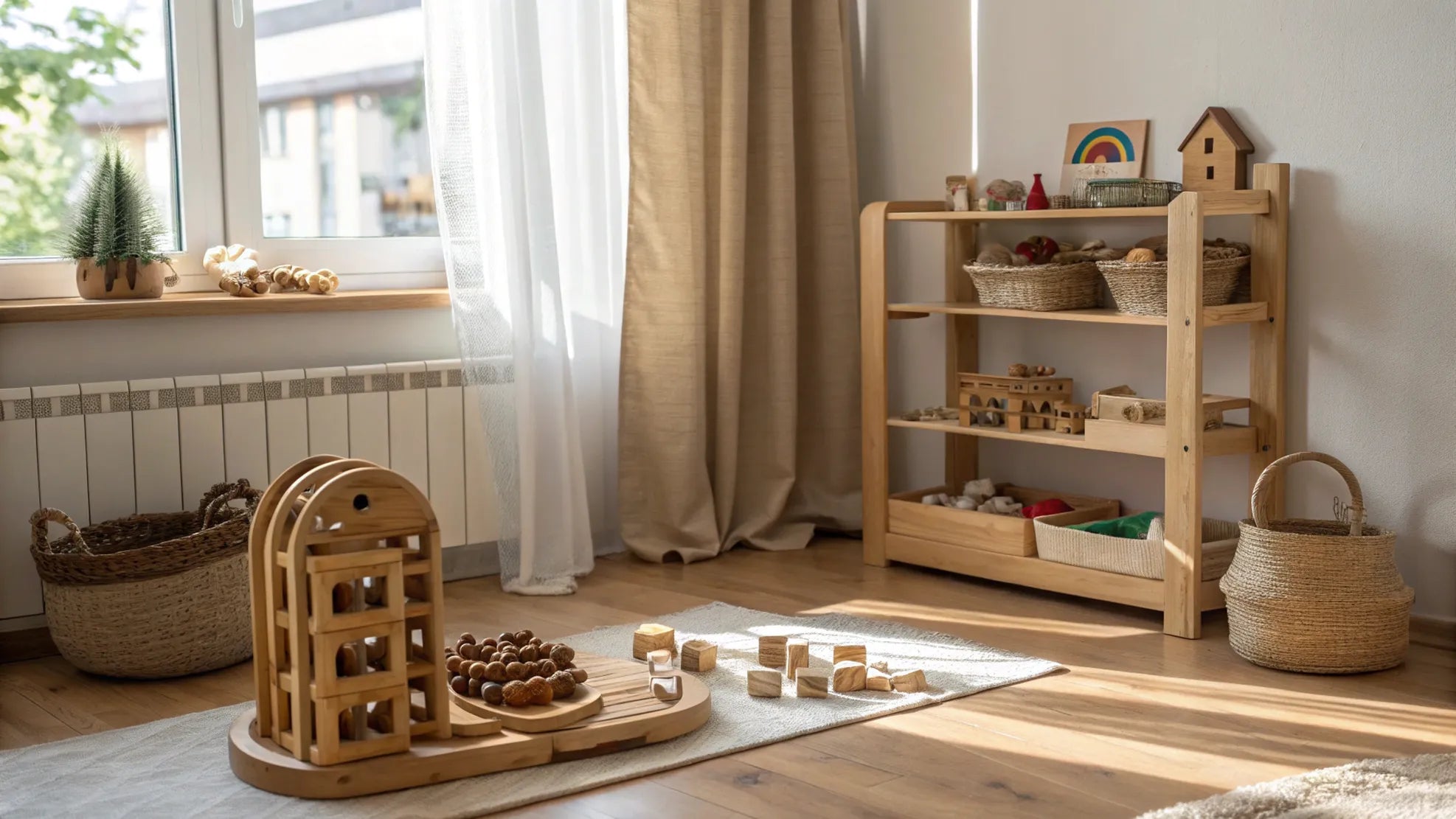
Older toys often contain much higher levels of harmful chemicals than today's newly produced ones. This is mainly because there was previously no knowledge of how many of the substances used in, for example, plastic affected and still affect us humans and the environment. Therefore, it is a good idea to start by removing the oldest plastic toys at home.
Legislation is now much stricter, and today's toys are safer. However, knowledge is still lacking about more than 90% of all the chemicals used, for example, in plastic, so the best approach is to avoid plastic toys as much as possible and instead choose toys made from other safer materials, such as wood, rubberwood, wool, organic cotton, stainless steel, and natural rubber. Keep in mind that some soft toys that appear to be made of cotton may be made from textiles containing plastic.
Smell
Use your nose. If a toy smells plasticky or chemical – remove it immediately. This is a sign that it contains many hormone-disrupting plasticizers. If the plastic toy feels a bit sticky or greasy, that is also a sign that it should be discarded and is not suitable for children to play with.
Choose toys of good quality
Invest in fewer toys of good quality. A child in Sweden today has on average more than 500 toys. Much of what is sold is of poor quality and breaks after only a few hours of play. These types of toys are a huge waste of resources and contribute significantly to the burden on our planet.
Avoid plastic toys as much as possible and instead choose toys made from natural materials. For example, choose a ball made of natural rubber instead of plastic, choose dolls and soft toys made from organic textiles, and choose small animals and figures made of wood rather than plastic. Toys made from natural materials are not indestructible and can break just like plastic toys. Often, you need to care for your organic toys differently than plastic ones. The advantage of organic and low-toxin toys is that they do not contain harmful chemicals that affect the child and the environment.
Electronics & other gadgets
Do not let children play with old electronics (worn-out mobile phones, old broken cameras, keyboards, phones, etc.). Electronics are not subject to the same strict legislation as toys and contain both flame retardants and heavy metals that can easily leach from the products. They are directly unsuitable for children to play with and are classified as hazardous waste and should be taken to a recycling station.
A good rule to follow is: If it is not a toy, it should not be used as a toy! This applies, for example, to keys, jewelry, handbags, belts, plastic hoses, car tires, and remote controls.
Avoid flame retardants
Also, do not let electronic products remain in the room where your child sleeps. Flame retardants and heavy metals leach from the products especially when they get warm and end up in the dust in the room where they are located. If children sleep in the same room, they inhale these particles. Another option is to put away electronics and store them in closed boxes with lids or cabinets.
The floors
Perhaps the biggest and most comprehensive change to make at home to reduce harmful chemicals is to review the floors in your residence. Plastic floors (PVC floors) are a major source of hormone-disrupting substances leaking into the dust in the room where the floor is located. If these floors are present in your home, it is most important to replace them first in the children's bedrooms, as children are most sensitive to these substances and spend a large part of their time in their bedrooms while sleeping. If you replace floors, choose safer materials such as wooden floors or linoleum.
Original post written by Sara Mårtensson, founder of Lapland Eco Store, which has been part of Glimja since 2021.