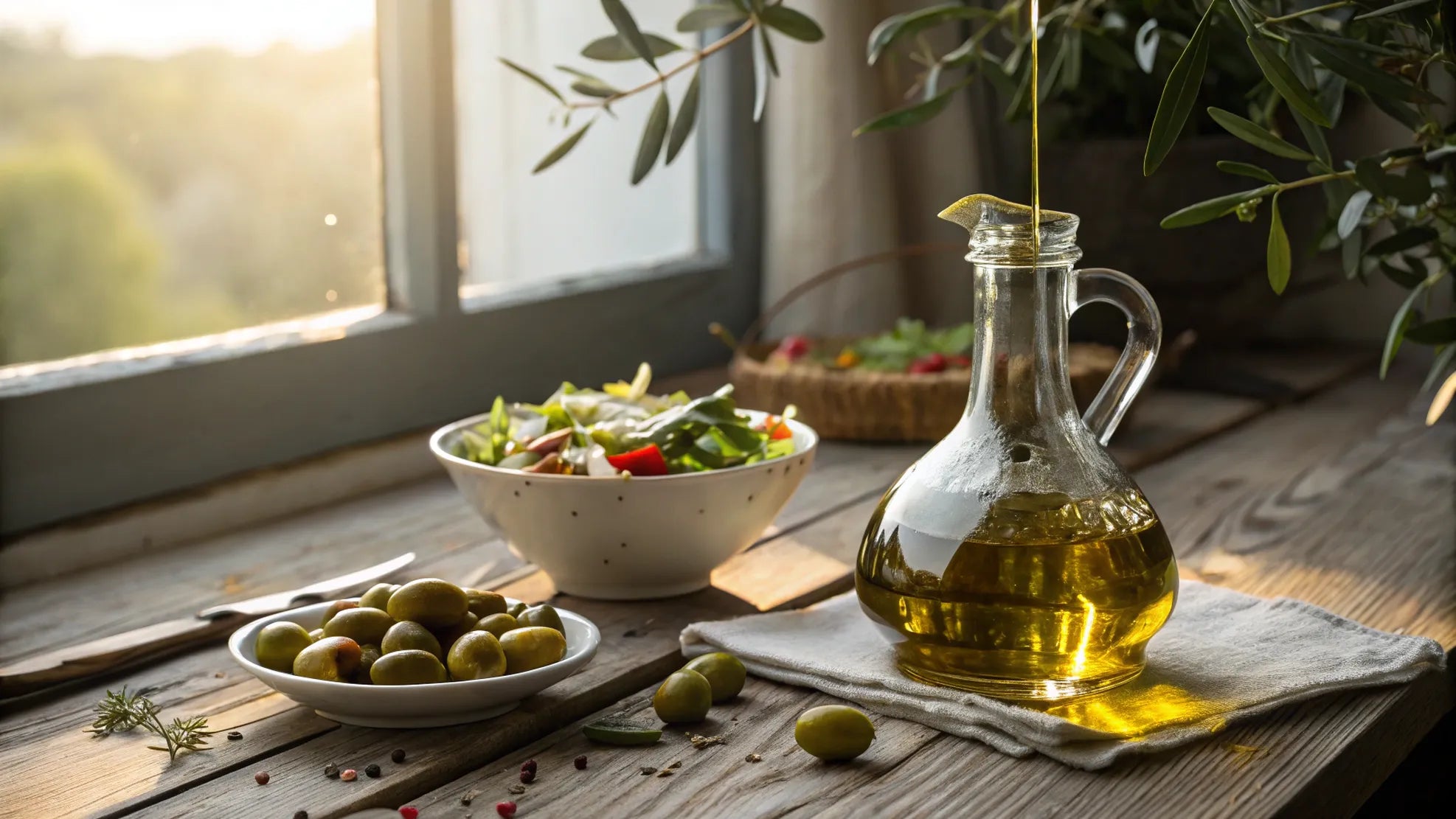
Olive oil is made from the olive fruit of the olive tree (Olea europaea).
Olive oil has existed throughout history. For the people of the Mediterranean region, it has had medicinal and even magical powers over time. The olive tree is therefore considered a symbol of peace and honor.
Olives began to be cultivated in the eastern Mediterranean region around 5000 BC. In Italy, olive oil production started already during the first century AD. Olive oil was then used in food, medicines, and various ointments.
The oil was also used as a general healing agent. Today, olive oil is produced in many places, e.g., Italy, Spain, Greece, and California.
A health-promoting oil that is good for the body
We have probably all heard that extra virgin olive oil is very beneficial for health or that the Mediterranean diet is a healthy diet to follow as it involves high consumption of fruit, vegetables, legumes, spices, herbs, and above all olive oil.
So what makes olive oil so special?
Yes, olive oil contains anti-inflammatory compounds, antioxidants, and many macronutrients that are good for the heart and blood vessels.
Olive oil's positive effect on health:
- Reduction of inflammation in the body.
- Positive for the heart and blood pressure.
- Positive for the brain.
- Nourishment for the skin and eyes.
What makes olive oil so healthy?
Omega 9
The most common omega-9 is called oleic acid and is found in high amounts in olive oil.
Oleic acid is known to be healthy and can fight free radicals.
The oil is also said to balance the effects of omega-6 without damaging the omega-3 health benefits.
Oleic acid is needed by the body's cells to ensure that the cell membrane has a sufficiently thick layer. This is important for fighting pathogens, transporting minerals, and responding to hormones.
Oleic acid also serves as an important energy source for our cells and is used for the production and biosynthesis of many vital metabolites.
Oleic acid has a protective effect on the cardiovascular system by contributing to healthy blood pressure.
It has also been observed that omega-9 can be important for blood lipids by helping to lower “bad” LDL cholesterol and raise “good” HDL cholesterol.
Polyphenols
Olive oil has become known as a “heart oil” not only because of Omega-9 but also because the oil is rich in polyphenol antioxidants.
Polyphenols are a type of health-promoting antioxidants found in extra virgin olive oil.
Like other antioxidants, polyphenols combat oxidative stress and age-related diseases such as heart disease and high blood pressure.
Olive polyphenols contain strong anti-inflammatory properties. It is believed that 1.5–2 tablespoons of extra virgin olive oil per day are enough to provide the body with anti-inflammatory benefits.
The International Olive Council (COI) has approved an official analysis method for polyphenols, and the EU has approved this health claim for olive oils with a polyphenol concentration higher than 5 mg per 20 g of oil. (250 mg/kg)”:
“Olive oil polyphenols help protect blood lipids from oxidative damage.”
How should you enjoy olive oil?
Olive oil should be enjoyed cold, drizzled on a salad, vegetables, or other foods.
It’s best not to cook with olive oil at high temperatures, as this can damage its nutrients and alter its chemical composition.
Studies have shown that olive oil combined with brightly colored vegetables gives us maximum absorption of carotenoids.
The carotenoids in extra virgin olive oil are organic pigments with antioxidant properties, whose presence enables a protective effect.
How to choose the right type of olive oil for your health
Unfortunately, not all olive oils are created equal. So choose carefully.
If you want all the benefits of olive oil, you need to choose the finest oil, preferably organic.
1. Extra Virgin Olive Oil
It is oil from the first cold press, without additives, without chemical or thermal processing, i.e., no heat is used, and it is therefore a naturally very beneficial product.
To qualify as "extra virgin," the oil must meet certain standards for aroma and taste regarding its fruitiness, bitterness, and pungency, and it must have specific properties such as an acidity level below 0.8%.
This type of oil has high antioxidant levels and offers the most nutritious benefits as well as the most flavorful experiences.
The valuable health-promoting antioxidants in olive oil disappear during the refining process that turns extra virgin oil into "regular" olive oil.
However, the oil's concentration increases when extra virgin olive oil is produced through a fully organic extraction and production process.
Extra virgin olive oils contain significantly more polyphenols than other qualities.
2. Virgin Olive Oil
Has a higher acidity level (up to 2%), lower levels of nutrients, and some defects that affect its aroma and taste, which may have arisen due to the use of riper olives or because it comes from the second pressing (after the extra virgin is produced).
It is therefore cheaper than extra virgin but can still be a good quality olive oil.
It also has a "lighter" taste compared to most extra virgin oils, due to its lower antioxidant content.
3. Refined Olive Oil
Oil that, due to many defects, is unsuitable for consumption and is then subjected to physical or more often chemical processing to remove the defects and make it edible.
Chemical processing involves treating it with solvents like sodium hydroxide and exposing it to high temperatures and other processing methods to produce oil that is colorless, tasteless, and odorless.
The result is not only that the defects are removed but also its important nutrients and antioxidants.
This oil can sometimes be mixed with other vegetable oils or have flavor added.
How do I know which oil it is?
Look at the bottle and it will say extra virgin or virgin.
Preferably then choose an organic oil, for health and the environment.
However, it is not certain that small olive farms can afford to certify their oil, so you can ask the producer how they grow their olives.