Health Blog
Health Blog

5 healthy and natural ice cream recipes for homemade ice cream
Here we share five delicious and healthy ice cream recipes that you can use to make ice cream sticks with ice cream molds from Pulito. Omit the agave, honey, or sugar for a less sweet option and adjust to taste by using less. Choose organic ingredients! 1. Banana Ice Cream Use ripe organic bananas. 1. Mash the bananas into a smooth mixture. 2. Fill the containers and freeze the ice cream. 3. Enjoy! 2. Watermelon Ice Cream Use organic watermelon, organic honey, and optionally organic mint. 1. Blend the watermelon in a blender/mixer and add as much honey and mint as you like – or skip entirely. Taste as you go! 2. Fill the containers and freeze the ice cream. 3. Enjoy! 3. Strawberry Ice Cream Use frozen organic banana (freeze the banana without the peel to make it easier), frozen organic strawberries, organic honey (or other sweetener), organic vanilla powder, and organic milk of your choice. 1. Slice the banana and freeze it. 2. Then put it in a blender/mixer together with the frozen strawberries. 3. Pour in milk or another liquid and blend. Also add honey (or other sweetener) for sweetness, and a little vanilla powder. 4. Fill the containers and freeze the ice cream. 5. Enjoy! 4. Chocolate Ice Cream Use frozen organic banana (freeze the banana without the peel to make it easier), organic cocoa, organic milk of your choice, organic liquid honey, and organic cocoa nibs. 1. Slice the banana and put it in a blender/mixer. 2. Add cocoa, milk or another liquid, and a little honey for sweetness. 3. Fill the containers and freeze the ice cream. 4. Take out the ice cream and dip it in melted organic chocolate, then dip the top in cocoa nibs. 5. Piña Colada Ice Cream Use 400g fresh or canned pineapple, 1.5 dl (160g) coconut milk or coconut cream, honey for sweetening, and 1 lime. Blend the pineapple with the coconut milk/cream. Add the amount of honey and lime you want (taste as you go) and blend. 2. Fill the containers and freeze the ice cream. 3. Enjoy!
Read more
Natural & Organic Castile Soap - One Soap for Everything
Here you have a multifunctional product that works as hand soap, shower gel, shaving soap, and shampoo but also handles dishes, laundry, and cleaning. Castile soap is one product for everything! If you are going on vacation with camping, tent, bike, caravan, or cabin, this is the perfect multi-product. What does Castile mean? The word Castile is a reference to La Castilla – a region in central Spain that is historically significant in the history of soap making. In America, Castile means a soap made with olive oil, usually a liquid soap of olive oil and coconut oil. What is Castile soap made of? Dr Bronner’s mild liquid Castile soaps are based on organic coconut oil, olive oil, jojoba oil, and hemp oil. Vermont Soap’s mild liquid Castile soaps are based on organic saponified coconut oil, jojoba oil, and olive oil. To make a good soap, only a few natural ingredients are needed, no complex chemical mixtures. Problems in mass-produced soap making can be low-quality base ingredients, alcohol, synthetic colors and fragrances, and preservatives. The soap then lacks moisture fundamentally and tends to have alkali residues left, which will irritate the skin. Oil and alkali must be balanced to make the perfect soap, as we mentioned earlier. Problems arise when alkali and oil do not chemically combine; alkali salts remain in the product. Excess alkali creates a soap that is too strong and dries out the skin. So why doesn’t everyone make natural Castile soap? It’s about money. Mass production costs less, takes less time, and yields greater profit. Good, organic, and sustainable ingredients for a less drying soap cost more. Why choose Castile soap? Fantastic liquid soaps made completely without chemicals (no surfactants, perfumes, or preservatives) yet they still lather a lot. They are vegan-friendly. No hidden animal ingredients, which is common in conventional soap. Great for washing the whole body and hands as they are so mild. Suitable for all ages and all skin types. Excellent for shaving. Also suitable as shampoo for oily hair. You can use them full strength or dilute up to 50% with water. They are very economical. All fragrance comes from genuine essential oils (also available fragrance-free). They smell delightful. Also suitable for cleaning & dishwashing. Castile soap for cleaning & dishwashing Here are some general recommendations for diluting the soap for cleaning: For floors, walls, and car washing: Add about 0.5 – 1 dl liquid soap to a bucket of warm water. Clean as usual and let dry. Laundry: Use about 0.5-0.8 dl per load – a bit more for hard water. Liquid soap can be neutralized by detergent residues in the machine, so use enough – you may need to use a little extra the first time. Perfect for hand washing most silk fabrics, delicate fabrics, and wool. For stain removal: Wet the surface and apply soap. Work the soap into the material from several directions and let it sit for a while. Wet the stain with a cloth or towel and rinse. General cleaning: Fill a clean spray bottle with warm water, add 5% concentrate, spray and wipe. Suitable for all water-safe surfaces. Safe and non-toxic for people, plants, and pets. Bathroom cleaning: Use the soap on a sponge on tiles or porcelain, rinse. The soap can also be used to clean makeup brushes. Feel free to read Morotsliv’s blog here about 10 ways to use the soap! About the companies Vermont Soap is a family-owned company from Vermont, USA, whose vision is to make the soap industry healthier and more sustainable. Their perhaps most important contribution to the environment is that they only use natural base ingredients from sustainable sources in all their products. A consistent theme in their products is simplicity. Their products are certified according to the USDA organic food standard (USDA Organic) from Vermont Organic Farmers (VOF). Dr Bronner’s uses organic and natural ingredients and buys Fairtrade and ethically sustainably harvested raw materials from around the world for fair prices, wages, and conditions for local farmers. The packaging is made from 100% recycled material. What do you use your Castile soap for? Share and inspire others!
Read more
11 tips for more beautiful skin with the right diet and supplements
We receive many questions about skin and skin problems. To tackle skin issues, it’s important to identify the cause. It’s not enough to just relieve symptoms on the surface of the skin. Common symptoms can include acne, eczema, rosacea, redness, inflammation, dry skin, or premature aging. These symptoms may indicate an imbalance in the body that needs adjustment. To achieve younger, firmer, clearer, and radiant skin, there are things you can add to your lifestyle. 4 things to consider for younger skin 1. How is your gut feeling? In nutritional medicine, skin health is often linked to gut health. 2. How do you manage stress? Stress affects overall health, including digestion and the skin. 3. What do you eat daily? Most of us need to review our dietary choices to keep our skin happy. That doesn’t mean you have to be super strict; it’s the daily, consistent choices that matter most. 4. Do you use natural skincare without harmful ingredients? For the healthiest skin possible, we need to minimize harmful additives. 7 foods, supplements, and superfoods that support healthy skin 1. Healthy gut bacteria …because health starts in the gut! We get many good gut bacteria from the right diet and fermented foods like sauerkraut, miso soup, tempeh, kefir, and some from yogurt. But that’s not always enough; if you have a severe imbalance or have taken antibiotics for a long time, it’s recommended to take a probiotic supplement (lactic acid bacteria), which can be one of the most important supplements you can choose. 2. Omega fatty acids Enjoy healthy fats like avocado, olive oil, coconut oil, algae oil, avocado oil, hemp oil, flaxseed oil, borage oil, sea buckthorn oil, black cumin oil, and other oils you like daily. Omega-3 fatty acids can counteract red, dry, or itchy skin. Omega-3 helps improve the skin’s barrier function and inflammation, which is a common problem with acne and psoriasis. Many swear that Omega 3 helps with eczema, atopic dermatitis, and psoriasis. 3. B vitamins We’ve all probably heard that B vitamins are good for both skin and hair. AFA blue-green algae and spirulina are rich in B vitamins, as are spinach, parsley, peas, broccoli, asparagus, avocado, legumes, yogurt, eggs, and shellfish. You can also take a B-complex supplement. Several B vitamins are used therapeutically for various skin issues, which you can read more about in Cecilia's (Morotsliv) blog here. 4. Zinc Zinc is required for the production of collagen, a connective tissue necessary for skin repair and regeneration. Zinc is a powerful mineral in preventing wrinkles, sun damage, inflammation (acne, rosacea), and pigmentation disorders (melasma). Eat zinc-rich foods like pumpkin, sunflower, and sesame seeds, various nuts, chickpeas, kidney beans, cocoa powder, spinach, and spirulina. Or you can take zinc supplements. Remember: Eczema and acne can be caused by a deficiency of zinc and B vitamins in the body. 5. Sulfur Sulfur gives the skin radiance and glow. Many use sulfur to combat acne. Where do we find sulfur? In lovely greens like arugula, kale, watercress, broccoli, Brussels sprouts, kohlrabi, and also in maca. Or you can take a sulfur supplement like MSM, often called the beauty mineral. MSM is not sulfur itself, but an organic compound that contains sulfur. It is the same sulfur naturally found in the body and in vegetables. MSM is said to support healthy bones and promote skin, hair, and nails. 6. Silica Silica is a crucial mineral that keeps the skin happy. Silica-rich foods include green beans, nettles, oats, millet, artichokes, asparagus, beets, romaine lettuce, baby spinach, herbs like horsetail, and mineral water. We can also take mineral supplements or mineral drops. Mineral drops contain both silica and sulfur. Other mineral-rich products are AFA algae, spirulina, and seaweed. 7. Antioxidants Everyone has probably heard that antioxidants mean "anti-aging" and that they counteract skin aging. Important antioxidants include carotenoids, Q10, resveratrol, astaxanthin, vitamins E and C. How do you get a lot of antioxidants? We can eat carrots, sweet potatoes, spinach, cabbage, and dandelion leaves for vitamin A. Yellow bell pepper, kale, papaya, pineapple, berries, acai, camu camu, kiwi, goji berries, and broccoli for vitamin C. Hemp seeds, sunflower seeds, almonds, spinach, avocado, and vegetable oils for vitamin E. Yes, choose all the colorful ones! We can also get these nutrients through supplements to consume larger amounts. For example, astaxanthin is found in the amazing Biosuperfood. Drinks that support healthy skin Feel free to drink organic green tea, horsetail tea or Spring Dragon tea, 1-2 cups a day. Green tea protects the skin from sun damage and studies have shown it reduces redness – but it's important to choose a high-quality organic green tea without sugar. And don't forget, clean water is also very important for the skin's hydration and detox!
Read more
8 health benefits of nettles - for health, skin, and hair
Stinging nettle (Urtica dioica) is a fantastic, nutrient-rich plant packed with chlorophyll, vitamin C, B1, B2, B6, folate, iron, calcium, potassium, magnesium, zinc, silica, histamine, acetylcholine, formic acid, serotonin, pantothenic acid, and sulfur. And you can pick it for free in our nature! When to pick nettles You can pick nettles throughout spring, summer, and part of autumn. Use gloves! Take the youngest leaves at the top and skip the stems. Early spring, the stinging nettles have young tender shoots perfect for food and tea. But nettles can also be harvested later in the season. To get equally tender shoots as in spring, cut down the older plants, and new shoots will soon sprout. Avoid picking nettles near manure heaps as they may contain too high levels of nitrates. Nettles intended for nettle water can be harvested any time of the year. 8 health benefits of nettles Provides steady energy in the body and is generally strengthening, making it good for exhaustion. Supports the kidneys. Diuretic effect. Supports all glands and organs. Helps with stomach gas. Helps with dry mucous membranes. Helps with skin problems. Gives radiance to skin and hair. Here you can find nettle as an herbal supplement. Nettle in cooking Nettles are not used fresh in cooking but blanched or dried. Blanch for 2–3 minutes. This is done to remove nitrates. Strain off the water. Use the blanched nettles directly in cooking or freeze them. You can dry the leaves, crumble them, and use them for tea, smoothies, yogurt, or muesli. You can also make a powder. Dried nettles should be stored in a dark, cool place in a glass jar. Or you can use the blanched leaves in cooking; in soups, sauces, gratins, omelets, pies, pesto, frittata, risotto, etc. Fresh nettles have a short shelf life and should be eaten immediately or dried for storage. Nettle pesto Pick the leaves from the stems and rinse them. Boil the nettles for a couple of minutes in salted water. Then rinse them in cold water and dry a little. Blend the nettles together with pine nuts or almonds, garlic, parmesan, and olive oil. Season with salt and pepper. Make a nettle infusion When dried nettle is steeped in water for a long time, it becomes very mineral-rich. Here’s how to extract the minerals: 15 grams of dried stinging nettle to 1/2 liter of freshly boiled water. Let the dried leaves steep in freshly boiled water, covered, in a pot for at least 4 hours (heat off). It’s fine to let it stand longer, overnight. Strain and store in a glass jug in the refrigerator. You can drink 2-4 cups a day or use it as a base in a smoothie. Remember to also drink water as nettle makes you thirsty. This is an excellent way to get minerals, especially magnesium. You can find dried stinging nettle here. Nettle in skincare DIY / Nettle shower gel: 2.5 dl nettle infusion (recipe above)0.5 dl liquid Castile soap2 tbsp castor oil20 drops essential oil Nettle in hair care Nettles are said to help against hair loss and make hair soft and shiny. They are also said to counteract dandruff. Several of the natural hair products we offer contain nettle. Nettle water for gardening Nettle water is something most gardeners know about. You put nettles in a barrel, fill it with water, and let it stand for a week or more. You need a lid because it smells unpleasant. The water fertilizes, strengthens the plants, and gives them more resistance. A fun legend In the Middle Ages, it was believed that nettles marked the place where fairies lived. Nettles were also a protection against black magic since trolls and witches could not spoil the milk where nettles grew. In folk medicine, nettles have been used against scurvy, tuberculosis, cough, and hair loss (which it is still used for). Nettle decoction was formerly used as an antidote against various poisonings such as mushroom poisoning, snake bites, and if someone had eaten poisonous berries.
Read more
7 best tips for better sleep and sleep problems
Waking up truly rested can be a luxury for many of us. But for our body and mind, it is as important as air, water, and food. Good rest and recovery can be pure miracle medicine. 9 benefits of good sleep Better and more stable mood. Improved learning and performance both physically and mentally. Increased creativity & social skills. Reduced release of stress-related hormones. Stronger immune system. Reduced inflammation in the body. Stable blood sugar and better metabolism (= less craving for sweets and caffeine). Better muscle building and reduced fat storage. Reduced risk of a wide range of diseases including cardiovascular disease, diabetes, and depression. In short, the body repairs and restores itself when we sleep well, and there is no substitute or shortcut to get these benefits. You probably know yourself how it feels in both body and mind when you are rested versus when you haven’t gotten the rest you really need. At the same time, it can be a puzzle to find time to rest properly in our connected society. The 7 best tips for creating good sleep 1. 8 hours – no pressure Most people feel best by sleeping at least 5 “sleep cycles” lasting about 90 minutes each – that is about 7.5 hours in total. Note that this is 7.5 hours of actual sleep, which means you need a minimum of 8 hours in bed to have time to fall asleep and wake up in a relaxed way. An important aspect of being able to rest deeply is not turning sleep into a performance. If you have trouble falling asleep (or if you wake up in the middle of the night), it’s okay. Staying still with your eyes closed and just resting is the best and most effective tip we know. Don’t make a problem out of it, meaning don’t stress yourself out if you wake up in the middle of the night. 2. Optimize your bedroom An optimal bedroom is cool, dark, and quiet. If you have a window, try to keep it open while you sleep. The choice of bedding and the room’s appearance also matter. Is there anything you can upgrade in your bedroom to make it more “sleep-friendly”? Make your room nice and beautiful, keep it clean and cool. Get good blackout curtains or a really good roller blind. 3. Light during the day – dark in the evening Our brain and hormone system react to all types of light sources and try to adapt to them. That’s why we feel best by getting as much sunlight as possible during the day, and minimizing direct light in the eyes during the last 1-2 hours before we go to sleep. This means practically: Spend at least 30 minutes outdoors in the middle of the day. Turn off all screens (phone, computer, tablet) at least 1 hour before you go to sleep. If you absolutely must use your computer or phone, we recommend installing a blue light filter or buying glasses that block blue light. 4. Exercise during the day We sleep better if we move regularly. But at the same time, we sleep worse if we exercise too late in the evening. So the simple solution is not to try to work out so late. 5. Take it easy with caffeine Coffee and tea stimulate the central nervous system and boost our energy. It can be useful during the day, but in the afternoon and evening, it’s not what the body needs. Studies have shown that most people experience disturbed sleep if they drink coffee after 2-3 PM. 6. Meditate Having some kind of routine that helps you release stress and tension, especially in the evening, is optimal for a good night's sleep. It can be meditating for a while, doing gentle yoga, listening to a relaxation tape, enjoying beautiful music, taking a walk in the forest, or reading a relaxing book. Meditation doesn’t have to mean sitting perfectly upright on a hard cushion with your hands on your knees and no thoughts. However, you can let thoughts pass without attaching to them. It simply means taking time to be still, alone for your own good. What is your best way to unwind after a long day? 7. **Supplements & herbs for better sleep There are a number of herbs and nutrients that support the body's ability to relax and rest. Here are several products we like to use for a good night's sleep: Herbs Lemon balm – An excellent herb to help the body unwind. Chamomile – Traditionally used for its calming properties. Tulsi – An Ayurvedic herb used to prevent and manage stress. Reishi – A Chinese herb said to bring peace of mind. Dietary supplements Magnesium – Has a relaxing effect. Inositol – A special B vitamin shown to support good sleep. L-theanine – The compound in the tea bush that creates feelings of calm and well-being. GABA – A neurotransmitter that helps the brain quiet thoughts and worries. Combination supplements (products with a bit of everything for sleep) Sleep Balance: Contains the amino acids GABA and L-theanine, plant extracts from ashwagandha, saffron, hops, and lemon balm, as well as vitamin B6 and magnesium. Contains the amino acids GABA and L-theanine, plant extracts from chamomile and lemon balm, as well as vitamin B6. Chinese herbs and L-theanine that help us prevent stress in our daily lives. Liposomal GABA/L-Theanine: A liposomal solution with two of the most powerful substances to help the brain relax at night. We wish you all a good night's sleep!
Read more
7 natural treatments for lice with coconut oil & essential oils
A tedious thing for parents when school starts is lice outbreaks. Here we give 7 tips on what you can consider and do. The more thorough you are in treating a lice outbreak, the less likely it is to become a recurring problem. 1. Treatment and combing with oil Rub the entire hair thoroughly with an oil such as coconut oil, neem oil, and/or sesame oil. See recipe tips further down. Note, neem does not smell good but is very effective. The oils suffocate the lice. Comb through the hair and cover the head with a disposable shower cap or plastic wrap and leave it on for at least 2-4 hours or overnight. Discard the shower cap. You can then use hair clips to divide the hair into manageable sections to comb through the hair thoroughly with a lice comb. Rinse the comb often under very hot water while you work. When you have combed out all the hair, shampoo and rinse the hair twice in a row. This treatment is recommended to be done every day for a week. 2. More combing After the treatment, it is important to comb the hair every day for another week. Yes, you need to comb the hair every day for 14 days after a lice outbreak. Wet the entire hair and use a little conditioner if you want. Comb through the hair carefully with a fine-toothed nit comb from the scalp to the tips. NOTE! Wash the towels you use. 3. Lice-killing essential oils Specific essential oils can have a toxic effect on lice and lice eggs. Some of the top choices of essential oils against lice are tea tree, ylang ylang, lavender, eucalyptus, rosemary, lemongrass, and anise. You can combine these essential oils with, for example, coconut oil for a natural treatment and suffocation of lice. DIY Treatment Recipe: Ingredients: 2 tbsp coconut oil 1 tbsp neem oil 1 tsp essential oils – ylang ylang, tea tree, lavender, rosemary, and eucalyptus, or a blend of them. 5 dl apple cider vinegar 3 dl water How do you do it? Apply the oil blend all over the scalp, massage it in thoroughly, and run it through the ends. Comb through the hair with a fine-toothed lice comb. Cover the head with a disposable shower cap or plastic wrap and leave on for at least 2-4 hours or overnight. Carefully remove the shower cap and discard. Comb through the hair with a lice comb before washing and rinse thoroughly, twice. While the hair is still wet, mix 5 dl apple cider vinegar and 3 dl water in a spray bottle. Saturate the hair and spray half the bottle on the scalp and hair. Pour the remaining mixture over the hair and massage in gently. Rinse thoroughly and comb the hair once more. You can now optionally follow up with a light application of coconut oil as a leave-in conditioner. Let it work in the hair until the next wash. Wash all towels immediately. 4. Disinfect brushes and combs Clean all combs, brushes, and hair accessories in hot water – at least 65 °C. Also wash all hats, scarves, pillowcases, and stuffed animals in very hot water and then put them in the dryer for at least 15 minutes. Wash all items that have contact with hair, such as hair clips, hair ties, headbands, etc. Put all non-washable items that may have come into contact with lice in an airtight plastic bag for a few days. 5. Get the vacuum cleaner & wash bedding You should give all carpets and furniture in your home a good and thorough vacuuming. It is also important to avoid lying on bedding, pillows, and even carpets that have been used by someone with lice in the last 48 hours. Wash all bedding! 6. Talk to the children Make sure your children understand to avoid head-to-head contact. This applies both on the playground and when playing at home. Also explain that they should avoid sharing hair accessories, hats, combs, or brushes. Tie long hair back during a lice outbreak at school or daycare. 7. Prevent lice in the future Repeat the process with the oil and essential oils every five to ten days for a couple of weeks. This helps ensure you really eliminate all lice and eggs. Feel free to use coconut oil as an overnight hair mask, then wash the hair in the morning. Feel free to use coconut oil as a leave-in conditioner. Since coconut oil both repels and kills lice, you can use it as a leave-in conditioner. Spray the hair with water mixed with essential oils like tea tree or lavender every morning. What home remedies do you have for children with lice? Share in a comment so we can all be lice-free!
Read more
The 6 most important dietary supplements for your health
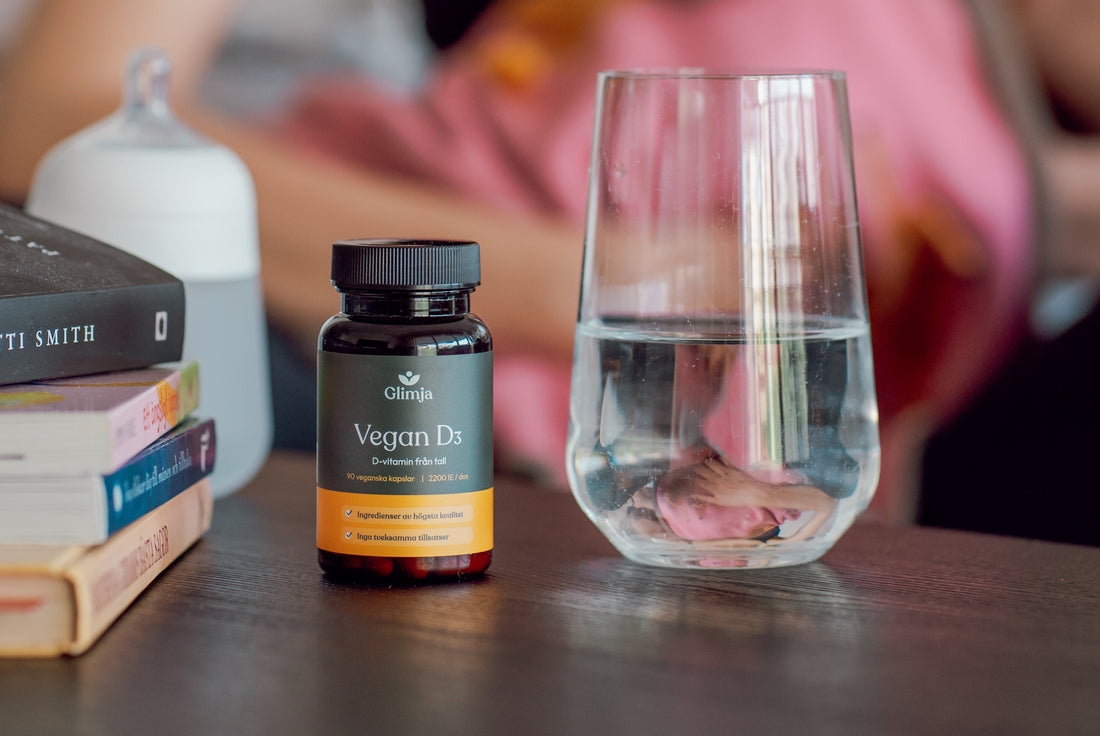
Are you wondering which supplements you should prioritize, or where to start? Here is our guide to the most important supplements you can take every day, recommended by many health and nutrition experts to optimize your nutritional status throughout your life. It is important to note that we are talking specifically about "supplements" – not "replacements." The foundation for good nutrition is always healthy and nutrient-rich food. Good supplements provide that little extra your body needs to function optimally, but they cannot make up for a poor diet. Why do we actually need supplements? There are many reasons why we today need supplements to maintain our health in the best possible way. Some of the most important are: Depleted soils have caused food to contain less nutrition than it did in the past. Environmental toxins and various pesticides increase the body's need for good nutrition to protect itself and detoxify. Stress in daily life is higher than ever before, which further increases our nutritional needs. We also consume more junk food than previous generations, leading to more stress and disturbances. Overall, we take more medications, which also increases the need for good nutrition since many medications deplete the body. All this means that natural, high-quality supplements have become an important part of a healthy lifestyle and recovery from lifestyle-related diseases. What are the most important supplements? The supplements you need most obviously vary from person to person and at different times in life. It should ideally be tailored based on a nutritional analysis or other diagnostic method to evaluate your specific needs and possible deficiencies. But at the same time, there are basic nutritional needs that apply to virtually everyone. This list is based on those; a general foundation that is good for most people. 1. A quality multivitamin Most people have imbalances and insufficient amounts of vitamins and minerals to optimally protect themselves from stress, environmental toxins, medication side effects, and more. Additionally, very few eat an optimal diet, and both our soil and food often contain too little of certain nutrients, such as selenium and iodine. And if these are not in the soil, they are not in the food. 2. A green powder A blend with, for example, spirulina, chlorella, wheatgrass, barley grass, and/or nettle powder that contains phytonutrients not found in a vitamin and mineral combination. 3. A pure omega-3 supplement Essential for many functions in the body, not least the brain. The optimal daily intake is at least 800 mg of EPA and DHA combined. A daily intake of 250 mg DHA contributes to maintaining normal brain function and normal vision. A daily intake of 250 mg EPA and DHA contributes to the normal function of the heart. 4. Good gut bacteria The bacterial flora in our gut helps us absorb nutrients in the best way and protects us from invaders (sometimes called the "first line of immune defense"). Taking a high-quality supplement of lactic acid bacteria and/or bacterial cultures can help us feel better on many levels. If needed, digestive enzymes can also be very helpful in breaking down the food we eat properly. 5. For stress: Magnesium, B-complex & Vitamin C. B-complex helps us manage stress, and magnesium helps the body relax. These two are quickly depleted in the body during stress and can be very helpful to take as extra supplements to support these functions. B vitamins contribute, among other things, to the normal function of the immune system, reduced tiredness, and fatigue. Optimal doses of vitamin C often do not fit into a multivitamin, and it is often beneficial to supplement with extra vitamin C for the immune system. 6. For extra needs: Vitamin D Optimal doses of vitamin D also often do not fit into a multivitamin. It can therefore be a good idea to supplement during the winter months when we do not get sunlight, as well as during periods when you want to support your immune system. We hope this was helpful – and don’t hesitate to contact us if you have questions about our products!
Read more
Food dehydrator for better health and savings - 6 benefits
A good food dehydrator can give you both better health and better finances. Here we list six reasons to make food drying a habit in the kitchen! A modern food dehydrator is designed to dry all kinds of foods: fruit, berries, vegetables, mushrooms, herbs, flowers, and fish for those who want. They are easy to use and inexpensive to operate. Only your imagination limits what you can dry and preserve in a way that retains both nutrition and flavor in seasonal goods. In late summer, it can be a good time to dry blueberries and mushrooms you find in the forest. Below are some simple tips and recipes for that! 1. Drying offers new taste experiences If you use a food dehydrator to dry foods like fruit, vegetables, and berries, a naturally concentrated flavor is created that can be used for tasty snacks, as a side dish, or as an extra seasoning in stews, on porridge, in desserts, and other recipes. Simple fruits can be transformed into healthy candy. Vegetables can become tasty chips, burgers, raw food pizza, homemade herb or soup blends with herbs and garlic. The possibilities are endless. 2. Drying food reduces food waste and extends shelf life Never waste food again. If you dry leftover fruit and vegetables in a food dehydrator, you can extend their shelf life up to 2 years. This is perfect if, for example, you harvest food from your own garden or the forest when it’s in season. Or why not buy larger batches at the grocery store when it’s in season and stock your pantry with summer’s or autumn’s ingredients in dried form? It’s both cheaper and more fun than buying pre-dried food in the store. Dried food can also be “rehydrated” with water or added directly to soups, stews, or pasta sauces. 3. Healthy and 100% natural foods Drying food requires only one ingredient; the food you are drying. This way you can be sure of what you and your family are eating without having to scrutinize ingredient lists or worry about hidden additives (e.g., sugar, citric acid, and sulfur dioxide are common additives in dried fruit). 4. Better finances Pre-packaged snacks can be expensive, and organic dried food as well. You can save a lot of money by drying your own food. Feel free to buy fresh foods in bulk when they are in season or harvest your own ingredients and dry them for later storage. 5. Efficient storage Dried foods take up less than one-sixth of their original storage space and don’t consume electricity like a fridge or freezer. Just pack the food in clean, dry containers and store them in your pantry. Reduction in size and weight means dried food is especially perfect for camping, hiking, or emergency supplies. 6. Best results with a good dehydrator A good dehydrator is both safe and incredibly easy to use. Key components for successful drying are even temperature and good airflow around the food. Unlike other preservation and drying methods, the risk of bacterial growth is very low. With a dehydrator, you just need to place appropriately sized pieces on the trays, set the timer, and "forget" the food until it’s done and the dehydrator turns off by itself. Could it be any easier? How to dry blueberries and mushrooms this fall There are plenty of blueberries and mushrooms in our Nordic forests. Pick a large amount and dry them for autumn and winter. Here are some simple tips on how to dry blueberries (or any other berries) and mushrooms for the best results. Tips for drying blueberries and other berries in a dehydrator Blueberries are one of our Nordic "superberries" packed with nutrition and health-promoting properties. Wild berries are said to be especially nutritious and full of vitality that we want to preserve and enjoy year-round. Blueberries have very high antioxidant levels. The main antioxidant compounds in blueberries belong to a family of polyphenols called flavonoids. Polyphenols are said to help counter harmful gut bacteria and reduce the risk of inflammation. Blueberries also contain anthocyanins and carotenoids; anthocyanins give blueberries their blue color. They also contain a lot of vitamins and minerals. The easiest way: Dried whole berries or berry powder. Spread fresh berries on the drying trays and dry at around 40°C for about 12 hours or until completely dry. If you want to make a powder from them, you can now process the dried berries in a food processor to the desired size. Store in a dry place protected from light for up to two years. Then use in smoothies, baked goods, porridge, etc. Blueberry candy: Make delicious strips with different flavors To make fruit & berry strips, simply blend blueberries with your choice of other fruits, herbs, or spices into a batter, which you then spread out and dry. Very simple and very tasty! Two different flavors of blueberry strips*: Blueberry/Licorice strips 6 dl blueberries 1.5 tbsp liquid honey or liquid coconut sugar 2 tsp licorice root powder 1 pinch natural salt (or more to taste) Blueberry/Vanilla strips 4 dl blueberries 1 banana 10 pitted dates 1 tsp real vanilla powder Instructions: Blend all ingredients into a batter. Spread evenly and thinly on a silicone mat or baking paper on a drying tray (or several). Dry for 6-8 hours at 40°C. Take out the trays, place an empty tray on top of the mixture, and flip everything over, then carefully peel off the silicone mat or baking paper. The point here is to place the entire mixture, which hopefully has now hardened into a "sheet," onto a drying tray without paper or mat. Dry again for 6-8 hours at 40°C until you get a really chewy texture and they are dry on the surface. Take out of the oven, cut into narrow strips, and roll into rolls. Store in a dry and cool place. *****You can easily make raspberry, mango, or strawberry strips with the same base recipe – just replace the blueberries with whatever you want and do the same. How to dry mushrooms in a drying oven Almost all edible mushrooms are well suited for drying. They develop a concentrated and fine mushroom flavor that is perfect for enhancing the taste in all kinds of recipes, and they keep very well if stored dry. This is important to keep in mind when drying mushrooms Only dry whole and clean mushrooms – that is, remove mushrooms that look old or damaged. Cut larger mushrooms into slices about 0.5 cm thick. Spread out on drying trays without drying cloth for the best airflow. Dry at around 50°C for 8-10 hours – this applies to most mushroom varieties. Preferably store in an airtight glass jar if they are to be kept for a long time. Note: it is important that the mushrooms are completely dry before you pack them. Here you can read more about our drying ovens. We are also happy to answer any questions about them, so don’t hesitate to get in touch! Here you can buy ready-made blueberry powder if you want to make it easy for yourself. 😉 About our ready-made blueberry powders: Holistics' blueberry powder comes from the Nordic region and is wild blueberries of the species Vaccinium myrtillus. The most common variety. Vimergy's blueberry powder is a different type of blueberry, so-called "lowbush" blueberries of the species Vaccinium angustifolium, wild-harvested in Canada. They are rarer and also more expensive.
Read more
The right order for your skincare products - step by step
Many people who buy skincare products find it difficult to know in which order to use the products. And skincare has become quite a science nowadays, so it’s not easy to know how to do it right. Maybe you’ve just bought an expensive face cream or serum that you don’t want to waste with the wrong timing? Here is the step-by-step order in which you should use your skincare products! 1. Facial Cleanser Cleanser such as milk/lotion/gel/oil is used first to wash away makeup, dirt, and external impurities from the skin. It removes excess sebum and sweat that can clog pores. Take an appropriate amount of product, massage into the face, neck, and décolleté with circular motions, then rinse off with lukewarm water. For example, oil-based cleansers may need to be wiped off with a towel or cotton before rinsing. 2. Peeling & Scrub 1-2 times a week, depending on skin type, it’s good to do a peeling. The peeling deeply cleanses, removes dead skin cells, and stimulates cell renewal. If using an enzyme peel, apply it to damp skin over the face, neck, and décolleté (avoid the eye area). Then leave it on the skin according to the instructions, generally 5-20 minutes. Enzyme peels can be used on all skin types but are especially recommended for sensitive skin and impure skin with pustules/acne. If using a grain-based peel (mechanical peeling), apply it to damp skin. Then gently massage with circular motions over the face, neck, and décolleté. Avoid the eye area. Afterwards, rinse the peel off with lukewarm water. Mechanical peeling can be used on most skin types, but not if the skin is sensitive or acne-prone with white pustules or cystic acne. The grains in the peel can then irritate the skin and spread acne bacteria. 3. Face Mask 1-2 times a week, depending on skin type, it’s good to apply a face mask. The face mask is applied after cleansing and any peeling. The face mask gives the skin extra nourishment, moisture, and care. It is an intensive treatment for the skin, a great way to deliver a large amount of beneficial ingredients in a short time. Generally, masks are left on for 10-20 minutes, but follow the instructions on the packaging. Some face masks can be left on overnight. Rinse off the mask with lukewarm water and follow up with toner. 4. Toner Toner prepares the skin for care by tightening the pores that opened when you cleansed your face and also acts as a carrier to deliver ingredients in serums and creams deeper into the skin. This removes residues such as chlorine, salts, and minerals found in tap water and balances the skin’s pH level. Spray the toner over the face or sweep a moistened cotton pad over the face and leave the skin damp. 5. Facial Serum Serum should be applied to the skin while it is still damp. Serum provides the skin with extra nourishment, works deeply, and gives an extra boost. Serums can penetrate deeply into the skin and deliver a very high concentration of active ingredients. This makes them excellent anti-aging products. 6. Facial Oil & Face Cream Facial oil and face cream provide care and hydration to the face. They protect the skin and also act as a barrier against air and environmental toxins. A face cream or oil can be used alone or together with serum. Apply the serum first and then the face cream and/or oil. This locks in all the nourishing ingredients and protects the skin. 7. Eye Cream Eye cream/oil/gel is moisturizing, firming, helps reduce puffiness around the eyes, and diminishes dark circles. Apply the product just below the eyebrow and a few centimeters under the eye on the upper cheekbone. It’s important not to apply the product too close to the eye as it can easily cause puffiness and irritation. Gently “pat” the cream into the skin with a finger. Remember that the skin around the eyes is thin and sensitive, so it’s important to use a product specifically designed for that area. The skin around the eyes cannot absorb a product that is too strong, so don’t overdo it, as it can have the opposite effect and irritate the eyes. Have questions or want to share wise tips with the rest of us? Write a comment and we’ll respond!
Read more
Natural deodorant: 3 simple homemade recipes
Around the 1950s, we suddenly became afraid of smelling bad, and deodorant was born. Deodorant removes odor, and antiperspirant prevents sweat from leaving the body. It also blocks our own body scent—the one we subconsciously follow when choosing a partner. We sweat at least 0.5 liters every day, but sweat itself doesn’t smell bad. The odor arises when it mixes with bacteria and starts breaking down certain substances. Why not make your own deodorant? Here are three recipes for simple but effective deodorants you can easily make yourself. And if DIY isn’t for you? Don’t miss my review of 4 natural deodorants here on my blog Morotsliv. Creamy Shea Deodorant This is a recipe for a creamy deodorant with shea butter and jojoba oil. It’s excellent for sensitive skin! Ingredients 0.75 dl cold-pressed organic coconut oil 15 g beeswax 15 g shea butter 15 ml jojoba oil 0.5 dl arrowroot powder 1 tbsp baking soda 10–15 drops essential oil Instructions Melt the fats in a water bath and add the powders. When the mixture reaches about 50 degrees Celsius, add the essential oils. Pour half into a jar, tube, or container and let it cool. It will thicken a bit. Then fill with the rest. Let it solidify completely before you start using it. Shea butter and jojoba oil soften the skin, baking soda is mildly antibacterial and removes bad odor, while cornstarch absorbs moisture. If you have sensitive skin, you can reduce or omit the baking soda. Leave out the essential oils if your skin is extra sensitive and reduce the baking soda. Massage about a pinch into each armpit to avoid greasy stains on your clothes. It’s best to use a spatula instead of fingers to scoop from the jar. This recipe makes about 60 milliliters and lasts at least six months. Witch Hazel Spray Deodorant Witch hazel has soothing, antibacterial, anti-inflammatory, and antifungal properties. It’s also mildly astringent, making this ideal for those who sweat easily and a lot. 0.7 dl witch hazel hydrosol / hamamelis water 20 drops sage 5 drops tea tree oil or another fragrance oil A pinch of salt 0.3 dl distilled water or alcohol Fill a 100 ml spray bottle with witch hazel water, essential oils, and salt. You can also choose other scents, but then switch to ones that are also antibacterial, such as peppermint, oregano, and bergamot. Fill the rest with water, or alcohol for an even more effective deodorant. Keep in mind that alcohol can be drying. For sensitive skin, water is a better choice. Rose Deodorant with Aloe Vera This is probably my personal favorite. Lovely scent of rose and nourishing aloe vera. 70 ml rose water 30 ml aloe vera juice or spray 1 pinch baking soda Optional 10 drops essential oil Mix everything in a 100 ml bottle. Shake before use. This one is incredibly easy to mix up. It’s quick too. Of these three recipes, I would recommend the cream deodorant for dry and sensitive skin, the witch hazel deodorant for heavy sweaters, and the rose deodorant for those who want a luxurious feel. All are mild and suitable for most people, so choose the one that appeals to you the most. Good luck!
Read more
How to get rid of yellow tones in blonde hair
Why does hair turn yellow and what can you do about it? When do you need a purple shampoo and what does it actually do? In this article, we answer all questions about purple shampoo and how you can remove yellow tones without damaging your hair. Table of Contents Why does your hair turn yellow? Lightened Hair Bleached Hair Sun and Bathing Warm and mineral-rich water What can you do to prevent yellow hair? Cool blonde color or toner Protect your hair from sun, heat, and bath water Shower smart Care for your hair before it becomes dry and damaged How do you get rid of yellow tones in hair? Silver shampoo and conditioner* Which Organic Purple Shampoo Is Best?* How Does an Organic Purple Shampoo and Conditioner Work?* What Should I Consider When Using an Organic Purple Shampoo? Go to a skilled hairdresser Care for Your Hair with the Right Products* Intensively Treat the Hair* Moisturize the Hair* Hair Oils Why does your hair turn yellow? To avoid unwanted yellow tones, we first need to clarify why the hair turns yellow. Remember that yellow tones can also affect those with untreated natural blonde hair. Lightened Hair The most common cause of yellow hair is when the hair is bleached. When you bleach hair, the melanin (dark brown to black pigment) oxidizes, which lightens the hair. Since all hair has more or less underlying warm tones, these become more prominent after bleaching. In blonde hair, yellow tones are emphasized (in brown or black hair, orange and red tones are emphasized) when the bleaching has not succeeded in removing all the hair's pigments. Bleached Hair At the hairdresser, a cool blonde shade can be applied after bleaching to counteract or remove any yellow tones. The hair then gets a natural blonde appearance. After a few weeks, the salon blonde shade can slowly fade and yellow tones take over. This is completely natural. Let us explain. Blue is what gives hair cool tones. The blue pigments are very small and are the first to disappear with hair washing and wear. What remains are the warm tones, which in bleached and lightened hair are yellow. Sun and Bathing Unfortunately, sun and swimming can quickly bring out yellow tones in blonde hair. Strong UV rays, salty seawater, and chlorinated pool water damage and dry out your hair more than you think. When the hair is dry, your hair color has a harder time taking hold and staying. Also, the sun bleaches the hair color. The end result is damaged and yellow hair. Warm and mineral-rich water Do you shower with soft or hard water? Is it water from your own well or shared municipal water? Hard water and well water usually contain the most minerals. Minerals can make blonde hair turn yellow. Showering with warm water also damages the hair more and highlights yellow tones in bleached hair. What can you do to prevent yellow hair? Don’t worry, there are a few tricks that can help you avoid yellow tones. Cool blonde color or toner Don’t even think about bleaching your hair further to remove yellow tones. Your hair will definitely be damaged and could, in the worst case, fall out in chunks. Go to a skilled hairdresser who can choose a cool blonde hair color to neutralize the yellow tones. If your hair is already damaged, you can instead choose a toner that is less damaging to the hair. Protect your hair from sun, heat, and bath water Tie up, braid your hair, or protect it with a hat when the sun is strongest. Also, let your hot hairdryer and other styling tools rest on the shelf. A good trick is to wet your hair thoroughly with clean water before swimming in the sea or pool. The hair becomes saturated with clean water and is then less likely to absorb the bath water. Then wash your hair immediately after swimming with mild shampoo and nourishing conditioner. Shower smart If you use hard water or well water at home, you can tie your hair up and shower first before washing it. This way, you reduce the exposure time of your hair to the water. Also, the first (warm) water from the pipes usually contains the most minerals. Preferably wash your hair with cold water. Maybe you can wash your hair at the gym or work instead if the shower water is better there. Installing a shower filter can be an option if the water causes many problems. Care for your hair before it becomes dry and damaged Be proactive and care for your hair regularly. It’s wise to use products like hair masks, moisture sprays, nourishing styling products, and gentle shampoos. Always be quick to trim split ends. How do you get rid of yellow tones in hair? What can you do if you still get yellow hair? Here we share tips on various products that can counteract or remove yellow tones. Silver shampoo and conditioner Using silver shampoo is the perfect choice if you want to tackle yellow hair on your own at home. We at Glimja of course recommend a natural and organic silver shampoo. Which organic silver shampoo is best? Let's get straight to the point. We recommend Bruns no. 24 Blonde Beauty, which gently and effectively reduces yellow tones in the hair and gives it a neutral or cool shade. How does an organic silver shampoo and conditioner work? Bruns Shampoo no. 24, also called organic silver shampoo, is designed to neutralize warm and yellow tones in: blonded or naturally blonde hair bleached hair silvery or gray hair white and light hair The result is instead a cooler shade. Some organic silver shampoos use clays to counteract yellow tones. Bruns Products instead use the plant dye Campeche Logwood (also called bloodwood) in their products, which visibly gives beautiful and cool hues. Even brunettes can get a cooler shade with this shampoo. On black hair, there is no color difference, but you get stronger, more manageable, and fuller hair. Always finish with their Conditioner no. 24, which adds shine, balances oily scalp, and provides moisture without irritating the scalp or weighing down the hair. Note that the plant dye Campeche Logwood is found in both the shampoo and conditioner. However, it is the shampoo that has the greatest effect in gradually reducing yellow tones. What do I need to consider when using an organic silver shampoo? Unlike conventional silver shampoos, Bruns Shampoo (and Conditioner) no. 24: can be used every day if you wish, without damaging hair quality. Remember that water itself dries out the hair. Avoid washing it unnecessarily often. processing time can be extended for better effect, without risking over-treatment or overdosing where the hair gets purple, blue, or green hues (which must be bleached out). can be used even if you already have damaged and dry hair. The products do not discolor the hair or make it dull. On the contrary, the hair gains more shine, strength, and a "more hair feel." Go to a skilled hairdresser If you need help, you can instead go to a skilled hairdresser who can remove the yellow tones for you. Try to find an eco-hairdresser who uses gentle methods and hair products. If your hair is already in poor condition, it is especially important to ask the hairdresser for the gentlest treatments and products possible. If they want to color your worn hair, ask instead for a hair toner. If the hair is already toned from before, it’s just a matter of maintaining the color and it’s time to tone the hair again. Care for Your Hair with the Right Products As we mentioned earlier, your (blonde) hair color (especially the blue pigments) adheres worse to fragile and dry hair. Therefore, it is extra important to keep hair hydrated, soft, and healthy to counteract yellow tones. Intensively Treat Your Hair Have you avoided nourishing hair masks out of fear of greasy and flat hair? Then we have good news! Try Bruns’ fantastic hair mask. This hair mask is a nutrition and moisture bomb for hair and perfect for damaged hair. The product makes hair airy with a beautiful fall. Use the hair mask regularly to give your hair protection and softness. Moisture Boost Your Hair Between hair masks and washes, hair can feel dry, brittle, or frizzy. Then it can be a good idea to give your hair extra moisture. Spray directly on dry or damp hair for an extra moisture boost. Note that these sprays are leave-in products and should not be rinsed out. Bruns Conditioner Spray is perfect for hair that easily tangles or needs shine and softness. Designed for daily use. Conditioner Spray 18 Sparkling Tangerine, 200 ml Are you one of those who love moisture sprays and want to use them constantly without breaking the bank? Then check out Zoya Goes Pretty’s organic rose water, which comes in a full 200 ml! A spray bottle that also works for the face (especially on hot days or when spending a lot of time in front of screens). Organic Rose Water, 200 ml Hair Oils Protect your hair with organic hair oils to withstand daily stressors and wear on your hair. This is especially important if you have medium to long hair. Applying a few drops of hair oil after a moisture spray also helps the moisture stay longer in the hair. Camellia Kissi oil is so amazing on the skin that many forget it works wonders on hair too. It is completely fragrance-free (no seed oil scent), light, and non-greasy. Khadi Ayurvedic Hair Oil Color Care is specially designed for colored hair. The oil protects hair from sun and wear and helps your hair color stay beautiful longer. You might also be interested in these articles: The Ultimate Guide: Dry Hair Repair Extremely Worn and Broken Hair After Bleaching: 10 Simple Steps! The Conditioner Method: Counteract Dry and Damaged Hair
Read more
9 common questions about Berkey water filters and water purifiers
Berkey water filters are an effective, standalone water purification system designed to provide drinking water for daily use or emergencies. It requires no electricity because it is gravity-fed. Water from almost any source can be poured into the unit’s upper chamber, and when it reaches the lower chamber, it is the cleanest and healthiest water you can drink. 2. What different Berkey systems are there? Travel Berkey Berkey’s most compact system but contains the same powerful filters as all other systems. Travel Berkey can provide 5.7 liters per hour with two filters. Travel is suitable for smaller families with normal household use. Also fits, for example, in an RV or suitcase. Recommended for 1-3 people. Big Berkey Berkey’s best-selling system. Big Berkey can provide 8.5 liters per hour with 2 filters and up to 26 liters per hour with 4 filters. This unit is suitable for medium-sized families with normal household use. Recommended for 2-4 people. Royal Berkey Can provide 11.5 liters per hour with 2 filters and up to 30 liters per hour with 4 filters. Suitable for anyone who also wants water for more than drinking, such as cooking, pets, plants, and other needs. Recommended for 2-6 people. Everything is made of stainless steel on all three water purifiers, but the spigot itself is plastic. If desired, you can purchase a stainless steel spigot. Sport Berkey in plastic Sport Berkey is a portable water bottle that purifies water on the go. The perfect choice for those who want to bring clean water on trips, to work, or camping. The theory behind this innovation is simple. The sports bottle filter is designed to reduce or remove many harmful contaminants from questionable water sources, including streams, lakes, and tap water. It handles about 640 refills (1,378 liters) from municipal water supply or about 160 refills (94 liters) from questionable sources before the filter needs to be replaced. 3. What filters are included? All units come with two black filters that Berkey calls Black Berkey Purification Elements. The lifespan is 11,356 liters of water per filter and 22,712 liters per set of two filters, so you only need to replace them about every other year, though this depends on how many people are at home and how the water is used. You can also choose to buy two extra black filters. Big Berkey, Royal Berkey, and Berkey Light all take up to four filters. Four black filters mean the system filters more water faster. Travel Berkey only takes two filters. 4. What does the filter remove? Over 200 contaminants are removed, including: Viruses (99.999%). Pathogenic bacteria (99.9999%). Chloramine (below the detectable limit in the laboratory). Trihalomethanes (99.8%). Pharmaceuticals (99.9%). Most heavy metals. Pesticides (below the detectable limit in the laboratory). Test results can be found here. 5. How does the filter work? The included black filter operates according to three steps. 1. Microfiltration The first line of defense against contaminants is the material that the Black Berkey filters are made of. Each cylindrical filter consists of a composition of more than six different media types, all constructed in a very compact matrix containing millions of microscopic pores. The microscopic topography on the surface of the filter elements contains millions of tiny holes that let water through. These holes are so small that contaminants physically cannot pass through them. Additionally, these micropores pass through the filter housing in intricate twists called "tortuous paths," causing the smallest pathogenic bacteria, cysts, parasites, sediments, and sedimentary minerals to be further trapped. Unfortunately, in modern times there are more contaminants to deal with than just bacteria. Agriculture and industrial activities can pollute water with contaminants like heavy metals and volatile chemicals that require more than just microfiltration. 2. Absorption 1 The technology Berkey uses for this step in the filtration process is ion exchange. This process is similar to leaving an opened box of baking soda open in the refrigerator to absorb strange odors. Heavy metal ions (chromium, lead, or copper molecules) are extracted from the water through an ion exchange process where they are attracted to and transformed by electrically binding to the media. Ions are molecules that are unbalanced – the number of electrons is not equal to the number of protons. The molecules want to restore balance and are therefore drawn to other molecules that can equalize their charge. The Black Berkey filters are charged with ions that attract contaminant molecules. These molecules are absorbed and permanently bound to the filter and never enter the drinking water in Berkey's lower chamber. 3. Adsorption 2 Adsorption 2 creates an ionic barrier similar to surface tension. The barrier stretching between the micropores blocks water contaminants, such as submicron viruses, which are smaller than the pore size itself. Berkey's filters utilize the electrostatic charge of viruses and draw them toward the tunnel walls in the filter's "tortuous path." Like static cling, it holds small viruses against the filter surfaces and never lets go. Berkey has the prestigious classification of water purifier, not just water filter, due to its ability to remove viruses. Because of Berkey’s gravity flow, it takes several minutes for water molecules to pass through the filter elements, while molecules in other filtration systems pass through in fractions of a second. The longer contact time between water molecules and the filter media provides much greater removal of harmful water contaminants that cannot be achieved with conventional pressurized water filtration methods. 6. Is it difficult to assemble the system? It takes a while but it’s not difficult. Feel free to follow this instructional video. You need to “prime” the filters before inserting them, meaning saturate them so that all air inside disappears and the water flows well. The video clearly shows how to do it. The video also shows that you need to wash all parts with warm water and natural detergent before first use. The black filters should not be washed with detergent; they can be rinsed with cold water and scrubbed with a sponge. 7. Do I have to fill the entire upper chamber? Yes, every time you fill the upper chamber in your Berkey water filter system, you should fill it to the top. If you only partially fill the system, the filters can wear unevenly because it is the lower part of the filter that does all the work. This leads to a significant slowdown in filtration speed. Note: Always make sure the lower chamber is empty before filling the upper chamber to avoid overfilling. 8. Why do I need to prime my filters? Priming the Black Berkey filter before first use is part of the initial installation. It is necessary for the filters to work properly and achieve sufficient water flow. The media inside the filters is very dense and has high surface tension. Water then has difficulty penetrating. This causes the system to filter very slowly or not at all. After priming, everything works and the water can flow through. 9. Why do my filters drip so slowly? What usually causes the filters to drip slowly is cloudiness and sediment clogging the micropores in the elements. Simply remove the filters from your system and clean them by scrubbing the outside of each element under running water. It’s easy to do and takes less than a minute per filter. If they don’t filter faster after cleaning, it’s time to replace them. This usually needs to be done about every two years depending on water usage. Do you have more questions about Berkey water purifiers? Write a comment and we will answer!
Read more